What Everyone Should Know About Manufacturing System
Learn what a manufacturing system is and why you need to use one for your business.
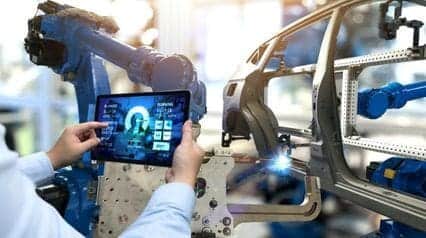
Learn what a manufacturing system is and why you need to use one for your business.
Published 28 Apr 2026
Article by
5 min read
In today’s fast-paced and ever-changing world, manufacturing plays a vital role in the economy. A manufacturing system is a collection of machines, tools, and processes that are used to produce goods or services. It typically includes the steps of raw materials acquisition, processing, assembly, and distribution.
A manufacturing system must have three basic components:
Inputs – raw materials, parts, or process equipment that will be used in the manufacturing process
Processes – the methods and techniques used to transform the inputs into the desired output
Outputs – the products or services that are created as a result of the manufacturing process
The goal of any manufacturing system is to produce outputs of the highest quality, at the lowest cost, and in the shortest amount of time possible. In order to achieve this, manufacturers must constantly strive to improve their processes and equipment.
Manufacturing systems are important because they provide the means by which products are created. Without manufacturing systems, it would be difficult to produce the vast array of goods that we have come to rely on in our everyday lives. From the simplest of products to the most complex, manufacturing systems play a vital role in their creation.
Moreover, manufacturing systems are constantly evolving and improving. As new technologies are developed, they are often incorporated into manufacturing systems to improve efficiency and quality. This ongoing process of improvement ensures that the products we rely on are constantly getting better.
Harness frontline insights, digital workflows, and seamless communication to boost efficiency and productivity across all manufacturing sites.
The manufacturing system is responsible for the production of goods and materials. It is a complex system that involves the coordination of resources, machines, and workers in order to produce finished products. The manufacturing system is an essential part of any economy and plays a vital role in the production of consumer goods and services.
A well-functioning manufacturing system is important for a variety of reasons, such as:
Ensure that products are of high quality and meet customer expectations
Improve efficiency and productivity, leading to lower costs and increased profits
Help create jobs and support economic growth
The characteristics of a manufacturing system include:
Efficiency – The manufacturing system must be designed to produce products or services quickly and efficiently.
Flexibility – It must be able to accommodate changes in demand and produce different products or services as needed.
Quality – It must make products or services that meet the required standards.
Safety – It must be designed to protect workers from injuries and hazards.
Cost-effectiveness – The manufacturing system must be designed to create products or services at a low cost.
There are various manufacturing systems, each with its purpose and importance. The five major types include the following:
This is the most efficient type of manufacturing system, as it uses assembly lines to produce large quantities of products quickly and cheaply. However, mass production is not well suited for products that require customization or have a lot of variation.
A custom manufacturing system is designed to produce a specific product or set of products. This type of system is usually used when products are not mass-produced and require special attention during production. One good example of these is handmade furniture and wedding cakes.
A flexible manufacturing system (FMS) is a type of manufacturing system that is able to quickly change between different product types or sizes. This type of system is characterized by its use of automated equipment and computer-controlled robots.
A continuous manufacturing system is also known as mass manufacture. It is a process of manufacturing in which processes and assembly are continuously performed during an operation at one station instead of stopping and starting the process.
In this continuous manufacturing method, there is no storehouse (raw material) needed. The material would come from one place or another process and go into the next phase immediately without being stored between steps.
Also known as batch processing, an Intermittent manufacturing system is a type of manufacturing process where products are produced in small batches. This type of process is characterized by its ability to produce a variety of products, its reliance on human workers, and its limited level of automation. A perfect example for this is clothing production.
What’s really eating into your team’s time?
Middle managers in manufacturing waste 7 weeks every year on low-value work. See what’s really slowing teams down.

The manufacturing process is the set of steps that are followed to transform raw materials into finished products. It can be a complex and detailed process, depending on the product being made.
In general, the manufacturing process can be divided into four main steps:
Planning and design – This step involves creating blueprints or plans for the product, choosing the right materials, and determining the production process.
Raw materials – This is the gathering of the raw materials needed for production. This can involve sourcing materials from suppliers, stocking up on supplies, or both.
Production – Once the design and raw materials have been finished and collected, the production stage will take place to produce the product.
Quality control – This involves inspection of the product to adhere to the customer’s standards. It is where any defect is checked to ensure quality products are made for the consumers. At this stage, equipment, spare parts, and leftover materials are also stored and managed for future use.
SafetyCulture is the perfect tool that helps manufacturers streamline their quality control processes. By digitizing paper-based checklists, SafetyCulture provides a simple way to standardize inspections, reduce errors and omissions, and improve safety and compliance.
With SafetyCulture, you can:
Quickly and easily create digital checklists for your manufacturing process and help ensure consistent performance or capabilities by checking in order to make sure standards are met
Coordinate with your team through proper communication channels using Heads Up.
Check and assess manufacturing system documents and records from a single, secure, and cloud-based location and share them with your team.
Evaluate your manufacturing processes and production performance by seamlessly conducting inspections and auditing the quality of products.
Conduct paperless inspections using free customized checklists from the Public Library —a more convenient way to ensure that machines, equipment, and tools are in proper working conditions.
Train your manufacturing workers to ensure Good Manufacturing Practices (GMP) are upheld at all times.
In this article