
An Introduction to Electrical Safety
Learn about common electrical hazards and the best practices for ensuring electrical safety is properly implemented in the workplace.
Published 10 Nov 2025
Article by
5 min read
What is Electrical Safety?
Electrical safety is a general practice for workers exposed to handling and maintaining electrically powered equipment. It’s a set of guidelines they follow to mitigate electrical hazards and prevent their dangerous effects in case of an incident. Failure to adhere to electrical safety can lead to accidents, near misses, or even fatalities.
Importance
Electricity is a vital energy source that powers homes, offices, factories, and other industrial facilities. Practicing proper electrical safety procedures helps prevent accidents, injuries, and fatalities caused by electrical fires and other hazards. In addition, the National Fire Protection Association ( NFPA ) emphasizes that electrical safety protects both property and worker well-being.
Since 2011, an average of 2,428 electrical injuries have occurred in the US each year, and most involve electrical shock. These incidents can cause burns, prickling sensations, seizures, and even respiratory arrest. To reduce the risk, employers must comply with electrical safety precautions and provide workers with proper protective equipment.
Electrical Safety Regulations
Electrical safety regulations define the standards for a secure work environment, ensuring that organizations follow the necessary safety measures and best practices.
Check with your local authorities for laws and guidelines that apply to your location and industry. To help you get started, here’s a quick overview of the electrical safety regulations from agencies around the world:
United States – The Occupational Safety and Health Administration ( OSHA ) sets workplace electrical safety standards, including 29 CFR 1910 for general industry. Additional subparts address specific industries such as construction.
Canada – Electrical safety is governed by federal and provincial regulations, primarily guided by the Canadian Electrical Code ( CEC) .
United Kingdom – The country follows the Health and Safety Executive ( HSE ) standards and codes of practice, including requirements for appliance installation and surge protection.
European Union – The Low Voltage Directive ( LVD 2014/35/EU ) ensures that electrical equipment within specific voltage ranges meets essential health and safety requirements.
Australia and New Zealand – Electrical safety is governed by the Australian/New Zealand Standard AS/NZS 3760 , which covers safe design, installation , and maintenance of electrical systems.
Ensure Health & Safety Compliance with Ease
Stay ahead of regulations and maintain a safe workplace with a digitized compliance tool.
10 Common Electrical Hazards
One key aspect of electrical safety is knowing and understanding the potential risks that come with using electricity. If not addressed, these hazards present significant threats to the workers and properties of the organization.
Here are 10 electrical safety hazards to keep an eye on in the workplace:
Overloaded circuits
Faulty wiring
Exposed electrical parts
Improper grounding
Damaged insulation
Contact with live wiring
Loose connections
Wet environments
Overhead power lines
Damaged electrical tools and equipment
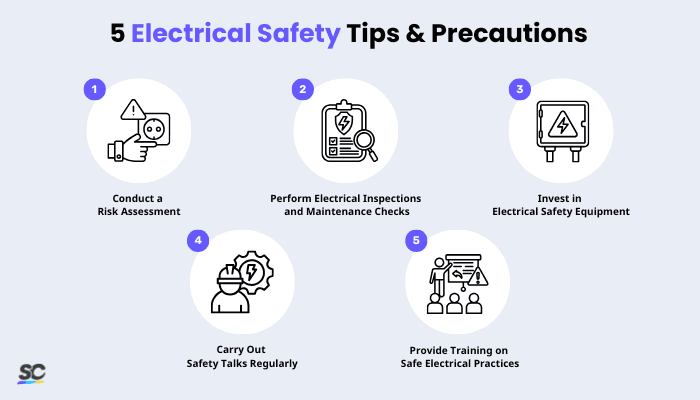
5 Electrical Safety Tips & Precautions
Safety precautions for working with electricity depend on the worker’s job instructions and working environment. Achieve optimal electrical safety at work by following these best practices:
Conduct a Risk Assessment
Before implementing any safety measure, it’s important to understand first the electrical hazards present in the workplace. This can be done through an in-depth risk assessment.
Performing a thorough risk assessment can help organizations identify potential electrical hazards. This evaluation should cover all electrical equipment, wiring, and power sources. Once they’re determined, prioritize them based on severity and likelihood of occurrence.
Perform Electrical Inspections and Maintenance Checks
Periodic inspections and maintenance are crucial to keeping electrical tools and systems in good working condition. Consistently carrying out these scheduled checks helps prevent damage, meet safety standards, optimize efficiency, and extend the lifespan of the system and equipment.
Before each use, employees must first inspect the equipment and report any problems they find. At an organizational level, it’s best to implement a routine electrical maintenance program. This way, electrical and maintenance teams can promptly address any identified issues to prevent accidents and breakdowns.
Create your own electrical maintenance checklist
Build from scratch or choose from our collection of free, ready-to-download, and customizable templates.
Invest in Electrical Safety Equipment
One of the best ways to keep employees safe from hazards associated with their work is by equipping them with specialized personal protective equipment ( PPE ). Electrical safety equipment is specifically designed to protect workers from general and specific electrical hazards. Most workplaces should have the following safety gear:
Insulated tools
Insulated gloves
Mats
Ladders
Safety equipment should also be used when doing specific types of electrical testing, repair work, installation,machine tasks, or maintenance, such as arc flash and customized earthing and short-circuiting, among others. And for an extra layer of safety, it helps to verify if your electrical equipment is certified by a nationally recognized testing laboratory.
Carry Out Safety Talks Regularly
Electrical safety encompasses a wide area of general safety guidelines, such as electrical PPE and lockout/tag-out procedures, among others. Project managers, site supervisors, and safety officers can improve electrical safety onsite when they make sure that workers are adequately trained and are involved in toolbox talks.
Listed below are a few examples of electrical safety topics organized by scope:
Toolbox Topics
Job-specific Safety Measures
Working near High-voltage Energized Electrical Lines
How to Deal with Downed Power Lines Safely
Basic Arc Flash Safety Precautions
Provide Training on Safe Electrical Practices
Proper training and awareness among employees are vital to building a safety-conscious workplace. Aside from the scheduled toolbox talks and safety meetings, it’s also important to conduct regular training sessions on electrical safety, covering the following topics:
Fundamentals of Electricity and a Job Task or Site
Hand and Power Tools Electrocution Prevention
Identifying and Eliminating Common Electrical Hazards
Emergency and First Aid Procedures for Electrical Accidents
Ensure Electrical Safety in the Workplace with SafetyCulture
Why Use SafetyCulture?
SafetyCulture is a mobile-first operations platform adopted across industries such as manufacturing, mining, construction, retail, and hospitality. It’s designed to equip leaders and working teams with the knowledge and tools to do their best work—to the safest and highest standard.
Efficiently manage and streamline health and safety processes across the organization, including incident management, safety audits and inspections, risk assessment, waste management, and more, using a comprehensive EHS software solution.
Save time and reduce costs
Stay on top of risks and incidents
Boost productivity and efficiency
Enhance communication and collaboration
Discover improvement opportunities
Make data-driven business decisions
FAQs About Electrical Safety
Related articles
Environmental Safety
Safety

Green Building for a Carbon-Neutral Future
Learn about green building, its components, and how it can help your business achieve its sustainability goals.
Safety
Risk Assessment

Machine Risk Assessment for Industrial Safety
Learn what machine risk assessment is, why it’s important, and the necessary steps to prevent workplace injuries and equipment failures.
Construction Safety
Safety
An Introduction to Core Drilling
Learn what core drilling is, why it’s used, and the best safety practices to during when core drilling.