Karakuri Kaizen: The Japanese Way of Improving Business
Learn about the Karakuri Kaizen method and how it’s used in lean manufacturing to improve production quality and efficiency.
Learn about the Karakuri Kaizen method and how it’s used in lean manufacturing to improve production quality and efficiency.
Published 27 Apr 2026
Article by
5 min read
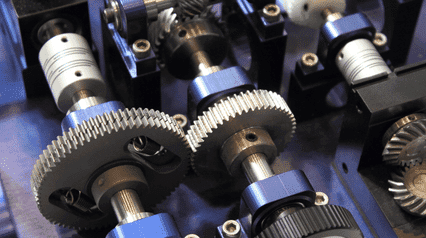
Karakuri kaizen is a Japanese manufacturing philosophy that focuses on using simple, low-cost mechanical devices to improve workplace efficiency and ergonomics without relying on electricity or complex automation. Rather than investing in expensive automated machinery, the approach emphasizes human ingenuity and hands-on problem solving, making it a cornerstone of lean manufacturing systems.
The history of Karakuri Kaizen dates back to the Edo period in Japan when many of the first automated machines were invented. It traces its origins to the rich tradition of karakuri ningyo, which were mechanical dolls crafted using wooden gears, cams, and springs made from whalebone and operated without using any external power source.
As Japan industrialized in the 20th century, this resource-efficient mechanism design was absorbed into factory culture. Karakuri kaizen is considered to be an integral part of the Japanese manufacturing process today, with Toyota being credited for adapting karakuri principles within a modern industrial context, weaving them into the Toyota Production System.
Karakuri kaizen draws from Japanese mechanical traditions, applying kaizen (continuous improvement) principles to create passive devices that reduce manual labor, like gravity-fed carts or magnetic screw dispensers.
On the other hand, traditional automation involves rule-based systems such as robotic arms or conveyor belts that follow pre-programmed instructions for repetitive tasks. While both methods present their own advantages and disadvantages, it’s important to take note of their key differences:
Aspect | Karakuri Kaizen | Traditional Automation |
Power Source | Gravity, springs, levers (nonelectric) | Electricity, pneumatics, hydraulics |
Cost | Low initial/materials; quick ROI and uses zero energy | High upfront for hardware/programming, consumes significant energy |
Maintenance | Simple, visual fixes by operators | Complex; needs specialists |
Flexibility | Easy modifications, no software | Rigid; reprogramming required |
Safety | Ergonomic, presents minimal risks | Potential hazards such as mechanical failure and software glitches |
One of the main reasons karakuri kaizen is still used today is because it doesn’t require an expensive investment in new technology. Moreover, applying karakuri kaizen can increase output and productivity without disrupting current manufacturing processes in place.
Here are some more advantages karakuri kaizen has to offer:
Waste elimination: By automatically feeding, positioning or transferring materials, karakuri devices directly address core lean wastes including unnecessary motion, waiting, and overprocessing to keep production flow smooth and uninterrupted.
Improved worker safety: Many karakuri devices are designed to reduce the physical strain of repetitive tasks such as lifting, reaching, bending, and carrying. This protects workers from injury without compromising manufacturing efficiency.
Employee engagement: Karakuri kaizen fosters a strong sense of ownership and engagement on the floor since workers themselves are encouraged to identify problems and engineer solutions using simple materials.
Flexibility and adaptability: Karakuri devices are simple in construction and easy to modify—a crucial advantage in lean environments where responsiveness and agility are essential.
Human-centered innovation: Rather than replacing workers with expensive automation, karakuri kaizen positions people as the drivers of improvement, building a smarter, safer, and more engaged workforce as a foundation for long-term operational excellence.
To successfully implement karakuri kaizen, it’s crucial to understand the core principles that define its manufacturing processes. This includes:
Karakuri kaizen directly targets lean's core wastes by designing simple mechanical devices that deliver the right part, to the right place, at the right time. By automating the flow of materials through chutes, rollers, and conveyors, karakuri helps eliminate the eight key forms of waste, including:
Overproduction
Waiting
Unnecessary transport
Overprocessing
Excess inventory
Unnecessary motion
Defects
Underutilized talent
A core principle of karakuri kaizen is reducing the physical burden placed on workers. Devices are designed to eliminate heavy lifting, awkward reaching, repetitive bending, and other physically demanding movements by using mechanical advantage to do the work instead. This protects workers from injury and allows them to focus their energy on higher-value tasks.
Kaizen upholds that improvement is only meaningful if it’s repeatable and sustainable. Once a karakuri device proves effective, the principle of standardization ensures that the design is documented and replicated across similar workstations or processes.
This allows a single clever solution to multiply its impact across the entire operation, embedding the improvement into standard work and preventing regression to the inefficient methods the device was designed to replace.
A defining principle of karakuri kaizen is that the workers closest to the process are the ones who design and build the solutions. Instead of relying solely on managers or engineers, kaizen empowers every employee to contribute ideas and take ownership of improvements, fostering a culture of collective responsibility, respect, and shared purpose across all levels of the organization.
Unlike radical innovation, kaizen emphasizes making many small, incremental improvements on a consistent and ongoing basis. Once a mechanism is deployed, workers continue to observe its performance, identify shortcomings, and make further refinements. Each iteration builds on the last, gradually producing more elegant, efficient, and effective solutions over time.
At its core, karakuri kaizen emphasizes having a deep respect for the creative potential of the human mind. By giving workers the freedom, resources, and encouragement to engineer their own solutions, karakuri kaizen treats every employee as an inventor that sustains continuous improvement from the ground up.
SafetyCulture is a mobile-first operations platform adopted across industries such as manufacturing, mining, construction, retail, and hospitality. It’s designed to equip leaders and working teams with the knowledge and tools to do their best work—to the safest and highest standard.
Streamline processes, eliminate bottlenecks, enhance resource utilization, and build an agile and scalable infrastructure with SafetyCulture. Strive for operational excellence to boost competitive advantage, foster sustainable growth, and deliver long-term value.
✓ Save time and reduce costs
✓ Stay on top of risks and incidents
✓ Boost productivity and efficiency
✓ Enhance communication and collaboration
✓ Discover improvement opportunities
✓ Make data-driven business decisions