Introduction to Maritime Safety: A Guide
Conform to maritime safety standards to help prevent accidents, ensure compliance, and promote safer voyages at sea.
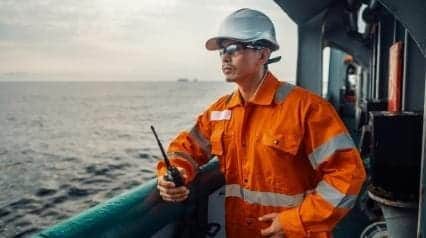
Conform to maritime safety standards to help prevent accidents, ensure compliance, and promote safer voyages at sea.
Published 28 Apr 2026
Article by
5 min read
Maritime safety is the protection of the crew and passengers aboard vessels, as well as those living or working near bodies of water, from hazards and the risk of injury or fatality. An example of maritime safety according to the Occupational Safety and Health Administration (OSHA) is the provision of Personal Flotation Devices (PFDs), which aid in the recovery of Persons In Water (PIWs) who are at risk of hypothermia, drowning, and even death.
Neglecting maritime safety can lead to unfathomable disasters such as the fatal tanker explosion of the Bow Mariner, the sinking of the Motor Ship (MS) Estonia and the Titanic, and the accident of the MS Herald of Free Enterprise. These incidents highlight how even minor lapses in safety protocols can escalate into large-scale loss of life, environmental destruction, and financial devastation.
Beyond preventing accidents, prioritizing maritime safety has broader operational and regulatory benefits. One key advantage is its impact on a ship’s risk profile, which is a critical factor used by the Paris Memorandum of Understanding (MoU) on Port State Control to determine how frequently ships are inspected. Under this system, vessels classified as Low Risk Ships (LRS) may only require inspection once every three years, while High Risk Ships (HRS) might face inspections as often as every five months. Maintaining a low-risk status not only minimizes downtime but also enhances a ship’s reputation and operational efficiency.
The Paris MoU’s New Inspection Regime (NIR), which governs this risk-based approach, applies to 28 member states —including Canada, the United Kingdom, and most European nations. Similarly, in the United States, the Coast Guard enforces strict compliance: a domestic vessel may fail its mandatory inspection if inspectors find any indication that its navigation or operation poses safety risks. These international frameworks collectively emphasize a universal truth: maritime safety isn’t optional, but essential for sustainable and responsible shipping operations.
Cultivate a safe working environment and streamline compliance with our EHS solutions.
Maritime standards are the industryrules that govern maritime safety and security. These rules are enforced by the International Maritime Organization (IMO) as well as by other international, regional, or national organizations, associations, and agencies. Below are just some of the maritime standards in place today:
SOLAS is an international treaty created “in response to the Titanic disaster.” Today, over 160 countries adhere to the current version, SOLAS 1974. It covers nearly all aspects of maritime safety, including the following:
Ship construction requirements (e.g., subdivision, stability, and fire protection)
Provision of life-saving appliances such as lifeboats and life jackets
Use of radiotelegraphy and radiotelephony (radio communication)
Implementation of safety in navigation (e.g., in manning, routing, signaling)
SOLAS 1974 also has chapters dedicated to the carriage of grain, transport of dangerous goods, and operation of nuclear ships.
A related standard, ISO 27991, provides detailed guidance on communication between a Marine Evacuation System (MES) and the survival craft or platform it connects to—an important component required under SOLAS regulation III/6.4.4.
The ISPS Code establishes a comprehensive framework to detect and prevent security threats to ships and port facilities engaged in international voyages. Its main components include the following:
Completion of a Declaration of Security when required by the government or requested by a ship
Development of a ship security plan and a port facility security plan
Use of ship security assessments and port facility security assessments
Participation in training, drills, and exercises on ship security and port security
Designation of a ship security officer, a port facility security officer, and a shipping company security officer
The GMDSS is a worldwide safety system that enables ships in distress to communicate quickly and effectively with rescue authorities. According to the Federal Communications Commission (FCC), all cargo ships of 300 gross tons and above, as well as passenger ships carrying more than 12 passengers on international voyages or open seas, must comply with GMDSS requirements.
Depending on the sea area of operation, vessels must be equipped with these components:
406 megahertz (MHz) Emergency Position Indicating Radio Beacon
Very High Frequency (VHF) radio that can transmit and receive Digital Selective Calling (DSC) and radiotelephony
NAVigational TEleX (NAVTEX) receiver
Search and Rescue Transponder (SART)
Two-way VHF portable radios
Radio equipment maintenance using approved methods
The STCW Convention establishes the baseline for the training and certification of seafarers worldwide. It requires that all crew members receive adequate and verifiable training relevant to their duties, validated through certificates, endorsements, or documented evidence.
While requirements vary by rank and role, all seafarers must hold a national certificate of competence while on board. The 2010 Manila Amendments to the STCW Convention further modernized the framework by introducing distance learning and e-learning options—ensuring that maritime education evolves alongside modern technologies.
SafetyCulture is a mobile-first operations platform adopted across industries such as manufacturing, mining, construction, retail, and hospitality. It’s designed to equip leaders and working teams with the knowledge and tools to do their best work—to the safest and highest standard.
Efficiently manage and streamline health and safety processes across maritime operations, including incident management, safety audits and inspections, risk assessment, regulatory compliance, and more, using a comprehensive EHS software solution to uphold the highest standards of safety at sea.
Save time and reduce costs
Stay on top of risks and incidents
Boost productivity and efficiency
Enhance communication and collaboration
Discover improvement opportunities
Make data-driven business decisions