
Construction Machinery: What Crews Need to Know on Site
Discover what construction machinery is, the common types of machinery you’ll find on the field, and the best practices for maintaining construction machinery.
Published 5 Dec 2025
Article by
6 min read
What is Construction Machinery?
Construction machinery refers to the machine, equipment, and even construction plant used to perform certain construction tasks. These are very specific machines specifically built for executing various processes within a construction site such as earthwork operations, material handling, or large-scale structural projects.
According to government and educational institutions, equipment for construction covers five main systems: implement, traction, structure, power train, and control/information.
What Counts as Construction Machinery?
Any type of equipment used to execute different tasks on a construction site counts as construction machinery. However, construction machinery can be split into two categories: light and heavy machinery. The primary difference between light and heavy construction machinery lies in their scale, capacity, and intended application.
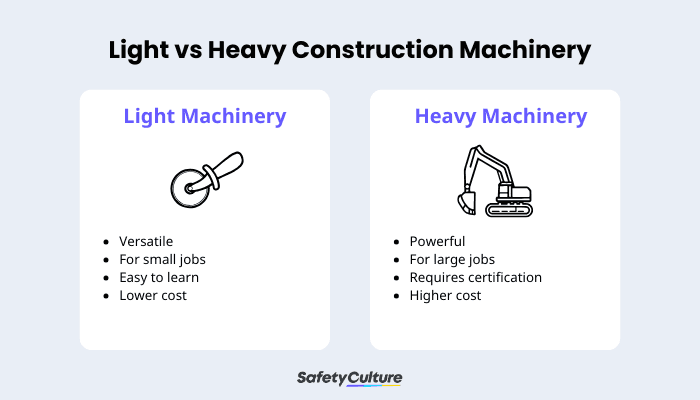
Light construction machinery are typically built for speed and versatility, making them best for smaller jobs like residential or landscaping projects. Usually, one person is enough to run these machines with basic on-the-job training. Common examples of light construction machinery include the following:
Tamping rammers
Asphalt cutters
Skid steer loaders
Plate compactors
On the other hand, heavy machinery are built for power, durability, and massive earthmoving tasks like building highways or skyscrapers. Once a piece of equipment weighs more than 5,000 pounds it’s classified as heavy machinery. For safety reasons, more than one person can sometimes be required to run these machines, along with a specialized certification or licence. Common examples of heavy construction machinery include:
Bulldozers
Backhoes
Excavators
Tower canes
Common Types
Here are some examples of construction machinery you may find on-site. This includes both light and heavy machinery that is commonly used in construction.
Rammers
Rammers are machines that compact the ground. These machines use direct impact force to compress the soil and compact it. These are widely used for flooring, making trenches, and any other task that requires you to flatten the earth.
Walk-behind rollers
Walk-behind rollers are compactors designed for smaller spaces like sidewalks and trenches. These machines flatten the ground while, as the name suggests, the operator walks behind the rollers, pushing them over the surface. These compactors use vibrations to compact the ground and flatten it as much as possible.
Excavators
The excavator is probably the most widely used piece of heavy construction machinery. These machines are made for excavating large areas. However, they can also be used for demolition purposes such as cutting trees, tearing down buildings, and more. These machines are also used for dredging rivers and heavy lifting.
Bulldozers
These heavy machines are designed to remove a significant layer of topsoil and is often used in land clearing. The bulldozer has a metal plate on its front that removes weak soil and rock as the operator drives the machine. You can adjust the soil or rock you remove by lowering or raising the plate.
Trenchers
These machines are called trenchers because they are designed to create trenches in the soil. The trenches you can make with trenchers are usually used for pipelines, cable laying, and drainage. Most trenchers consist of a digging wheel in front that has a digging tooth, making them effective for excavating harder layers of soil.
Loaders
Loaders are very important pieces of heavy machinery in construction projects and sites. These machines are used to place heavy loads on the back of trucks. These loads are typically thousands of pounds, which means that you will need strong and durable machines to lift them and place them onto trucks.
Backhoes
The backhoe is another common piece of heavy machinery. These work similarly to excavators, but the hoe arrangement for excavating is placed on the back. The front of the backhoe, on hand, should have a loading bucket. That way, you can use the backhoe for excavating and loading, which is why it’s a very useful piece of construction machinery.
Graders
Graders are typically used for constructing roads. These machines have a horizontal blade between the back and front wheels that you can lower to the ground to even out the soil surface. You can also use graders to remove snow from roads and remove unnecessary soil from the ground.
Dump trucks
Dump trucks are used to transport heavy loads from one place to another. For example, you can use dump trucks to carry soil from the construction site to a dump site. Or, you can use them for carrying materials from one site to another without having to take multiple trips.
Related Safety Standards and Regulations
In the US, any operation of construction machinery is strictly regulated by the Occupational Safety and Health Administration (OSHA) based on the equipment’s function and level of risk, regardless of light or heavy machinery classification. Some OSHA regulations are:
Cranes & Derricks (29 CFR 1926 Subpart CC): Under this regulation, operators must be certified by an accredited group such as the National Commission for the Certification of Crane Operators (NCCCO) before working with construction machinery. Anyone giving hand signals also needs to be qualified.
Excavation Equipment (29 CFR 1926 Subpart P): Before any digging begins, workers on construction sites must have a competent person inspect the trenches, soil and equipment being used. If the trench is deeper than 5 feet, workers will need a protective system like shielding, shoring or sloping.
Operator Training & Qualification (29 CFR 1926.21): This OSHA regulation requires construction workers to prove they’ve been trained for the use of various construction machinery. Make sure your equipment and training records are up to date and easy to access during an inspection.
Additionally, while OSHA covers most workplace safety rules in the US, there are other safety organizations like the Mine Safety and Health Administration (MSHA), which provides guidelines for safe construction machinery use. In particular, they set provisions that apply when you’re working in a mine, pit or quarry. MSHA inspectors have the authority to shut down a site on the spot if their set safety standards aren’t being followed.
Streamline Your Construction Operations
Unlock the power of data-driven insights, standardized processes, and effective communication to improve efficiency and productivity across all jobsites.
Maintenance and Operating Tips
There are many types of construction machinery, and most of the time, each type of machinery comes with its own set of maintenance and operating instructions. It’s important to follow these instructions down to the last detail to ensure that all employees are safe and equipment functions properly.
Here are some tips to keep in mind when operating and maintaining construction machinery:
Clean the machinery regularly.
Make sure everyone who operates machinery has received appropriate training.
Always monitor fluid levels.
Conduct regular inspections.
Understand your equipment limits and don’t go above limits.
Lubricate your equipment regularly.
Always follow the appropriate safety procedure when operating construction machinery.
Again, the exact practices you should perform to maintain construction machinery varies depending on the machinery you have. However, it’s very important that everyone involved in operating and maintaining the construction machinery remains on the same page.
That way, operating and maintaining the machinery safely will be much easier for everyone on-site.
Keep Your Machinery and Operations in Check with SafetyCulture
Why Use SafetyCulture?
SafetyCulture is a mobile-first operations platform adopted across industries such as manufacturing, mining, construction, retail, and hospitality. It’s designed to equip leaders and working teams with the knowledge and tools to do their best work—to the safest and highest standard.
Streamline processes, eliminate bottlenecks, enhance resource utilization, and build an agile and scalable infrastructure with SafetyCulture. Strive for operational excellence to boost competitive advantage, foster sustainable growth, and deliver long-term value.
Save time and reduce costs
Stay on top of risks and incidents
Boost productivity and efficiency
Enhance communication and collaboration
Discover improvement opportunities
Make data-driven business decisions
FAQs About Construction Machinery
Related articles
Facility Management
Maintenance

The Ultimate Guide to Warehouse Layout Optimization
Learn effective strategies in warehouse layout optimization to maximize space, streamline flow, and support efficient production operations.
Facility Management
Maintenance

Workplace Management: The Ultimate Guide
Learn how workplace management drives safe, efficient operations through frontline visibility, consistency, and continuous improvement.
Facility Management
Maintenance

A Guide to Retail Facility Management
Improve store performance with effective retail facility management, and learn its key components, challenges, and top solutions for success.