Yokoten: The Key to Quality Improvement
Understand the Japanese work principle, Yokoten, and discover how you can implement it in your business for maximum efficiency and productivity.

Understand the Japanese work principle, Yokoten, and discover how you can implement it in your business for maximum efficiency and productivity.
Published 13 Dec 2023
Article by
9 min read
Yokoten is a Japanese word that roughly translates to “horizontal deployment.” It refers to the idea of transferring knowledge among peers rather than being passed down from top-level management. By employing the principle of Yokoten, the entire team becomes aware of emerging issues, enabling them to share their solutions in case a similar issue arises in the future.
Think of Yokoten as the foundation for creating a process that everyone in the organization can understand and follow. Without a standardized process, employees are often left to figure things out on their own, leading to inconsistency and confusion. To solve this problem, Yokoten provides a framework for everyone to follow so that everyone is on the same page.
In a nutshell, Yokoten is about collecting and sharing knowledge so that everyone in the organization has access to the same information. This helps eliminate misunderstandings and allows everyone to work towards the same goal.
There are many benefits of Yokoten, such as the following:
Improved communication across teams
Reduced waste and improved quality
Easier to identify and fix any problems before they become bigger issues
Improved overall efficiency while preventing any bottlenecks from happening
In Lean manufacturing, Yokoten is a process of spreading and sharing knowledge throughout the organization. It is essential in problem-solving because it allows all members of the team to be aware of the problem and potential solutions.
Yokoten can happen at any point in the problem-solving cycle but is typically most effective when it happens as early as possible. This allows more time to develop creative solutions and test them before the problem becomes too large.
You can follow some of these simple steps when using Yokoten:
Identify and clarify the problem.
Analyze and sort it out.
Determine the objective.
Figure out what is the root cause of the problem.
Develop solutions.
See countermeasures through.
Evaluate the process and end result.
Learn from mistakes and standardized success.
If you’re looking to implement Yokoten in your own organization, there are a few things to keep in mind:
Make sure that everyone is on board and understands why it’s important.
Create a system for sharing information effectively.
Be patient, for Yokoten takes time to properly implement before seeing results.
While Yokoten was a Japanese term in itself, its usage as a management discipline was developed by Toyota as a business practice. Currently, it is a fundamental behavior deeply established in the Toyota Production System (TPS) and codified as the 8th Toyota business practice: Standardize and Share Successes.
By utilizing the principle of Yokoten, Toyota successfully reduced paint usage across its global plants by 20%. This achievement stemmed from a newly developed method implemented at the Takahama plant, which was quickly adopted as a global initiative across all Toyota factories worldwide. This approach contributed to a significant boost in cost efficiency across all sites.
Toyota also shared this discipline through its collaboration with the St. Bernard Project (SBP), a non-profit organization that rebuilt homes for Hurricane Katrina victims. They encouraged the use of job instruction sheets and A3 reports to assess problems, identify solutions, and effectively implement fixes across various situations. As a result, lead time was greatly reduced by almost 50% (from 116 to 60 days).
The Catalan Health Service achieved significant progress by drawing inspiration from Instituto de Oncologia do Vale (IOV), a pioneer in lean healthcare located in São José dos Campos, Brazil. By implementing the proven solutions of another successful organization, they were able to launch a system-wide project that improved logistics and primary care units across the city.
They used Yokoten tools, such as job instruction sheets and A3 problem-solving documents from IOV, as templates for their primary care units’ specific needs. They encouraged staff from various units to visit IOV to observe how the logistics changes were implemented in practice. Here, they evaluated how to adapt these methods in their own unit without imposing a one-size-fits-all solution.
In doing this, the Catalan Health Service observed a lot of notable results. Overall logistics costs were cut by 89.6% (from R$ 5.4 million in 2019 to R$ 570,000). Their central warehouse inventory dropped from 500,000 units per month to 175,000, further reducing storage costs. Supply time per unit dropped from 240 minutes to 168 minutes, saving 55 hours of labor per month across the network.
Another company that has effectively established the Yokoten principle in its process is Spanish hotel chain Dreamplace Hotels & Resorts. By building on continuous improvement and supporting it with a capability development program called Plan Talento, they were able to transform the quality and efficiency of their service.
Dreamplace employed Lean Days, a core Yokoten segment where cross-functional teams from different branches present their A3 problem-solving reports. Here, they highlight the improvements they made, the logics used, and the lessons learned so that other hotels can adopt them. Key leaders are also rotated between different hotel properties to spread their lean capability and experience.
Other tools that helped Dreamplace establish Yokoten into their daily operations include value stream maps they call “Arrows.” It connected the guest journey from the rooms division to food and beverage, visualizing how the successes of one department can impact another.
As of this year, the Dreamplace hotel chain has achieved operating costs that are 15–20% lower than those of its competitors. In 2024 alone, they eliminated 1.1 million minutes of non-value-adding work across their hotel branches. They also scored an 85% adherence rate to operational standards, further demonstrating Yokoten’s impact on various aspects of the business, from cost efficiency to compliance.
One of the most important aspects of Yokoten is its ability to be applied in a variety of ways across an organization. Here are a few examples:
Board or Executive Level – A key part of Yokoten is the executive briefings which help to keep everyone aligned and informed on current progress and challenges.
Innovation or Process Development – Implementing a suggestion system and promoting cross-functional collaboration with the House of Lean will help teams quickly develop new ideas.
Operations or Business Units – Applying lean principles such as kanban boards and value-stream mapping will help to improve efficiency and reduce waste.
Marketing or Customer Service – Capturing customer feedback through the use of the Plan-Do-Check-Act (PDCA) method and ideas and sharing them across departments will improve the overall customer experience.
Integrating improvement in practice
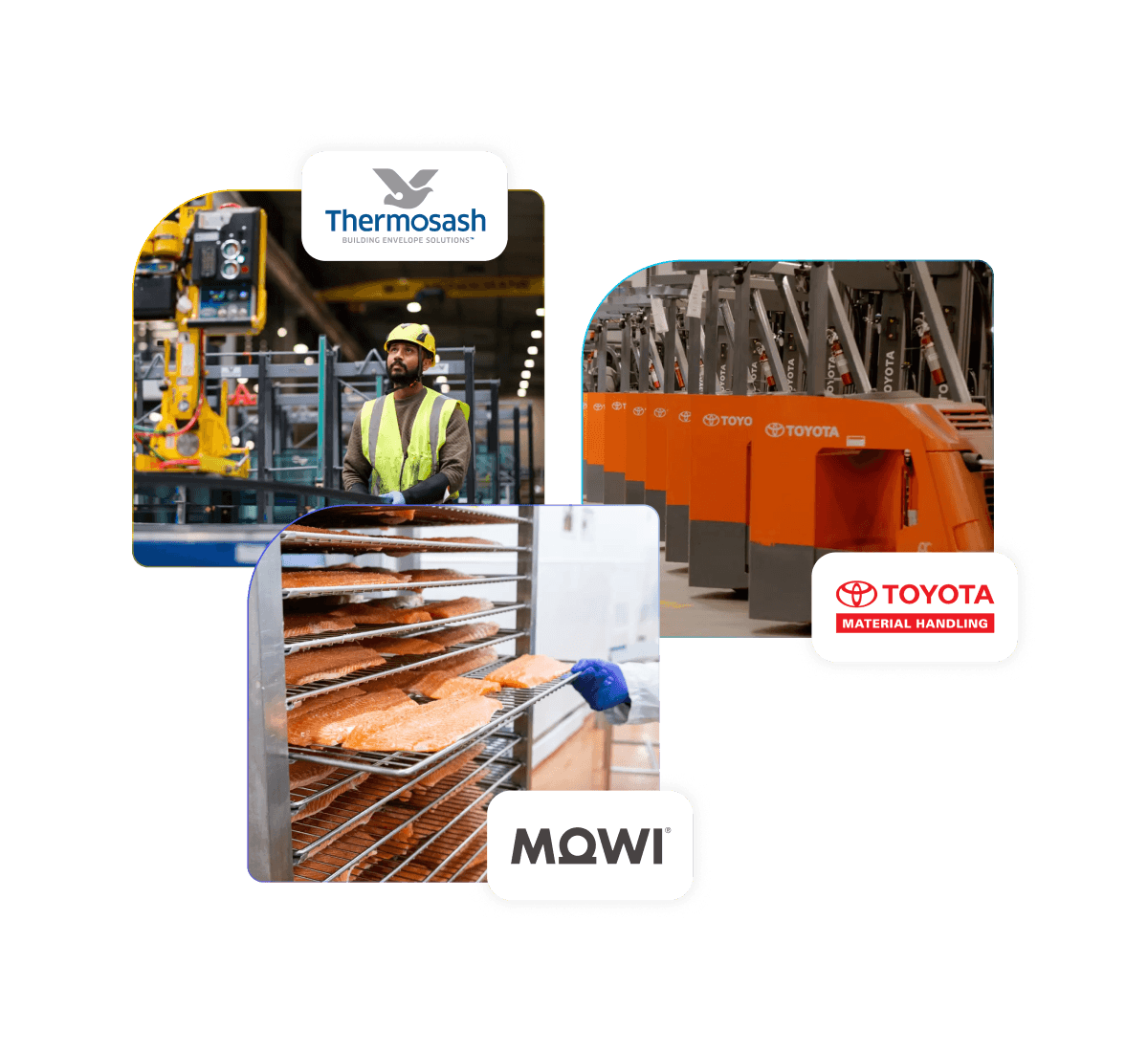
Discover how organizations like Toyota Material Handling, Mowi, Thermosash and Byblos Constructions are integrating improvement into how work is done to improve efficiency, reduce wastage and surface actionable insights across their operations.
Implementing Yokoten may seem straightforward in theory, but companies face various challenges that must be addressed to achieve optimal results.
Many organizations operate in silos, where departments focus only on their own KPIs. This isolation prevents teams from sharing solutions, leading to less efficient processes.
Solutions:
Set up regular cross‑functional huddles or “yokoten meetings” where teams briefly share one recent improvement and its impact.
Use simple visual boards or an internal page to log improvements in a consistent format (problem, countermeasure, result, contact person).
Encourage gemba walks across departments so people see each other’s improvements in real life, not just in slides.
Some employees hesitate to share knowledge because they worry it reduces their personal value or exposes their work to criticism. Others resist implementation because they doubt it would work for the current system.
Solutions:
Recognize and spotlight people who both share and adopt improvements, showing that their behavior is valued.
Involve frontline staff in adapting the idea to their area, rather than handing them a finished solution and expecting blind compliance.
Make changes small and test‑based through pilots and trials, so people feel safe to experiment without feeling stuck with a big, permanent change.
Many organizations mistakenly interpret the Yokoten principle as a one-size-fits-all solution. The truth is, a core part of Yokoten is understanding the underlying problem and conditions. It involves evaluating the logic behind the solution so teams can determine the best approach for their unique situation.
Solutions:
Teach teams to start with the problem, not the tool. Let them focus on answering the question: “What problem did this solve there, and do we have the same problem here?”
Use a standard checklist when transferring an idea: what’s the demand level, staffing, layout, skills, and constraints in the new area?
Encourage a “copy and adapt” method. Try a basic version of the practice, then deliberately tweak it to fit local conditions.
Improvements often remain in people’s heads and are not clearly documented, making it harder to deploy to other teams. Other times, there’s also a lack of metrics that could highlight the urgency of implementing changes.
Solutions:
Require every shared improvement to have a simple standard: one page on how and why, along with the key conditions for success.
Always attach a small set of before/after metrics (e.g., lead time, defects, changeover time) so others can see the benefit at a glance.
Store standards and improvement stories in a central, searchable location rather than scattered drives and emails.
Sudden changes can be a significant adjustment for the team, and it can get more confusing when materials and information are not centralized. Furthermore, when resources are scattered, it’s unclear who is responsible for tracking specific improvements.
Solutions:
Filter your improvements. Only share those that are clearly linked to strategic goals (safety, quality, cost, delivery, morale) to avoid straying away from the company’s overall vision.
Tag each improvement with “who should care” (e.g., all warehouses, all call centers) so people can quickly see relevance.
For each high‑impact idea, assign a specific person and due date for testing it in another area, and review status in regular meetings.
SafetyCulture is a mobile-first operations platform adopted across industries such as manufacturing, mining, construction, retail, and hospitality. It’s designed to equip leaders and working teams with the knowledge and tools to do their best work—to the safest and highest standard.
Implement Yokoten within your company with SafetyCulture. Streamline processes, eliminate bottlenecks, enhance resource utilization, and build an agile and scalable infrastructure. With easy-to-use tools, you can create and share inspection checklists, track progress, and collect feedback from team members. This ensures that everyone is on the same page and has access to the information they need to do their job successfully.
✓ Save time and reduce costs
✓ Stay on top of risks and incidents
✓ Boost productivity and efficiency
✓ Enhance communication and collaboration
✓ Discover improvement opportunities
✓ Make data-driven business decisions