A Brief Guide to Project Closure
Learn more about project closure, how it works, and its importance.

Learn more about project closure, how it works, and its importance.
Published 28 Apr 2026
Article by
3 min read
Project closure is the last phase in the project management process or lifecycle. In this stage, the project manager, their team, and their stakeholders review their deliverables, the quality of their work, and if the intended outcome was achieved and satisfactory.
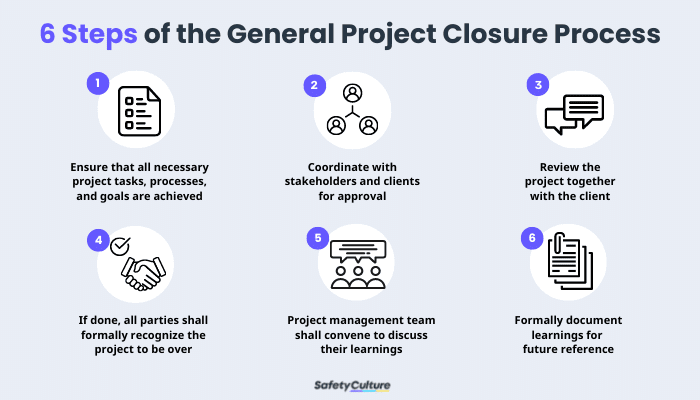
6 Steps of the General Project Closure Process
According to the Project Management Institute, the typical project closure process can be summarized following this order of events:
First, the project manager and their team should ensure that all necessary project tasks, processes, and goals of the project management system have been properly executed and achieved.
Once the main project management team deems all work to be completed, they shall coordinate with their stakeholders and clients to have the project checked for approval. In cases where there is a project sponsor, they should also be consulted.
Together, the project management team and their client shall review the project and guarantee that all tasks, legal processes, and quality checks have been performed by all parties involved.
If it is agreed that everything is done, all parties shall formally recognize the project to be over.
After the formal closure or end of the project, the project management team shall convene to discuss the issues they encountered along the way, the actions they took to solve them, and what they learned from the experience overall.
Their learnings and observations shall be documented for future reference, along with recommendations for future projects or revisions or for turning over the project to another management team if necessary.
Project closure may seem like a natural event to happen in the order of project management, but it is essential to do it formally and have it on paper.
Improper or informal project closure can lead to misunderstandings between the project managers and their clients. Certain paperwork, especially legal ones, may not be filed, which can lead to issues with their local government. This can cause problems that may affect project delivery and turnover.
Another effect of miscommunication is that the client, without having a proper project closure, may not be properly trained or equipped to maintain or handle the finished project. If the project is a building, the client may not know how to properly keep it in good condition without a proper discussion. Similarly, the project manager may fail to properly communicate with the client how to properly care for the project, which can also be detrimental to them both.
The lack of a formal project closure can also affect how project managing teams work in the future. It is important for them to discuss their learnings, issues, and takeaways together after the project closure, as it can help them be better prepared for future projects and do better.
Ensure all steps of project management are fulfilled before project closure with a smart, mobile-ready digital auditing app. SafetyCulture (formerly iAuditor) is one such tool that project managers and their teams can use.
SafetyCulture offers checklists to help you with your project auditing needs, from project initiation to project closure and project delivery. To get started, you can download free project closure and auditing checklist templates from SafetyCulture’s Public Library and just edit them as you see fit. You also have the option to create your own checklists from scratch, allowing you to make a checklist that is uniquely yours and catered to you and your clients’ needs.
With SafetyCulture, you can also:
Report issues in project closure and raise actions to address them
Provide a heads-up to your entire team or organization from the app, wherever and whenever
Sort your checklist templates in folders and bookmarks in-app
Set permissions to allow certain access controls to specific staff or a whole group
Provide training to your staff on project closure and management by utilizing Training by SafetyCulture into your system