A Guide to Disaster Preparedness
Be prepared for disasters and emergencies and ensure safety and survival at all times.
Be prepared for disasters and emergencies and ensure safety and survival at all times.
Published 28 Apr 2026
Article by
6 min read
Disaster preparedness refers to the set of measures and practices done to mitigate the effects of disasters such as storms, hurricanes, floods, earthquakes, and the like on businesses, communities, and individuals. It involves creating emergency plans, preparing specific kits for different disasters and incidents, managing supplies, and conducting regular training.
Each member of society, from the government to businesses, to communities, to individuals, are all responsible for preparing for disasters, not only for the organization that they belong to or their own sake, but for those around them. Disaster preparedness serves as a proactive strategy to minimize loss of life, property damage, and social disruption. By having comprehensive plans in place, organizations, communities, and individuals can respond swiftly and effectively, reducing the damage and chaos that often accompanies emergencies.
Disaster preparedness is also not just limited to immediate response following a harrowing event, as it also covers the recovery phase that follows it. Proper planning and preparedness ensure that the recovery process is smoother and faster, minimizing the long-term impacts of disasters. Furthermore, preparedness efforts foster a sense of unity and collaboration within communities, as individuals come together to support one another during challenging times.
Other benefits disaster preparedness offers include:
Reduced loss of life and property
Faster recovery and restoration
Enhanced collaboration
Preparing for disasters can be a long process, as disasters themselves can be unpredictable. It has now become the norm to have disaster plans in case of emergencies, as well as disaster kits, and regular discussions on the possible disasters we may face in our daily lives. There is also the International Day for Disaster Risk Reduction, which also places emphasis on ensuring preparedness.
A good way to ensure you and your community are prepared for a disaster includes the following:
Maintaining equipment to be used for disasters regularly
Establishing a clear chain of command and order of operations to be followed in times of disaster
Having disaster preparedness kits easily accessible to you at all times with the following items:
Non-perishable food
Water
Medications
Clothes
Important documents
First aid supplies
Whistles and flash lights
Maps
Radio with batteries
Conducting or attending r egular training sessions related to disaster preparedness
Ensuring that evacuation routes are accessible and inclusive, especially for those with disabilities
Developing a flood risk management plan
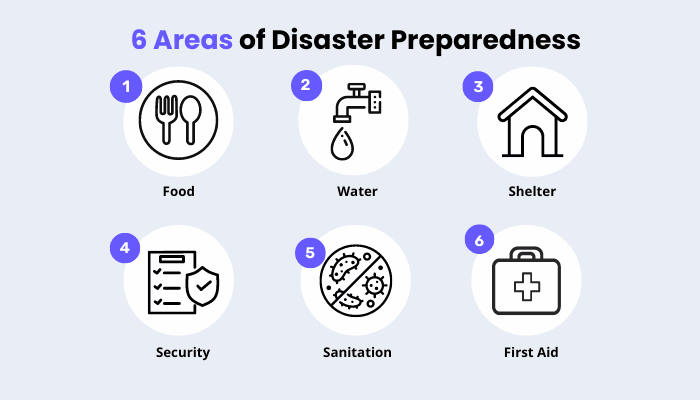
Disaster preparedness is focused on 6 key areas and ensuring they're available to us even in times of emergency. These are:
Food: Is there enough nutritional food to go around, and is it stored properly?
Water: Is there access to clean drinking water?
Shelter: Where is the nearest and safest shelter available?
Security: How can you keep yourself safe in times of disaster and its aftermath?
Sanitation: Can you keep yourself sanitized, disinfected, and free from injury regularly?
First aid: Do you have the resources to treat any possible injuries?
These areas are the main things to consider when preparing for disasters. Having easy access to these consistently is essential to human survival, thus making them the focus of all disaster preparedness plans and kits.
Businesses have to consider different things for disaster preparedness compared to governments, communities, and individuals. Not properly preparing for a disaster can lead to large financial losses and employee injuries and deaths, hence the need for the following:
Risk assessment plans: It’s important for businesses to identify the different risks associated with different types of disasters before they can properly engage in disaster preparedness planning. After identifying and assessing risks, it’s essential to create a mitigation plan for them as well.
Communication plans and strategies: Businesses should establish a clean chain of common and communication plans for when a disaster strikes. All employees and stakeholders should be made aware of these plans in advance so that when an actual disaster happens, everyone is prepared and knows who to contact in case of emergencies.
Regular disaster training: Businesses should provide employees regular training for various disasters with drills, lectures, and seminars. Doing so helps workers stay prepared for disasters, especially if one strikes while at work.
Business Continuity Plans (BCPs): A BCP is a document that outlines the different ways a business can stay operational during or after a disaster, incident, or emergency. Having one is an essential part of disaster preparedness for businesses.
Disaster recovery plans: While preparing for a disaster is important, it’s also necessary to be prepared for the aftermath, especially in relation to cybersecurity, hardware failures, and power outages. Together with a BCP, having this plan helps ensure that operations can resume seamlessly after a disaster.
There is a wide range of technological advancements available today for both businesses and communities to ensure disaster preparedness, in line with global disaster risk reduction guidance such as the Sendai Framework, or to help with streamlining the process. Some of which are the following:
Simulation technology: Utilizing simulation technology can help businesses and communities better visualize possible disasters, which can lead to improvements in their disaster planning processes.
Digital forms and templates: Digital BCPs and emergency action plans, especially templated ones, help businesses ensure their disaster preparedness efforts are fit for their needs and circumstances.
Cloud storage: Compared to relying on physical storage for important documents, it’s best to invest in cloud storage solutions so their files will be accessible even during or after a disaster with no issue.
Real-time monitoring solutions: Technology such as Internet of Things (IoT) sensors, weather monitoring tools, and vibration sensors can help with monitoring possible disasters in real-time, helping businesses and communities prepare more efficiently.
Mobile-ready training materials: Making disaster preparedness training materials mobile-friendly promotes learning on-the-go for workers, allowing them to stay updated on changes in best practices in real time, wherever they may be.
Remote communication systems: The use of digital communication systems, lone worker monitoring systems, and other remote communication tools should be considered when preparing for disasters, as these can help connect individuals to their employers, community members, or local government authorities.
SafetyCulture is a mobile-first operations platform adopted across industries such as manufacturing, mining, construction, retail, and hospitality. It’s designed to equip leaders and working teams with the knowledge and tools to do their best work—to the safest and highest standard.
Efficiently manage and streamline health and safety processes across the organization, including incident management, safety audits and inspections, risk assessment, waste management, and more, using a comprehensive EHS software solution.
✓ Save time and reduce costs
✓ Stay on top of risks and incidents
✓ Boost productivity and efficiency
✓ Enhance communication and collaboration
✓ Discover improvement opportunities
✓ Make data-driven business decisions