A Guide to Site Clearing
Discover what site clearing is, why it’s important, when you need to perform it, and the equipment you need to effectively clear a site.
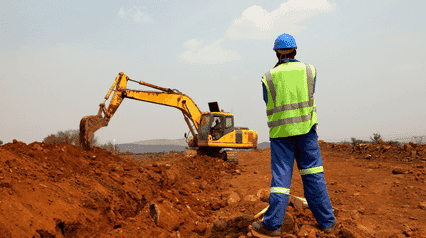
Discover what site clearing is, why it’s important, when you need to perform it, and the equipment you need to effectively clear a site.
Published 28 Apr 2026
Article by
5 min read
Site clearing is the first step in any construction project that involves removing any elements on the land that may get in the way of the construction process. This includes shrubs, vegetation, rocks, and other debris. The goal of site clearing is to create a construction site conducive to the project, allowing the construction team to start working on building the actual structure.
There are many things to consider when clearing a site. To start, it’s important to clear out anything that can get in the way of the construction project to allow for a safe and secure structure. However, it’s also essential for teams to consider the environmental impact of their site clearing operations and take steps to reduce it.
Most construction sites and properties are not ready for a structure to be built on the land. This is because most properties contain a lot of debris and vegetation that will prevent the team from building a solid foundation and a safe structure.
Site clearing can be seen as the construction equivalent of priming a surface before painting for a better overall output. Without site clearing, teams will be working on uneven land with debris that can get in the way of establishing solid foundations and meeting the ultimate goal of the project.
On top of that, most localities require teams to effectively clear a site before commencing with the project. So, not only is it essential in improving the overall safety and stability of the project, most construction projects won’t be allowed to start unless the site has been properly cleared.
Site clearing is necessary for all construction projects, as it is the first step in this process. Even if a property has minimal debris, the team must clear the site before starting construction. Without clearing the site, it will be much harder to build solid and stable structures. On top of that, an uncleared area poses many hazards to workers that can lead to unforeseen accidents and incidents on-site.
Before teams start breaking ground and establishing the foundations of a project, it’s important for them to clear the site first. So, before your team starts breaking ground and implementing the construction project, it’s important to ensure that the site has been properly cleared and is free from debris.
Site clearance is a very comprehensive process with many steps, each of which with its own requirements. On top of that, site clearing may look different depending on the type of project going on and the state of the property before clearing. However, these are the steps that most teams take when performing site clearing:
Determining the current state of the land and the hazards that needs to be cleared
Securing the necessary permits to ensure compliance with local regulations, zoning, and environmental laws.
Establishing a strategy for clearing the vegetation, rocks, and other debris and determining what equipment is needed
Clearing out any debris, removing old structures, and ensuring the site is graded and cleared
Conducting a final inspection to make sure the site is cleared and ready for the next phase
Site clearance in construction is the first step in getting a site ready, but it’s only one part of the wider site preparation process. After the site is cleared, teams move on to surveying, soil testing, and other preparation tasks before the actual construction begins.
Unlock the power of data-driven insights, standardized processes, and effective communication to improve efficiency and productivity across all jobsites.
The type of equipment you will need for a clearing site varies depending on the debris you need to clear, the size of the property, and other factors. You need the right site clearing equipment to avoid disturbing the soil or causing unnecessary erosion. Here are some of the most widely used pieces of equipment for site clearing and how they are used:
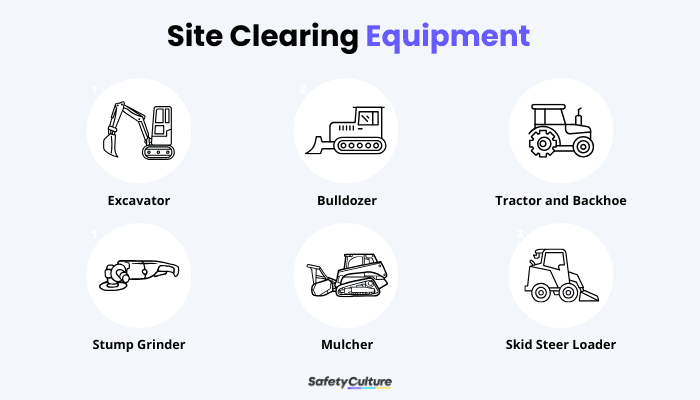
Site Clearing Equipment
Excavators: These are often used for large-scale land clearing projects and can remove debris while also being used for digging, excavation, and earthmoving operations.
Bulldozers: They are very recognizable construction equipment, typically used to push debris away from the site while leveling the ground and prepping it for the construction project.
Tractorsand backhoes: These pieces can be used for digging, but they are also highly effective at removing debris such as vegetation, large rocks, trees, and more.
Stump grinder: This simple machine is used specifically for removing tree stumps after the tree has been cleared.
Mulcher: This is used for clearing shrubs, underbrush, and small trees while shredding them to turn them into mulch.
Skid steer loaders: These are used to carry, pick up, and transfer dirt, rocks, and other large pieces of debris on a site.
While these aren’t the only pieces of equipment you’ll need for site clearing, they are some of the most widely used or important. Thus, it’s likely that your site clearing processes may require all of these tools, just one of them, or specific tools not mentioned in the list above.
SafetyCulture is a mobile-first operations platform adopted across industries such as manufacturing, mining, construction, retail, and hospitality. It’s designed to equip leaders and working teams with the knowledge and tools to do their best work—to the safest and highest standard.
Promote a culture of accountability and transparency within your organization where every member takes ownership of their actions. Align governance practices, enhance risk management protocols, and ensure compliance with legal requirements and internal policies by streamlining and standardizing workflows through a unified platform.
✓ Save time and reduce costs ✓ Stay on top of risks and incidents ✓ Boost productivity and efficiency ✓ Enhance communication and collaboration ✓ Discover improvement opportunities ✓ Make data-driven business decisions