A Short Introduction to Commercial Construction Management
Learn more about commercial construction management and what it entails for you.
Learn more about commercial construction management and what it entails for you.
Published 28 Apr 2026
Article by
3 min read
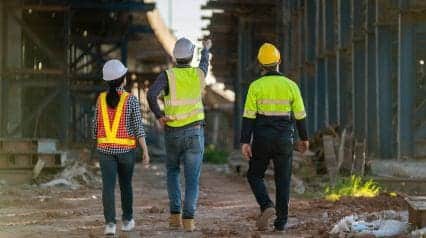
Commercial construction management refers to the tasks related to planning, designing, and executing any building or establishment meant to generate profit. This is often done for office buildings, malls and retail stores, warehouses, factories, and the like. Some common responsibilities include ensuring compliance with safety regulations, managing project and financial plans, and more.
Commercial construction management is the backbone of all commercial projects, making it essential to the construction industry and process. It is only with proper commercial construction management, a detailed plan, and a dedicated Construction Manager (CM) that a construction project can succeed and operate safely during and after project completion.
Some aspects of overall construction management that having a CM and an efficient commercial construction management plan can improve are:
Risk and safety management
Finances and budgeting
Quality management
Time management
Compliance with laws and regulations
Unlock the power of data-driven insights, standardized processes, and effective communication to improve efficiency and productivity across all jobsites.
Residential construction projects and commercial construction projects are similar in how they are carried out. However, when it comes to specific steps, responsibilities, tasks, and requirements, they are very different.
By definition, a residential construction project refers to the creation of houses, apartments, flats, condominiums, and other places where people live. On the other hand, commercial spaces are those used for generating income. As commercial spaces are often larger structures than residential establishments, they are more complex and require more materials and management. The standards that a commercial construction project needs to comply with are different as well, since commercial establishments will have more users.
Additionally, compared to residential construction projects, the amount of people involved in commercial construction is twice or thrice the size, including but not limited to stakeholders, employees, customers, and more. This makes commercial projects more expensive both in production and in management, thus the need for a stable and thorough commercial construction management, plan, and manager.
Common tasks a commercial construction management team does for a project include the following:
Analyze the feasibility of a certain project
Identify points for improvement and how to do so
Address issues in labor, supply chain disruptions, procurement, and documentation
Creating and managing timelines and deadlines
Allocating resources and finances to the right teams as needed
A digital solution can help greatly with managing a commercial construction project. Watch this video to learn more how it works:


Audit time is reduced by 50%, and even by 70% for a 5S audit. Reporting on a dangerous situation used to take us 10 minutes, compared with 1 minute today with SafetyCulture.

Commerical construction management has many moving parts to it. To effectively manage a commercial construction project of any scale, it is necessary to have a team with the right tools at hand in order to properly streamline operations and provide the best results for all.
Technology is revolutionizing the construction industry, enhancing efficiency, accuracy, and safety, thus, it would be best to utilize it in commercial construction management. One such new technology is an operations platform such as SafetyCulture (formerly iAuditor). Ready for mobile use and offline use anytime and anywhere, SafetyCulture aims to assist commercial construction managers with their tasks and ensure a safe and efficient workflow for all.
One way SafetyCulture can help commercial construction managers is through its form builder and template Public Library, to document plans and list down necessary tasks. You can view your findings in a dedicated analytics dashboard afterward, then export them as necessary and integrate them with other workflow software.
You can also use SafetyCulture to do the following:
Tag work locations and sites for easy tracking in case of emergency
Report issues in commercial construction management and planning, and create corrective actions for them
Communicate with the whole construction management team with a Heads Up
Schedule meetings and deadlines in-app and create notifications for them
Monitor lone construction workers from any field or project with SHEQSY by SafetyCulture
Insure workers on the field with Care
Purchase the necessary work gear from SafetyCulture Marketplace
Manage assets such as hand tools, vehicles, and other construction necessities
Train staff on proper project management tasks, skills, regulations, and safety practices