Use this digital checklist to verify the reading accuracy of temperature sensors. This temperature sensor verification form is designed to centralize temperature readings from sensors and ensure they comply with established thresholds or food safety standards.
This checklist can also be used to:
Check whether temperature readings are within acceptable ranges
Investigate and identify the factors that are causing temperature deviations
Assign corrective actions to prevent product loss
Verify the accessibility and retention of the recorded logs
A temperature sensor verification form is a structured document used to verify and record the calibration and accuracy of temperature sensors, ensuring they provide correct and consistent temperature readings. This checklist is designed to help users easily verify that sensor temperature readings comply with regulatory standards, strengthening effective temperature control for food safety in businesses.
Why Is It Important?
A temperature sensor verification form is crucial for verifying and testing the effectiveness of temperature sensors used for temperature control. Using this checklist also provides benefits such as:
Adhering to food safety regulations: Using this checklist streamlines documentation for instrument calibrations required for verification activities under a Hazard Analysis Critical Control Point (HACCP) Plan.
Preventing foodborne illnesses: The checklist ensures proper temperature control is followed to prevent foodborne illnesses such as Salmonella, E. coli, and Listeria.
Minimizing inventory losses: Having consistent record logs from the checklist also highlights equipment issues and failures, making it easier to take action and move food products to temporary storage units to prevent food waste.
What Should a Temperature Sensor Verification Form Include
A structured temperature sensor verification checklist should include key components to verify that temperature sensors are reliable and functional. These include the following:
Device and verification information
This section provides general information about the checklist, including the temperature sensor assets and the temperature-controlled storage units. It also includes details such as:
Reference standards to demonstrate the validity of reference measurements in accordance with national or international standards.
Test points and acceptance criteria to establish temperature test points, the maximum allowable tolerance values, and appropriate probe placements.
Measurement and drift validation
This section reviews and evaluates temperature readings from sensors and other technologies. It consists of four sub-sections:
Preparation: Focuses on the physical condition of the sensors, including their firmware versions, and battery levels.
Stabilization: Identifies environmental disturbances and positioning that could affect temperature readings.
Measurement: Specifies reference readings, consistency, and the unit of measurement used when recording.
Drift analysis: Triggers an investigation and an escalation when temperature deviations are found.
Data integrity and system reliability
Aside from investigating data gaps in recorded logs from temperature-data loggers, this section aims to confirm the reliability of the recorded data despite outages and connectivity issues. This means verifying the recorded timestamps, alerts, and data backups for recorded logs.
Adjustments and corrective actions
If a deviation from the allowable temperature tolerance occurs, this section outlines the necessary corrective measures, which may include flagging or replacing the device, in accordance with ISO 9001:2015 - 9.1. It also confirms product impact assessment and root cause analysis of these deviations.
Operational Applicability
This component focuses on the kind verification tests applicable to the equipment, particularly to the restaurant freezers and coolers. It verifies the team's training for using this checklist, internal audits for process compliance, and monitoring oversight from leaders.
Documentation and sign-off
This field assesses completion and provides ratings for readings and deviations, along with their verification date and next scheduled verification. It also checks the supervisory reviews, retrievability, and retention of such records.
How to Fill out this Checklist
To create an effective temperature sensor verification report, follow these steps to assess its calibration tests using the checklist:
Provide the necessary details on the title page. This usually includes the inspector or supervisor's name, the time and date, and the location where the inspection is being conducted.
Identify the temperature sensor assets and their classifications. It’s also important to specify the reference standards used and set acceptable tolerance values for verification.
Record and evaluate the logged temperature readings for deviations from the established tolerance values. Additionally, initiate a root cause analysis or escalation to address deviations.
Determine whether replacement is needed or if the device should be flagged for re-verification once analysis and assessment are completed. Assign corrective actions needed to address the identified issues.
Attach media annotations and notes to provide evidence of temperature deviations or sensor errors.
Complete the checklist with a sign-off.
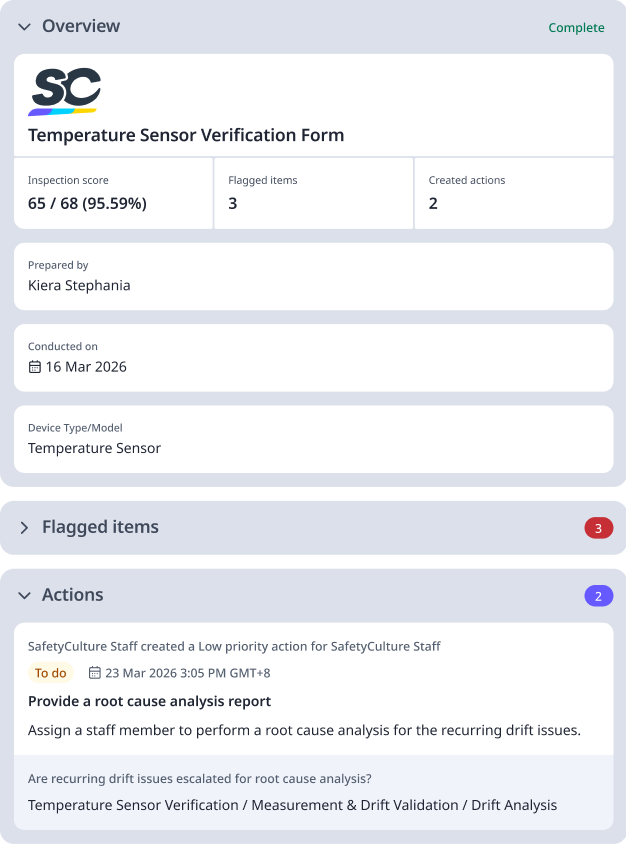
Sample Temperature Sensor Verification Report
For reference, here is a completed temperature sensor verification report:
The Importance of Temperature Sensors in Food Inventory
“We’ve now got 130 real-time temperature sensors in all our kitchens and trucks. They alert us if temperatures drop. The escalation process is automatic, so our team can act quickly to avoid stock loss.”