
Everything You Need To Know About Flood Restoration
Here’s an overview of the steps involved in the flood restoration process and some tips on what you can do to prevent floods.

Published 31 Oct 2025
Article by
6 min read
What is Flood Restoration?
Flood restoration is the process of returning a property to its pre-flood condition. This can be done through a number of different methods, depending on the extent of the flood damage. If the damage is minor, it may be possible to clean and repair the affected areas. In more severe cases, it may be necessary to replace damaged materials and structural elements.
Importance
Flooding is one of the most common weather disasters in the world, and it is now occurring in areas where it used to be unheard of. Several factors often cause floods, such as climate changes, hurricanes, tornadoes, and heavy rains. According to the US National Association of Insurance Commissioners, floods are the most common natural disaster in the country, accounting for 90% of all natural disasters experienced nationwide.
This is also experienced globally. Since the start of the 2000s, economic losses from flood-related incidents have exceeded $735 trillion worldwide, with at least 130,000 fatalities reported.
When floodwaters enter a home or business, they can cause extensive damage to the property and everything inside. After, it may be necessary to perform flood restoration.
Flood restoration refers to the process of cleaning, drying, repairing, repairing, and sanitizing a property after water damage from flooding. Efficient flood restoration makes sure the area is safe, structurally sound, and livable again, while also preventing further water damage to the home or business. Doing so also keeps the tenants or residents of a building safe, as unchecked flood damage can lead to molds, broken furniture, and infestations, all of which can cause injury and illness.
Improve your EHS Management
Cultivate a safe working environment and streamline compliance with our EHS solutions.
What are the Health Risks Associated with Flood Damage?
Flood damage introduces a mix of biological, chemical, and physical hazards into indoor environments. The risks begin as soon as water enters a structure and can persist long after water recedes if building materials remain damp or contaminants aren’t removed. Timely flood restoration reduces these risks, keeping property occupants safe quicker and faster.
Health risks associated with flood damage are extensive and affect physical, infectious, and mental health in both the short and long term. Major risks include:
Injuries and accidents such as falls, drownings, and trauma caused by fast-flowing or deep floodwaters, or from structural damages.
Infections from contaminated floodwater, which can carry sewage, bacteria, and other pathogens leading to wound infections, gastrointestinal illnesses like diarrhea, cholera, typhoid fever, hepatitis A, and diseases such as melioidosis and leptospirosis.
Respiratory infections and lung disease exacerbated by mold and damp conditions after floods.
Mental health impacts including anxiety, depression, and post-traumatic stress disorder from the possible trauma, displacement, and economic loss caused by flooding.
Additional hazards such as animal bites (from snakes or spiders) and exposure to blood-borne viruses in some flood recovery contexts.
Things to Do Immediately After a Flood Before Restoration
Before restoration and repair, it’s important to secure the property first and those residing within it. Before anything else, ensure all electrical hazards are turned off if they aren’t already. Make sure to also shut off gas-powered items, as they leak and affect the flood restoration and repair process. Evacuate if you are told to do so by authorities, and relay the announcement to your residents or tenants.
Additionally, make sure to also carefully check for structural damage such as foundation cracks, warped floors, or sagging roofs. If unsure, consider consulting professionals to examine the property. This can help identify what parts of the home or business to repair first, and which parts may need more attention than others. After, clean and disinfect everything that has come into contact with floodwaters.
What Steps are Involved in the Flood Restoration Process?
Now that we have a clear idea of what flood restoration is, let’s now move on to how the process works. Below are steps usually involved in the flood restoration process:
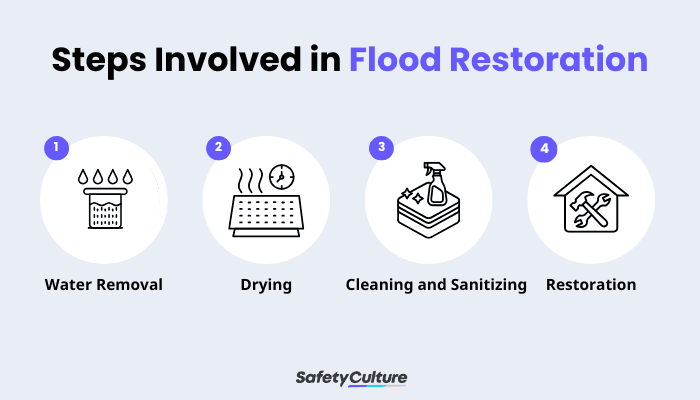
Step 1: Water Removal
The restoration process will begin with the removal of standing water from your home or business. This is often accomplished using industrial-strength pumps and vacuums. Once all the water has been removed, the drying process can begin.
Step 2: Drying
Once the standing water has been removed, those in charge of the flood restoration can get started. Typical professional restoration crews will use a variety of techniques and equipment to dry out your belongings and structure. This may include using dehumidifiers, air movers, and fans. Depending on the extent of the flooding, this drying process could take several days or even weeks.
Step 3: Cleaning and Sanitizing
After your home or business has been dried out, it is important to clean and sanitize all the surfaces to prevent mold growth. This is the first step after drying because mold can start growing in the first 24 to 48 hours after a flood, depending on the extent of the damage. Restoration crews will use specialized cleaners and disinfectants to cleanse your property. In some cases, damaged materials may need to be removed and replaced.
Step 4: Restoration
The final step in the flood restoration process is restoring your residential or commercial property back to its pre-flood condition. Depending on the extent of damage done, this can be as simple as replacing a few floorboards and conducting repairs where necessary. However, in more extreme cases, complete rebuilding may be necessary.
Streamline Your Construction Operations
Unlock the power of data-driven insights, standardized processes, and effective communication to improve efficiency and productivity across all jobsites.
Tips to Prevent Flood Damage from Reoccurring
Floods, just like other natural disasters like fires, are very unpredictable. This is why having a disaster preparedness plan is so important. Some things that you can do to prevent flood damage from reoccurring in the future are:
Improve your home or business property’s water drainage system. This can be done by installing and maintaining gutters and downspouts, or by redirecting rainwater away from your home with landscaping.
Elevate appliances and electronics. If possible, raise them off the floor and onto higher shelves to keep them above any potential floodwaters.
Store valuable items in waterproof containers or sealed bags. Consider keeping important documents in a waterproof fire-safe box or safe deposit box at your bank.
Be aware of flood warnings and watches in your area. Stay tuned to local news and weather reports for updates on any potential flooding threats.
Have an emergency plan in place for yourself and your family. Conduct a flood risk assessment regularly and know what to do and where to go if you need to evacuate your property quickly due to floodwaters.
Ensure Safe and Effective Flood Restoration Procedures with SafetyCulture
Why SafetyCulture
SafetyCulture is a mobile-first operations platform adopted across industries such as manufacturing, mining, construction, retail, and hospitality. It’s designed to equip leaders and working teams with the knowledge and tools to do their best work—to the safest and highest standard.
Efficiently manage and streamline health and safety processes across the organization, including incident management, safety audits and inspections, risk assessment, waste management, and more, using a comprehensive EHS software solution.
Save time and reduce costs
Stay on top of risks and incidents
Boost productivity and efficiency
Enhance communication and collaboration
Discover improvement opportunities
Make data-driven business decisions
FAQs About Flood Restoration
In this article
- What is Flood Restoration?
- Importance
- What are the Health Risks Associated with Flood Damage?
- Things to Do Immediately After a Flood Before Restoration
- What Steps are Involved in the Flood Restoration Process?
- Tips to Prevent Flood Damage from Reoccurring
- Ensure Safe and Effective Flood Restoration Procedures with SafetyCulture
- FAQs About Flood Restoration
Related articles
Safety
Public Safety

A Guide to Disaster Preparedness Training
Check out this guide to disaster preparedness training, including its key objectives and different approaches.
Safety
Public Safety

Understanding Disability and Disaster Risk Preparedness
Learn about disability-inclusive approaches to disaster risk preparedness, why it’s important, and tips for creating a preparedness plan.
Environmental Safety
Safety

Green Building for a Carbon-Neutral Future
Learn about green building, its components, and how it can help your business achieve its sustainability goals.