Fire Restoration: What’s the Process and How Long Does it Take?
Discover what fire restoration is, who performs this process, and the best practices professionals take to effectively restore a property from fire damage.
Discover what fire restoration is, who performs this process, and the best practices professionals take to effectively restore a property from fire damage.
Published 28 Apr 2026
Article by
5 min read
Fire restoration is a process that includes assessing property damages caused by fire, securing the property, and restoring it to its original state. The process involves removing and repairing parts of the infrastructure damaged by fire while also attending to any smoke damage left behind. It’s part of the larger disaster restoration umbrella that can include water damage restoration, weather damage restoration, and more.
Fires are devastating forces. In the US, the NFPA reported that property damage costs from fires reached $23 billion in 2023, which prompted significant reform in how they approach the restoration process.
The fire restoration process is critically important because it addresses the extensive damage caused by fire, smoke, and soot. This process not only repairs and reconstructs the physical structure but also ensures the removal of hazardous residues to restore air quality, which is essential for health and safety. It can also include other restoration steps to address water damage, prevent mold, and thoroughly clean the affected areas to help property owners reclaim their spaces swiftly and safely.
Respond to fire incidents as they occur. Quickly log, track, and resolve incidents to minimize operational downtime.
Fire restoration services are performed by specialized professional companies and certified experts trained in handling the complex aftermath of fire damage. Many of these professionals are certified Fire and Smoke Damage Restoration Technicians, who have the necessary expertise and equipment to assess, clean, repair, and restore properties affected by fire.
Many of these companies operate 24/7 to provide rapid response and help property owners recover swiftly and safely. Additionally, they may offer assistance with insurance claims and follow industry safety standards to ensure thorough and efficient restoration.
Fixing a property damaged by fire can be a long and complicated process. While all fire restoration service professionals may have their own techniques to restore a structure, most follow a similar procedure. Typically, the procedure consists of the following steps:
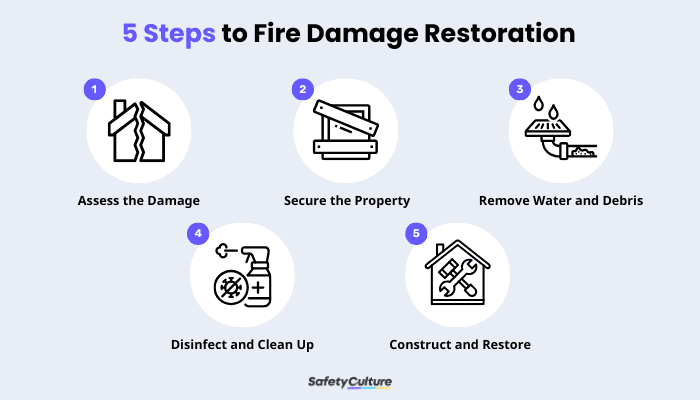
5 Steps to Fire Damage Restoration
The first step in restoring a property damaged by fire is to have a proper assessment of the damage. The goal of the assessment is to determine the extent of the damage and the actions that the team can take to restore the property. From there, they can use checklists to note details regarding the fire incident and document the observable damage.
Build from scratch or choose from our collection of free, ready-to-download, and customizable templates.
This way, they can determine what steps are necessary for restoring the building. During the damage assessment, the team will note all types of fire and smoke damage in the building or structure. This step also involves determining what things are to be discarded and which things are still possible to restore.
The next step in restoring a building or structure is securing the property. This usually involves installing a fence and boarding up the building to ensure that it’s safe from weather and no one enters the structure unauthorized. Additionally, if parts of the building or structure weren’t damaged, then the team needs to seal off the damaged parts of the structure to reduce the chances of cross-contamination.
During fires, firefighters extinguish the flames using various methods, the most common method being dousing it with water. While water effectively extinguishes most fires, it can also result in water damage. By leaving parts of the building wet, this can lead to further damage from mold, corrosion, and other biological hazards.
As such, the next step in fire restoration is preventing future damage by drying out the structure and removing as much water as possible. This also involves demolition and removal of anything that the fire has damaged. For example, damaged drywall and flooring need to be removed, which the technicians do during this process step.
The cleaning phase is one of the most labor-intensive parts of fire restoration. During this phase, the team has to clean up any remnants of the fire, including all soot and smoke stains on the floors, walls, ceilings, and other surfaces. It’s crucial for the team to ensure that every inch of the affected and contaminated areas is clean during this phase.
Once the areas are cleaned, the team then applies deodorizers. This removes any smoke or fire smell in the area. If water damage occurs due to the fire extinguishing techniques, the team may also apply a disinfecting agent and antimicrobial chemicals to prevent mold and bacteria growth.
The cleanup phase also involves going through the vents and ducts before the team moves on to the final step.
The last step in the fire restoration process involves rebuilding everything that was damaged by the fire. This could involve fixing the floors, rebuilding the roof, and restoring the walls. The team will try their best to salvage and restore whatever is possible. But in most cases, some things have undergone too much damage and require a complete replacement or reconstruction.
SafetyCulture is a mobile-first operations platform adopted across industries such as manufacturing, mining, construction, retail, and hospitality. It’s designed to equip leaders and working teams with the knowledge and tools to do their best work—to the safest and highest standard. Efficiently manage and streamline health and safety processes across the organization, including incident management, safety audits and inspections, risk assessment, waste management, and more, using a comprehensive EHS software solution.
Save time and reduce costs
Stay on top of risks and incidents
Boost productivity and efficiency
Enhance communication and collaboration
Discover improvement opportunities
Make data-driven business decisions