A Simple Guide to Building Security
Learn more about building security, why it’s important, the different types of building security systems and how to secure a building

Learn more about building security, why it’s important, the different types of building security systems and how to secure a building
Published 28 Apr 2026
Article by
6 min read
Building security is the protection of property, assets, staff, workers, and customers from intruders and unsafe situations that can cause harm or damage. The goal is to deter, detect, and respond to security threats and violations swiftly and efficiently. Underestimating the importance of building security puts everything and everyone within the building at risk, including the actual work or commercial activities taking place.
Building security is essential for protecting both physical and digital assets from malicious threats. A clear building security plan helps teams follow the right protocols, especially during high-risk situations or emergencies.
No matter the type of facility—residential, commercial, or industrial—building security teams must stay alert, prepared, and updated. While 2024 data from the US Federal Bureau of Investigation (FBI) shows a 13.1% drop in property crimes, building security measures are still necessary. With the right building security policy, organizations can reduce risks related to theft, cyber threats, and workplace violence.
Types of Building Security Systems
There are many types of security threats that can occur in a building, and each requires specific protocols and security systems to address it. Building managers should conduct a thorough risk assessment to identify potential vulnerabilities and determine which types of security systems are needed as part of an in-depth building security plan.
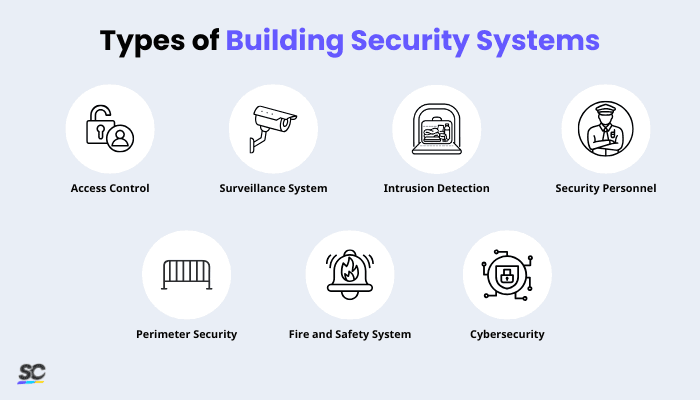
The different types of building security systems include the following:
Access Control - This includes all the measures used to limit unauthorized access to the building, areas within the building, or other building assets such as equipment, machines, and facilities.
Surveillance System - This primarily involves the installation of a closed-circuit television (CCTV) system to monitor and record the occupants and visitors in the captured areas 24/7.
Intrusion Detection - This refers to the use of motion sensor devices, weapon detection systems, and intruder alert notification systems.
Security Personnel - This includes the security director, security officers, security guards stationed at access points, and patrol guards.
Perimeter Security - This focuses on protecting the outer boundary of a property or area with physical barriers such as fences, gates, and bollards.
Fire and Safety System - This refers to early detection and response systems including smoke detectors, fire alarms, sprinklers, and emergency building protocols.
Cybersecurity - This involves protecting the building’s digital systems and data from cyberattacks through firewalls, encryption, and regular system updates.
With the rise of work-from-home and hybrid setups, cybersecurity is more critical than ever. Building security systems, networks, and access permissions need to be constantly updated and monitored by a Security Operations Center (SOC) or a Managed Detection and Response (MDR) team that keeps watch over online access and potential threats.
Hackers often exploit weak passwords, unsecured Wi-Fi, and outdated software to gain access to sensitive information, and sometimes, even building assets, rooms, and equipment as well. That’s why best practices like regular software updates and two-factor authentication are essential to reduce online risks. Even simple habits, such as reminding staff to lock their laptops when stepping away, help prevent unauthorized access.
Cybersecurity training is also vital for all employees as phishing, spam, and malware continue to rise. Teams needs to recognize potential threats so they don’t accidentally install harmful software. One small mistake can compromise an entire network.
Buildings are large and complex—often ten or more floors—where any blind corner or unsecured area could pose a serious security risk. Securing them is challenging, but once you understand your building’s vulnerabilities, protecting it becomes much more straightforward.
Secure a building by doing the following:
Assess Risk -Conduct a risk assessment to identify the building’s key security vulnerabilities.
Set Perimeter - Establish a security perimeter using fences or walls.
Screen Items - Install weapon detection systems at major entry points.
Log Visitors - Record the names of visitors and occupants, the times they entered and exited the building, and their signatures in daily logbooks.
Verify Identity - Enforce a strict ID-wearing rule and require Multi-factor Authentication (MFA) for each staff and employee.
Secure Access - Install a locking or keycode system on doors that lead to high-risk areas, especially those containing extremely valuable assets, information, or equipment.
Improve Visibility - Keep all areas of the building well lit and under CCTV surveillance, with no hiding spots outside the building.
Install Sensors - Install motion sensor devices with alarms that are triggered by unauthorized access and with the capability to automatically send intruder alerts once the alarm is triggered.
Activate Protocols - Establish security violation protocols, including evacuation procedures and emergency response plans.
Conduct Checks - Perform regular security testing to identify new vulnerabilities and prepare for emerging threats.
Building security doesn’t end once the systems are installed. Real safety comes from maintaining strong security policies that keep your site protected 24/7, all year round. Threats can strike at any time, so every security system needs to be ready to deter, prevent, detect, and respond.
Here are some ways to maintain building security:
Regular Risk Assessments: Conduct periodic security audits for building vulnerabilities such as broken locks or outdated system updates.
Preventive Maintenance: Ensure system assets in the building such as automated opening doors, intrusion sensors, and CCTVs are working properly.
Access Control Management: Keep a list or ID scanner for authorized personnel who have access to certain rooms or floors, and ensure security guards have access to these as well.
Up-to-date Staff Training: Make sure staff and security personnel are up-to-date on best security practices, emergency procedures, and drills.
Policy Enforcement: Implement policies that must be followed and monitored through security logs and building analytics.
Vendor and Third-Party Control: Require temporary passes for third-party vendors and guests for security compliance.
Documentation and Improvement: Keep a detailed record of incidents, audits, maintenance logs, and training sessions for future reference.
Security officers can perform regular maintenance on building security systems using digital solutions like SafetyCulture, a digital inspection app that can help power security planning programs. Create digital checklists to manage building inspections, security issues, and staff training, and log everything in the cloud across all devices with full visibility and real-time reporting.
SafetyCulture is a mobile-first operations platform adopted across industries such as manufacturing, mining, construction, retail, and hospitality. It’s designed to equip leaders and working teams with the knowledge and tools to do their best work—to the safest and highest standard.
Promote a culture of accountability and transparency within your organization where every member takes ownership of their actions. Align governance practices, enhance risk management protocols, and ensure compliance with legal requirements and internal policies by streamlining and standardizing workflows through a unified platform.
Save time and reduce costs
Stay on top of risks and incidents
Boost productivity and efficiency
Enhance communication and collaboration
Discover improvement opportunities
Make data-driven business decisions