
Published 1 Mar 2024
Article by
6 min read
What is a Hoist Inspection?
A hoist inspection template is a structured checklist or form used to systematically evaluate the condition and safety of a hoist used to lift or lower heavy loads in construction. It guides inspectors through a series of checks covering key components of the mechanical device and ensures that inspections are thorough, consistent, and compliant with relevant safety standards and regulations.
What to Include in a Hoist Inspection Template
Conducting a hoist inspection requires thoroughly checking different parts or types of hoists to ensure that everything is functioning properly. It’s an important part of hoist safety and general construction practices to routinely check mechanical parts to prevent accidents and hazards.
With this, it’s essential to have key components in the template, such as:
Hook and hook latch – Check for cracks, deformation, twisting, or wear. The safety latch must close properly and show no signs of damage.
Wire rope or chain – Inspect for kinks, fraying, corrosion, broken wires, or stretched links that could compromise lifting strength.
Brake system – Verify that the brake engages and releases correctly, holds the load without slipping, and shows no signs of excessive wear.
Hoist body and frame – Look for cracks, dents, corrosion, or structural damage to the main body and supporting frame of the hoist.
Electrical controls and wiring – Check that control buttons, switches, and wiring are intact, properly insulated, and functioning correctly with no exposed conductors.
Limit switches – Confirm that upper and lower travel limit switches stop the hoist movement at the correct points to prevent over-travel.
Load capacity rating – Verify that the Safe Working Load (SWL) label is clearly visible, legible, and matches the hoist's rated capacity.
Trolley and running track – Inspect the trolley wheels, bearings, and the track. Check for wear, misalignment, or damage that could affect hoisting movement.
Lubrication – Ensure all moving parts, including gears, chains, and bearings, are adequately lubricated according to the manufacturer's specifications.
Fasteners and attachments – Check all bolts, nuts, pins, and anchoring points for tightness, corrosion, or signs of loosening.
Load block and sheaves – Examine the pulley system for wear, cracks, or misalignment that could affect rope movement and load handling.
Warning labels and markings – Confirm that all safety warnings, operating instructions, and identification markings are present and clearly readable.
Overall cleanliness – Assess whether the hoist is free from dirt, grease buildup, or debris that could interfere with operation or mask damage.
Inspector sign-off – Record the name, signature, date, and qualifications of the person conducting the inspection for accountability and compliance.
Top 5 Things to Remember for Effective Hoist Inspections
Construction is a high-risk industry that puts great emphasis on proper safety measures to prevent hazards and incidents. An effective hoist inspection policy can minimize risk,ensure legal compliance, and maximize productivity. Here are the top 5 things construction professionals need to remember for effective hoist inspections:
Always perform pre-use checks
One of the best safety practices when using construction machinery are pre-use checks. These inspections are essential for detecting potential faults or issues that could have developed since the last time a hoist mechanism was used. Operators can take advantage of digital checklists to streamline their inspections and keep all relevant data in one place.
Adhere to scheduled inspections
OSHA requires cranes and hoists to be inspected once a year at the minimum. However, it is common practice for construction teams to schedule pre-use, daily, weekly, and monthly inspections to ensure safety.
Regardless of how your team sets the interval for inspections, it is essential that you follow them to maximize their effectiveness. Having automated measures to remind operators of scheduled inspections can go a long way to ensure compliance with safety policies.
Communicate and address identified issues
After identifying issues with the hoist, immediate action must be taken to resolve them. Getting the information across to the right people immediately is crucial to prevent accidents and operational setbacks.
Using a checklist helps provide structured protocol to communicate corrective actions and issues that need attention. It outlines the steps inspectors and teams need to follow to avoid confusion and encourage workers to report their concerns as soon as they can.
Ensure the inspection checklist is easy to use
Overly complex inspection checklists may end up being skipped altogether due to the hassle of completing them. Workers might also gloss over wordy sections in a rush to find the field or element that’s only relevant to their inspection.
Make sure that your inspection checklists ask for only the most relevant information. Keep them short, but effective by breaking down sections in specific categories for easy reading and data verification.
Compile and organize inspection data for easy access and insights
A comprehensive digital checklist for hoist inspection can be used to easily compile data. The platform acts as a data management tool that can be analyzed to identify recurring issues and gain added insights to implement improvement. This helps teams solve the problem, while also addressing the root causes to prevent recurring issues.
How to Use a Hoist Inspection Template
Here’s a quick step-by-step guide on how to use a hoist inspection template to use it effectively:
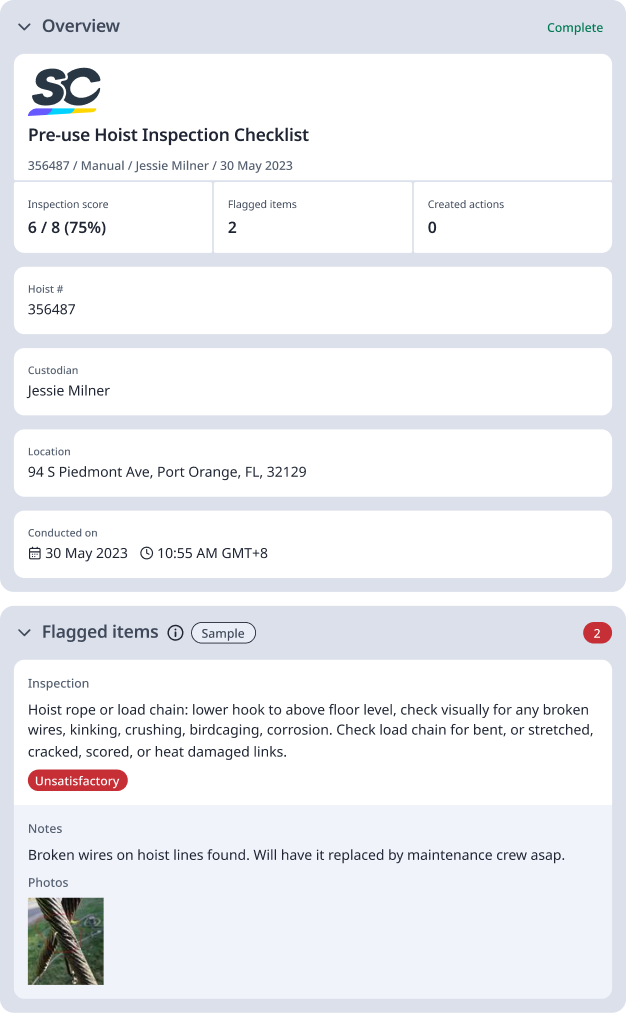
Fill out the basic inspection details on the title page. This typically includes the name of the inspector, the location where the inspection is being performed, and the kind of inspection being conducted.
Go through the sections included in the checklist and provide detailed answers for all applicable questions. A template like this includes inspections for the hoist rope, hook block, hoist support, and other operating mechanisms.
Attach photos and notes to provide additional information. Including annotations also provides further context to better understand any issues being reported.
Assign corrective actions as needed to immediately address issues and prevent hazards from escalating.
Complete the checklist with a sign-off and approval from the supervisor.
Sample Hoist Inspection Report
For reference, here is an example of a filled-out hoist inspection template:
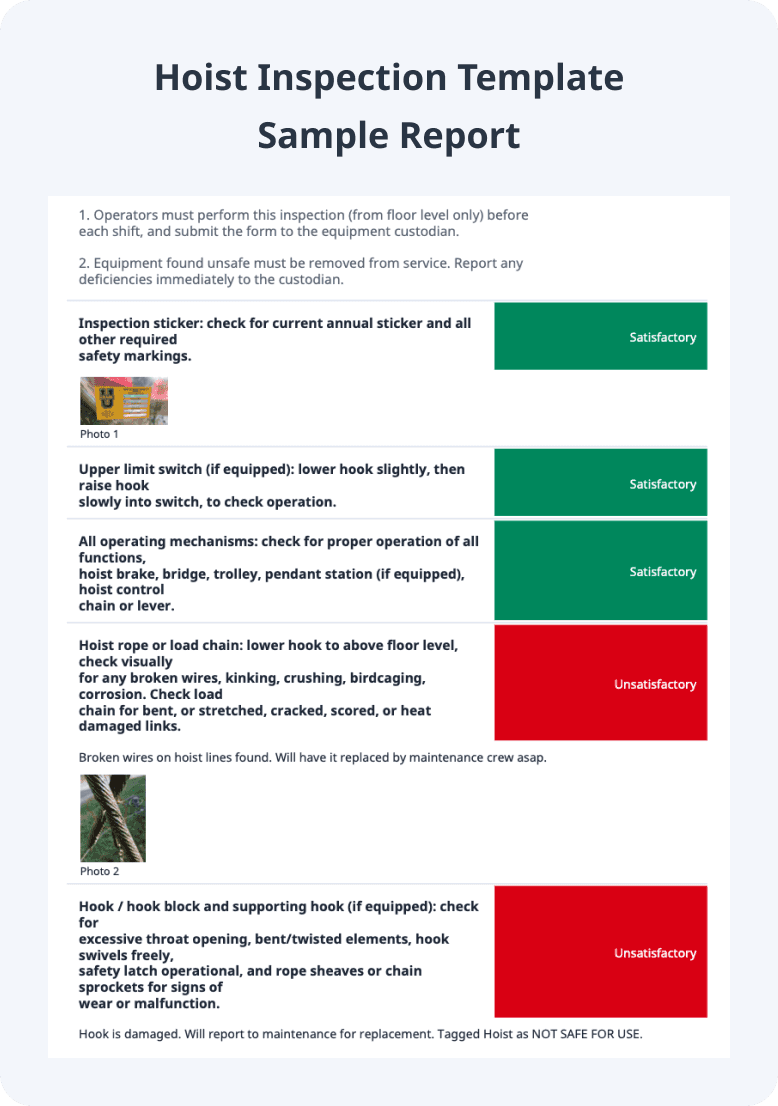
Sample Hoist Inspection PDF Report
See How Industry Leaders Manage Inspections

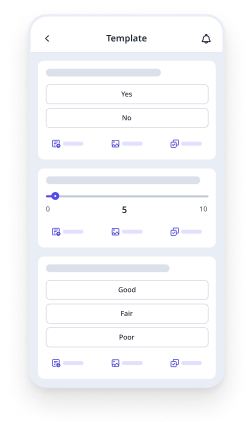
By producing inspection templates that use assigned, standardized questions and multiple-choice options, alongside logic and rich data capture such as photos, Equipe ensures consistency and obtains valuable data to continually improve standards. The flexibility of the tool for multiple use cases is a big benefit for the organization.


Still looking for a checklist?
Search, filter, and customize 60,000+ templates across industries and use cases.