Manufacturing Work Instructions (MWIs): The Ultimate Guide
Learn how work instructions help ensure consistency, quality, and safety across every step of the manufacturing process.
Learn how work instructions help ensure consistency, quality, and safety across every step of the manufacturing process.
Published 5 May 2026
Article by
5 min read
In manufacturing, work instructions serve detailed guides to standardize the processes involved in manufacturing a product, ensuring consistency, quality, and efficiency throughout production. These instructions serve as a critical communication tool between engineers, designers, and production staff, providing step-by-step guidelines, diagrams, and necessary specifications for each stage of the manufacturing process.
MWIs typically include information on required materials and equipment, safety precautions, quality control measures, and troubleshooting tips. They reduce errors and maintain high-quality standards, leading to optimized production workflows and cost-effective operations.
Creating work instructions for manufacturing may seem like an extra step, but the impact on efficiency, quality, and consistency is undeniable. These documents help streamline operations, enhance communication, and strengthen overall productivity.
Here's why they play a crucial role in every manufacturing setup:
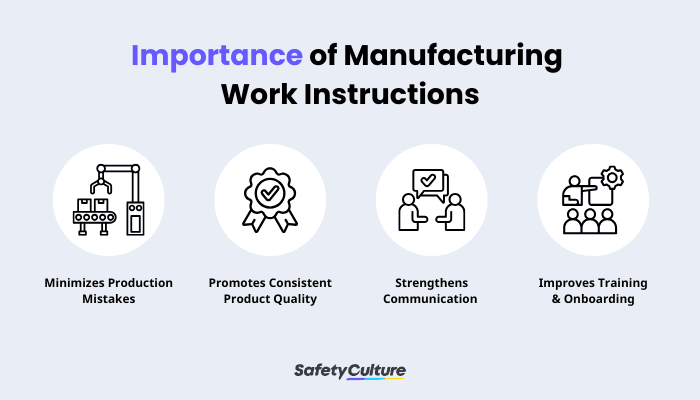
Importance of Manufacturing Work Instructions
Minimizes Production Mistakes: Standard operating procedures outlined in work instructions reduce guesswork and ensure accuracy in every task. When employees follow precise steps, production errors, rework, and material waste are significantly minimized, saving time and money.
Promotes Consistent Product Quality: Clear instructions help maintain product uniformity across every batch. Whether it's automotive components or food products, standardized processes guarantee the same quality and performance every time, building customer trust and satisfaction.
Strengthens Communication Between Teams: Manufacturing work instructions align engineers, technicians, and quality control teams under a single, clear framework. It ensures smooth coordination, eliminates confusion, and synchronizes all departments, even when processes evolve.
Improves Training and Onboarding: With detailed visual and written steps, new employees can quickly grasp their responsibilities and perform tasks confidently. Even experienced workers benefit from having a reliable reference that enhances consistency, reduces downtime, and fosters a culture of collaboration.
A well-structured manufacturing work instruction provides the clarity and consistency workers need to perform tasks correctly and safely. Each section aims to ensure processes run smoothly and meet quality standards.
Here are the essential components that make up effective manufacturing work instructions:
Detailed Task Breakdown: Provide a sequential process breakdown using clear instructions, visuals, or interactive elements. Explain the purpose of each task and its role in the production to highlight its importance.
Safety Procedures and Protocols: Include all safety requirements and precautions for the job, covering proper use of machinery, material handling, and necessary Personal Protective Equipment (PPE) to ensure a safe work environment.
Quality Assurance Criteria: Define how each stage maintains product quality and consistency. Provide measurable standards for appearance, texture, and performance, so workers can identify and correct potential defects early.
Required Tools and Equipment: List all tools and machinery needed to complete the task efficiently. Placing this information at the beginning ensures workers can prepare the necessary equipment beforehand, reducing delays and improving workflow efficiency.
Manufacturers use different formats to present work instructions depending on their processes, workforce, and available technology. Each format has strengths, but some offer more flexibility and safety.
Here are the most common formats used in manufacturing environments:
Printed Work Instructions: Paper-based instructions are often posted directly on machines or workstations for easy reference. They can include step-by-step text, diagrams, or detailed visuals, but lengthy documents may be difficult to manage. They can pose safety risks when workers handle multiple pages near equipment.
Digital Work Instructions: Digital formats allow employees to access step-by-step guidance on mobile devices or tablets any time and anywhere. For instance, Schindler, a Swiss manufacturer of elevators and escalators, introduced a mobile-first platform that simplifies digital work instructions for its field service employees.
Creating visual work instructions takes careful planning and structure, especially for an industry as stringent as manufacturing. Follow these steps to make them clear, accurate, and easy to follow:
Use Clear and Specific Titles: Write titles that instantly tell workers what the task is. For example, use "Assembling the Product" instead of a vague or generic title like "Process Steps". It will help workers quickly identify the correct instructions for their task.
Add a Short Introduction: Give a brief context on why the task matters. For example, "Testing Circuit Boards" ensures product safety and reduces defects, helping workers understand its importance.
Explain the Task Purpose: State the purpose of the task and how it contributes to the overall goal or process. For example, "Calibrating the Machine" must ensure accurate readings and product quality.
Give Clear Step-by-Step Actions: List steps using simple, direct language. Each step should show one action to avoid confusion. For example:
Step 1: Press the power button to start the machine.
Step 2: Place the part correctly in the feeder tray.
Add Visual Aids: Include photos, diagrams, or videos to make steps easier to understand. Visuals help reduce errors and guide new workers more effectively.
Check Accuracy with Experts: Ask engineers or supervisors to review the instructions. They can spot missing steps and add essential safety reminders.
Create Instructions Digitally: Store instructions in cloud storage or use digital tools to manage version control. These tools make it easy to update instructions and keep them accessible to everyone.
Train the Team: Ensure all team members can follow the instructions correctly through training. It should include safety protocols and any necessary skills or techniques.
Conduct Regular Reviews: Periodically review and update the instructions, especially if there have been changes in equipment or processes. Solicit feedback from workers on potential improvements.
SafetyCulture is a mobile-first operations platform adopted across industries such as manufacturing, mining, construction, retail, and hospitality. It’s designed to equip leaders and working teams with the knowledge and tools to do their best work—to the safest and highest standard.
Streamline processes, eliminate bottlenecks, enhance resource utilization, and build an agile and scalable infrastructure with SafetyCulture. Strive for operational excellence to boost competitive advantage, foster sustainable growth, and deliver long-term value.
Save time and reduce costs
Stay on top of risks and incidents
Boost productivity and efficiency
Enhance communication and collaboration
Discover improvement opportunities
Make data-driven business decisions
In this article