Published 9 Mar 2026
Article by
3 min read
What is a Temperature Alarm Response Checklist?
A temperature alarm response checklist is a structured document used to document issues when food storage or refrigeration units go beyond safe temperature limits. It lists down the immediate steps staff must take to repair equipment and protect food from potential spoilage. The checklist also ensures that all foods exposed to unsafe temperatures are properly segregated and disposed of before they reach customers.
Importance
Having a temperature alarm response checklist allows staff to make quick, confident decisions when encountering high food safety risks. It also holds supervisors and managers accountable for implementing effective temperature monitoring systems, as it confirms that they:
Ensure controlled and structured responses: A checklist lists standard operating procedures to make sure no temperature verification, equipment maintenance, or food inspection is overlooked.
Reduce food waste and illnesses: Guiding teams for a swift response minimizes the amount of spoiled food that carries bacteria and goes to waste.
Identify equipment weak points: A complete temperature alarm response procedure fixes issues in refrigeration equipment and storage rooms to improve reliability.
Document corrective actions: Using a structured checklist makes it easier to retrace corrective actions taken to address temperature deviations and record proof for food safety management system audits.
Prevent unknown failures: By verifying every safety measure, staff know how to respond to all alarms and proactively take action to prevent noncompliance issues.
What are the Key Components of a Temperature Alarm Response Checklist?
A temperature alarm response checklist must include all procedures and elements that help teams effectively manage and address issues of noncompliance. A checklist is incomplete without these elements:
Immediate response procedures to verify alarms and inspect affected foods
Preventive measures to ensure temperatures don’t further surpass limits
Corrective actions for repairing equipment and resetting alarms
Validations of segregating, holding, moving, and disposing of affected foods
Root cause analysis of temperature fluctuations to investigate issues with refrigeration units and storage areas
Evaluation of temperature monitoring performance
Inspections of food storage temperature controls to prevent future breakdowns and deviations
Records of confirmed equipment repairs and food safety measures—including notes, annotations, and attached images
How to Use the Checklist
Staff managers and supervisors must follow these steps to complete a temperature alarm response template:
Provide basic information for accountability and logistics. This includes the supervisor’s name, date of response, and location of alarm.
Document temperature alarm acknowledgment and verify readings.
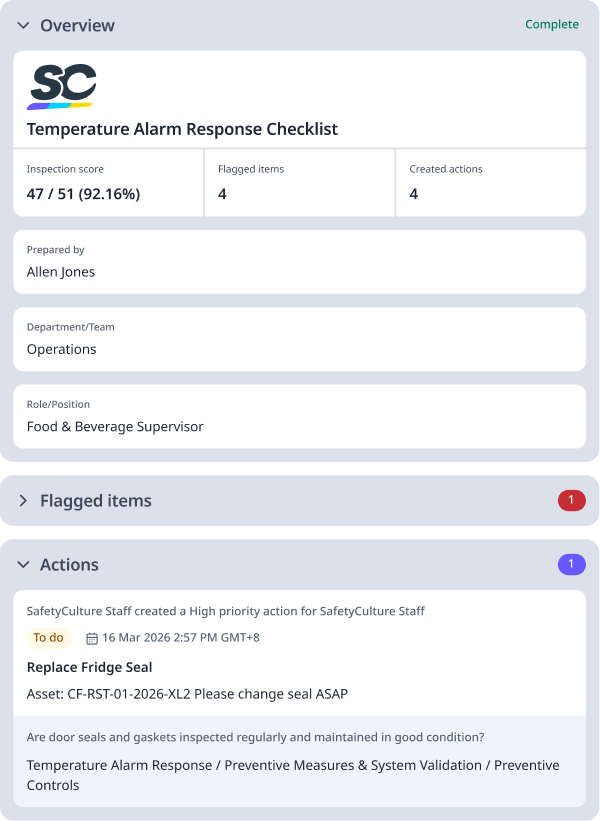
Confirm that all listed items for immediate action and preventive response are followed. Make sure to include annotations explaining the context of issues encountered.
Validate that all required food safety measures and equipment services have been made. Attach images and files to show proof.
Record the findings from investigating the temperature alerts.
Finish the checklist with a sign-off.
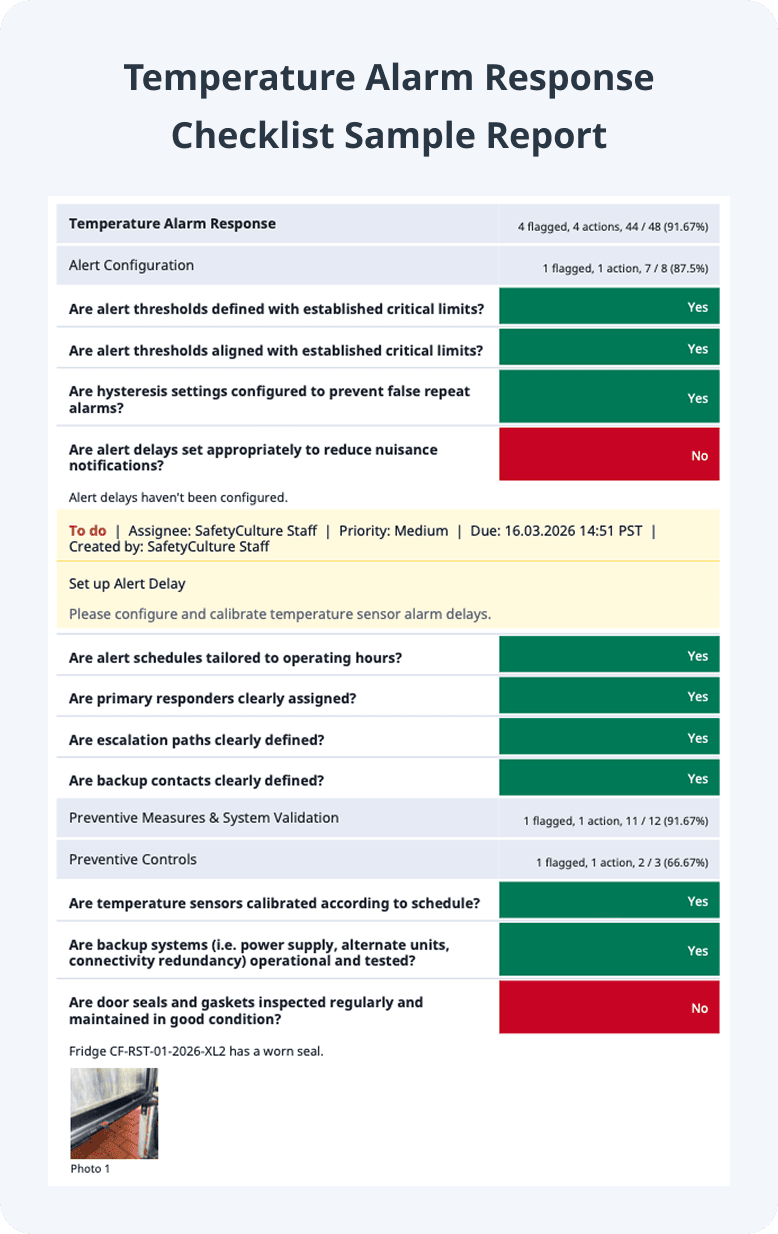
Sample Temperature Alarm Response Report
Below is an example of a completed temperature alarm response report to understand how the checklist works:


Still looking for a checklist?
Search, filter, and customize 60,000+ templates across industries and use cases.