Published 9 Mar 2026
Article by
3 min read
What is a Food Reheating Checklist?
A food reheating checklist is a safety control document used to check that kitchen staff reheat previously cooked and cooled foods to the correct temperature. It serves as a structured guide that staff can follow for reheating times, temperature checks, and equipment usage to eliminate pathogens and foodborne illnesses before dishes are served to guests.
Importance
Using a food reheating checklist is essential to establishing an effective food safety management system. It gives kitchen managers and shift supervisors confidence that their teams practice food hygiene and avoid the significant risks of improper food reheating. With the checklist, a kitchen staff can:
Prevent foodborne bacteria: A checklist verifies that foods are reheated to appropriate temperatures, which removes germs and microbes accumulated from storage or holding.
Preserve food quality: Documented guides help teams time and control food reheating properly, making sure products retain their taste, color, and texture.
Standardize kitchen practices: Food reheating instructions, such as temperature checks and hot food holding, are implemented consistently across different locations and work shifts.
Provide proof of care: Recording all the steps for safe reheating guidelines makes it easier for inspectors and customers to trust the establishment.
Support food safety culture: The checklist keeps safety as the top priority during service by avoiding any shortcuts in reheating, no matter how busy the shift is.
Ensure satisfying guest experiences: Consistent reheating procedures mean guests can always expect hot food without hygiene concerns or potential food poisoning risks.
What are the Key Steps Required?
A food reheating checklist must have food safety guidelines to instruct staff on how to warm and reheat food back to the required temperatures. It should also include preparations for the task, errors to avoid, and actions to take once food is reheated. In total, the following steps should make up the checklist:
Inspections to determine whether food was stored and cooled properly before reheating
Identifying the type of food to be reheated
Selecting the right reheating equipment and technique for the food
Calibrations and sanitation of thermometers
Temperature measurements to verify that the product is ready to be served
Time checks to monitor whether food is reheated within the required period
Corrective actions to address issues in case the food wasn’t prepared and reheated properly
How to Use a Food Reheating Checklist
When filling out a food reheating checklist, it is important to follow these steps:
Record the date and time when the food was reheated
Note down who reheated the product for accountability
Verify that all the steps for preparing, reheating, and serving food were followed
Log all essential details, such as the equipment ID code, food temperature, and reheating duration, to provide proof that instructions were followed
Take note of any steps that were missed and provide detailed explanations for failed compliance
Address issues by assigning corrective actions and specifying whether to discard, reheat, or change equipment
Sign the checklist, authorizing that all entries are valid and legitimate for food safety inspections
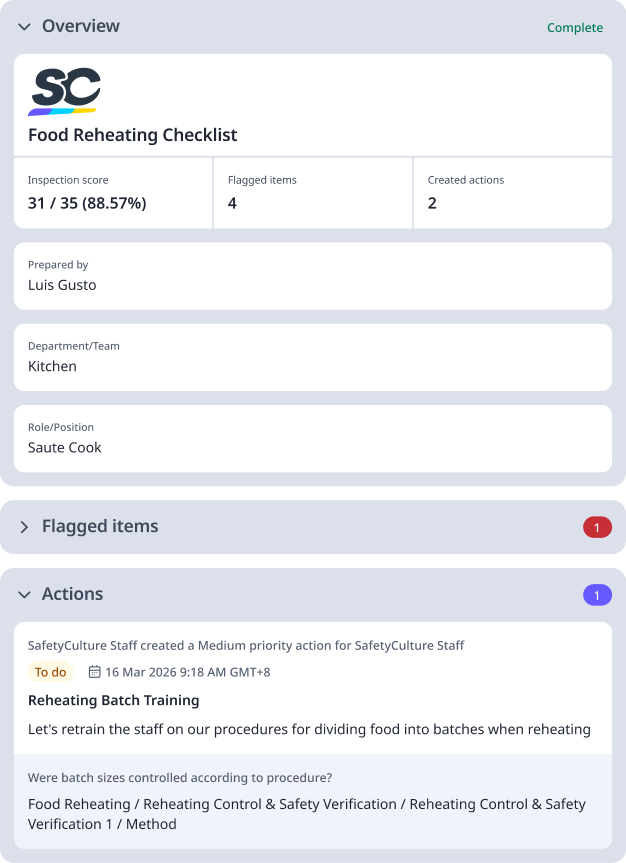
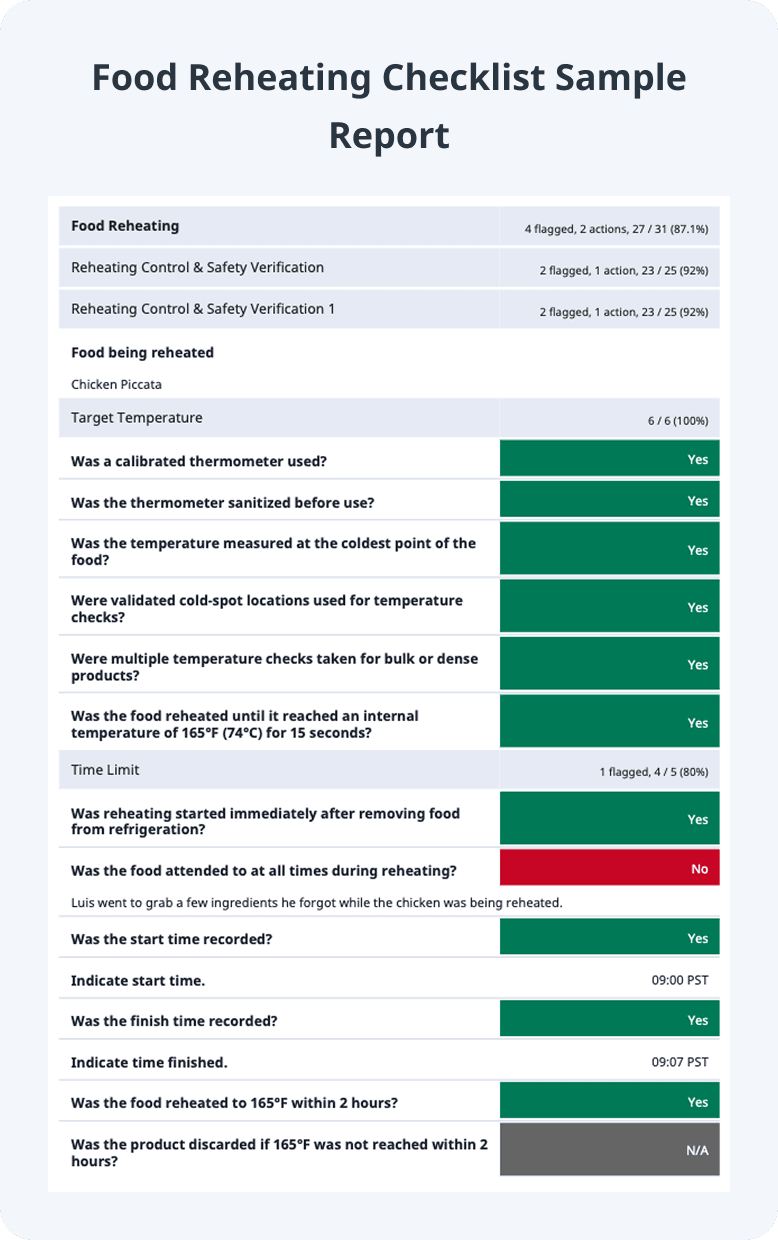
Sample Food Reheating Report
Here is an example of a complete food reheating checklist report:


Still looking for a checklist?
Search, filter, and customize 60,000+ templates across industries and use cases.