Food warehousing involves storing food products in specialized facilities until they’re ready to be distributed to retailers, restaurants, or consumers. These warehouses are designed with climate control systems to ensure the right temperature and humidity levels for frozen goods, perishables, and packaged non-perishables, and various other food products.
Importance
Effective warehouse management is essential for the food supply chain and industry. It helps ensure products are stored safely, handled efficiently, and delivered on time.
Here are some key reasons why food warehousing is so essential:
It helps maintain the freshness and nutritional value of food products by providing the right storage conditions for both perishable and non-perishable items.
It minimizes the risk of spoilage and contamination so that consumers are safe from foodborne illnesses.
It ensures deliveries reach customers without delays or errors.
It enables warehouses to manage large inventory volumes with fewer handling errors and damage.
It lowers operational costs through better inventory control, streamlined logistics, and scalable systems for growing food businesses.
Sodexo used SafetyCulture to digitize HACCP, enabling quick food safety issue resolution. They've digitized 30+ logs at 40% of sites, saving over 83,000 pages. This boosts regulator access and connects frontline staff with management, easing unit managers’ workloads.
Difference Between Food Warehousing and Food-Grade Warehousing
Food warehousing and food-grade warehousing both involve storing and managing food, but they differ in their safety, hygiene, and regulatory requirements.
Food warehousing handles storage and distribution of packaged or shelf-stable products. It follows basic cleaning and operational procedures and usually doesn’t require mandatory certifications or rigorous audits. Temperature controls may be optional depending on the product, and traceability is often limited to SKU-level tracking.
In contrast, food-grade warehousing is meant for perishable or sensitive items like dairy, meat, and frozen goods. These facilities meet stricter hygiene standards, enforce pest control programs, and maintain precise temperature ranges for ambient, refrigerated, or frozen storage.
Here’s a quick glance into their differences:
Aspect
Food Warehousing
Food-Grade Warehousing
Standards and certifications
Basic storage, no mandatory audits
Requires FDA, HACCP, SQF certifications with regular inspections
Cleanliness and sanitation
Standard cleaning protocols
Rigorous schedules, pest control, allergen segregation, and monitoring
Temperature control
Optional or basic
Mandatory zones (ambient, refrigerated, frozen) with continuous logs
Traceability
SKU-level if any
Lot/batch/expiry tracking for recalls
Facility design
General racking and layout
GMP-compliant construction to prevent contamination
Regulatory compliance
Minimal, may risk non-compliance
Subject to third-party audits and FDA registration
Practical implications
Suitable for packaged, shelf-stable products
Ideal for perishables, reduces spoilage and liability, supports scalable operations
Main Elements of Food Warehousing
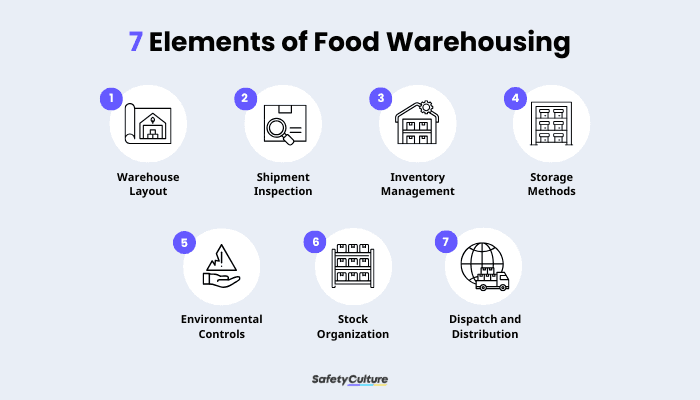
A successful food warehousing relies on several core elements, including:
Warehouse layout: A well-designed warehouse layout maximizes space, improves product flow, and speeds up operations. Clearly defined areas for receiving, storage, and dispatch reduce handling time and costs.
Inspection area for incoming shipments: Dedicated inspection zones help confirm the quality of goods on arrival. These areas should be equipped with the tools for consistent checks.
Inventory management: Reliable inventory systems track stock levels, movement, and location across the warehouse. Accurate data is key to prevent shortages, overstocking, and misplaced goods.
Storage methods: Different products require different storage conditions. Warehouse keepers should match temperature, humidity, and handling instructions to each product type to preserve quality.
Environmental controls: Temperature, humidity, and light all affect shelf life. Therefore, it's crucial to monitor and regulate these factors for food safety.
Stock organization: Regularly reorganizing inventory allows you to keep spaces efficient and access products easily. Keeping warehouse records up to date aids in smooth daily operations.
Dispatch and distribution section: This function manages order processing, packaging, labeling, and shipment tracking, so products reach the right destination on time.
Types of Food Warehouse Storage
Food warehouses use a range of storage environments to protect product quality, extend shelf life, and ensure safety. Since different food items have unique handling requirements, these facilities must have the right systems to support reliable storage across the supply chain.
Some common types of food warehouse storage include:
Dry storage: This type holds non-perishable items, such as canned goods, packaged goods, and grains. It maintains low humidity and good airflow to prevent moisture buildup.
Refrigerated storage: A refrigerated food warehouse is designed for dairy, fresh produce, and certain meats. Temperatures typically range between 33°F and 39°F to slow spoilage and preserve freshness.
Frozen storage: This food storage maintains temperatures at 0°F (–18°C) or lower for items like meat, frozen vegetables, and ice cream. These conditions limit bacterial growth and increase shelf life.
Climate-controlled storage: This type maintains precise temperature and humidity levels for sensitive items like chocolate, wine, and specialty ingredients. This keeps food items safe from melting, spoilage, or texture changes.
Uphold food safety and quality standards with SafetyCulture
Enhance operational efficiency with monitoring sensors. Track real-time data and insights to never miss another food safety incident.
Food warehouses must comply with strict regulatory and safety standards to keep products safe, traceable, and free from contamination. While each country has its own rules, most regulations require licensing, documented food safety controls, and well-maintained food storage environments.
Here are some essential requirements for food warehousing:
United States
FDA registration before operating any food warehouse
Compliance with the Food Safety Modernization Act (FSMA) , including a written food safety plan created by a Preventive Controls Qualified Individual (PCQI)
State-issued food licenses based on location and product type
Optional certifications such as Safe Quality Food (SQF) or FSSC 22000 support higher food safety standards
USDA licensing when handling agricultural commodities under the United States Warehouse Act
A complete HACCP system documenting hazards, controls, and monitoring steps
Periodic inspections from the Food Standards Agency (FSA) or local environmental health officers
Challenges in the Food and Beverage Warehousing Industry
Like warehouses in other industries, food and beverage facilities face a range of operational challenges such as:
Warehouse space limitations: Growing product ranges and demand can quickly fill available storage. Vertical racking, optimized layouts, and just-in-time inventory helps make better use of space.
Supply chain instability: Delays, labor shortages, and rising costs can affect stock availability. Resolve this by diversifying suppliers and using warehouse management systems.
Food safety compliance: Failure to meet safety standards can lead to recalls, fines, or reputational damage. To help maintain standards, warehouse managers can perform regular inspections, check temperature and humidity controls, and roll out employee training.
Employee safety hazards: Heavy equipment and fast-paced operations increase injury risks. Reduce these incidents by providing Personal Protective Equipment (PPE), enforcing safety protocols, and training staff on its use.
Perishable inventory control: Short shelf life and climate sensitivity require precise tracking. Inventory software, frequent audits, and demand forecasting help limit waste.
Achieve operational excellence
Cultivate a culture of excellence with our digital solutions that enhance efficiency, agility, and continuous improvement across all operations.
Food warehousing can be quite complex and presents various challenges due to the specific characteristics of food products. To operate successfully and maintain high-quality standards, every food warehousing company should follow these best practices:
Maintain strict hygiene and sanitation across the facility , including regular cleaning, handwashing protocols, and clearly separated break areas.
Monitor temperatures for frozen, refrigerated, and dry food storage , using automated systems supported by manual checks.
Train staff on food safety, allergen handling, proper storage, and emergency protocols to reduce errors and contamination risks.
Conduct routine pest inspections and apply preventive controls, such as sealed entry points and approved treatment methods to protect stored products.
Organize warehouse zones by product type and storage requirements, using physical barriers, clear labeling, and one-way product flow.
Keep detailed records of temperature logs, cleaning schedules, pest control, and staff training to support audits.
Useinventory management techniques like FIFO (First-In-First-Out) to move perishable items in the correct order and reduce waste.
Keep Food Warehousing Standards Clear with SafetyCulture
Why use SafetyCulture?
SafetyCulture is a mobile-first operations platform adopted across industries such as manufacturing, mining, construction, retail, and hospitality. It’s designed to equip leaders and working teams with the knowledge and tools to do their best work—to the safest and highest standard.
Streamline processes, eliminate bottlenecks, enhance resource utilization, and build an agile and scalable infrastructure with SafetyCulture. Strive for operational excellence to boost competitive advantage, foster sustainable growth, and deliver long-term value.
✓ Save time and reduce costs ✓ Stay on top of risks and incidents ✓ Boost productivity and efficiency ✓ Enhance communication and collaboration ✓ Discover improvement opportunities ✓ Make data-driven business decisions