National Burn Awareness Week: An Introduction
Ensure fire safety at work by celebrating National Burn Awareness Week.

Ensure fire safety at work by celebrating National Burn Awareness Week.
Published 28 Apr 2026
Article by
5 min read
National Burn Awareness Week is an annual campaign observed in the US on the first full week of February to raise awareness about burn prevention and fire safety. Led by the American Burn Association (ABA), it educates the public on common burn hazards, treatment, and prevention strategies. Each year focuses on a specific theme, such as scald prevention or electrical safety, to help reduce burn injuries and promote safer practices.
Raising awareness about burn prevention is crucial for fire safety because burns can cause severe pain, lifelong scars, and even fatalities. Many burn injuries occur due to preventable causes like hot liquids, electrical hazards, and open flames, making education a key tool in reducing incidents.
For this reason, National Burn Awareness Week was established by the American Burn Association (ABA) and has been observed since the 1980s to address the growing concern of burn-related accidents. This week aims to empower individuals, families, and organizations with knowledge and resources to create safer homes and workplaces.
By dedicating a week each year to burn awareness, the initiative helps reduce injuries through education, safety tips, and community outreach.
A different theme is set every year, depending on the current concerns of Americans at a given time. For example, the 2025 theme, “Burn Prevention Starts Where You Live,” focused on reducing burn hazards in everyday spaces. Meanwhile, the National Burn Awareness Week 2026 theme, “Burn Prevention Where You Live, Work, and Play - Preventing Burns in the Workplace,” focuses on reducing burn injuries in workplace settings such as kitchens, offices, construction sites, and factories.
As we approach National Burn Awareness Week, it’s important for organizations to raise awareness as well as improve fire and burn safety within their operations. While companies raise awareness in various ways, here are some tips to boost safety in preparation for it:
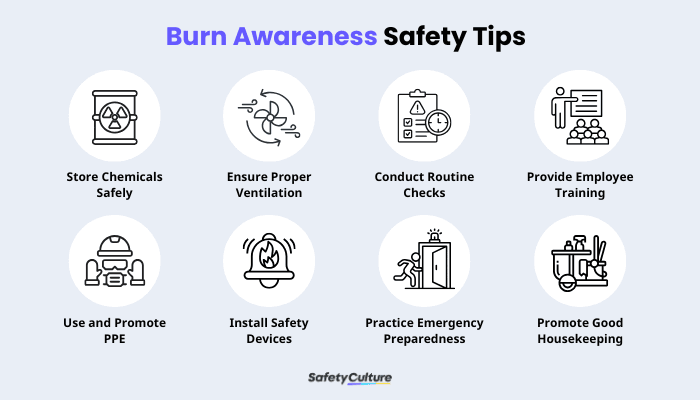
Burn Awareness Safety Tips
Proper storage of chemicals and other fire hazards is essential in preventing burns in the workplace. For National Burn Awareness Week, make sure to emphasize the importance of using proper storage containers and utilizing the right labels. Communicate the importance of storing flammable or hazardous liquids in approved, clearly labeled containers designed to prevent leaks and spills, and how using the right containers and lockout-tagout procedures minimizes the risk of accidental exposure and spillages, reducing the chances of chemical burns.
Workspaces with chemicals, open flames, or high temperatures should have proper ventilation to prevent heat buildup and exposure to harmful fumes. Poor ventilation can increase the risk of burns from trapped heat, flammable vapors, or toxic gases. Use this week to install new exhaust systems if needed and perform maintenance tasks on existing systems to ensure a steady airflow.
Regular safety inspections help identify burn hazards such as faulty equipment, flammable materials, or improper storage. Encourage your teams to use digital checklists as they ensure that no critical safety step is overlooked, keeping track of necessary inspections and corrective actions. Using digital tools streamlines the process and provides a record of compliance for safety audits.
Training employees on burn prevention is essential not only when celebrating National Burn Awareness Week, but also for overall workplace and fire safety. Create tailored learning sessions such as seminars, discussions, and meetings based on workplace-specific risks, and ensure they are updated regularly to increase awareness on fire safety and burns. Relatedly, with a digital training solution to supplement these, employees can better stay updated on different burn awareness and safety procedures. Additionally, customizing training sessions to also align with annual themes keeps employees informed about the latest burn prevention strategies and concerns that may be most prevalent at the time.
Personal Protective Equipment (PPE) such as heat-resistant gloves, flame-protected clothing, and face shields help reduce burn risks. Employers should enforce PPE usage and provide proper training on how to wear and maintain it, especially during National Burn Awareness Week. Regularly inspecting PPE ensures it remains in good condition and offers maximum protection.
Fire suppression systems, temperature monitoring systems, and emergency showers should be installed and maintained to reduce burn risks. Using QR codes and RFID tags helps track the condition, maintenance schedules, and lifespan of safety devices. This ensures critical equipment is always functional and ready for emergencies. Use National Burn Awareness week to orient workers on the importance of these devices, as well how to use them for improved workplace safety and more streamlined safety operations.
Workplaces should have clear emergency protocols for handling burns, including first aid procedures and evacuation plans. Discuss these practices during this week and conduct drills as necessary to ensure preparedness. Regular fire and burn response drills ensure employees know what to do in case of an incident. Keeping first aid kits stocked and accessible can make a crucial difference in injury management.
Include the importance of good housekeeping and overall workplace cleanliness in your National Burn Awareness Week initiatives. Keeping work areas clean and free of flammable materials reduces burn hazards. Proper disposal of combustible waste and regular cleaning prevent accidental fires. Organizing tools and equipment also minimizes the risk of contact burns from hot surfaces.
SafetyCulture is a mobile-first operations platform adopted across industries such as manufacturing, mining, construction, retail, and hospitality. It’s designed to equip leaders and working teams with the knowledge and tools to do their best work—to the safest and highest standard.
Efficiently manage and streamline health and safety processes across the organization, including incident management, safety audits and inspections, risk assessment, waste management, and more, using a comprehensive EHS software solution.
✓ Save time and reduce costs ✓ Stay on top of risks and incidents ✓ Boost productivity and efficiency ✓ Enhance communication and collaboration ✓ Discover improvement opportunities ✓ Make data-driven business decisions