Importance
Mobile cranes are heavy, costly and prone to serious incidents if they’re not handled the right way. From 2011 to 2017, the Census of Fatal Occupational Injuries (CFOI) recorded an average of 42 crane-related deaths every year. Because of this risk, OSHA has strengthened its rules for crane maintenance and safety. One of the most common citations they issue is for missing inspections, with operators skipping daily, monthly or even annual checks. This is where a dedicated mobile crane inspection checklist is beneficial, as it can help ensure safety checks are done properly and on time.
Mobile cranes also work very differently from stationary cranes, hence why they have different checklists. Being qualified on a tower crane doesn’t mean a person can operate a mobile crane. Under 29 CFR 1926, OSHA requires separate certifications for each type of crane, including tower, floating and mobile.
What to Include in a Mobile Crane Inspection Checklist
Mobile cranes are complex machines, so every component needs a quick inspection before the start of each shift. A mobile crane safety inspection checklist should include fields to inspect the following:
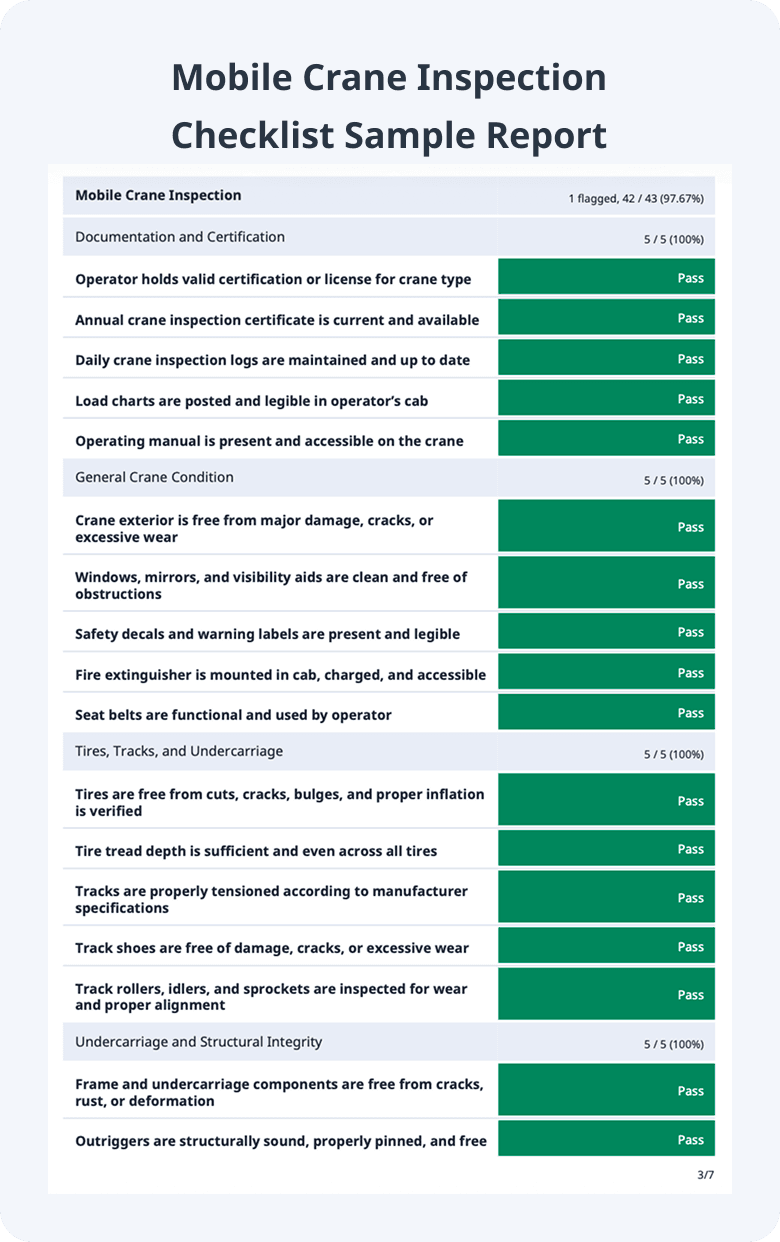
Documentation and certification: Confirm that the required documents to operate the mobile crane are current and complete, including operator certificates and daily inspection logs.
General crane condition: Inspect the mobile crane’s exterior for cracks or damage, and check that the interior is clean, with windows and mirrors clear and seatbelts working as expected.
Tires, tracks, and undercarriage: Check that tires are free from issues, tread depth meets safety standards, track rollers sit correctly, and the undercarriage is aligned.
Undercarriage and structural integrity: Make sure the frame, outrigger, turntable bolts, and undercarriage components are free from cracks, rust, or deformation.
Hydraulic system: Ensure that all hydraulic hoses and cylinders are free from leaks, cracks or wear, and fluid and pressure levels are within the safe operating range.
Lifting components: Check that the boom, jib, and all lifting parts are free from damage and properly maintained.
Controls and operational functions: Confirm that all crane controls, including horns, lights, and the Load Moment Indicator (LMI) or Rated Capacity Indicator (RCI), are fully operational.
Rigging and lift planning: Check that all rigging gear is in good condition and rated for the load.
Set-up and stability: Ensure that the mobile crane is set up on stable ground, wind conditions are within safe limits, and the operating radius is clear of overhead obstructions like power lines or nearby structures.
How to Use
Mobile crane operators, worksite managers, engineers, and on-site workers should understand the pre-operational inspections of mobile cranes. The safety of mobile crane operators relies on these checks, since proper operation and compliance sit with the operator, and anything missed can lead to downtime or extra costs.
Here’s how to use a mobile crane daily inspection checklist:
Review and follow the crane manufacturer’s instructions. OSHA requires all pre-operational inspections of mobile cranes to align with the manufacturer’s guidance.
Walk the area and visually inspect every part of the mobile crane and the work zone you’ll be using. Refer to the mobile crane inspection checklist as you go.
Test the crane’s functions to confirm everything is working as expected. Make sure the brakes, load indicator and other key controls respond the way they should.
Document your findings, including any issues or safety hazards. If a problem persists, shut the crane down and have it checked by a qualified technician.
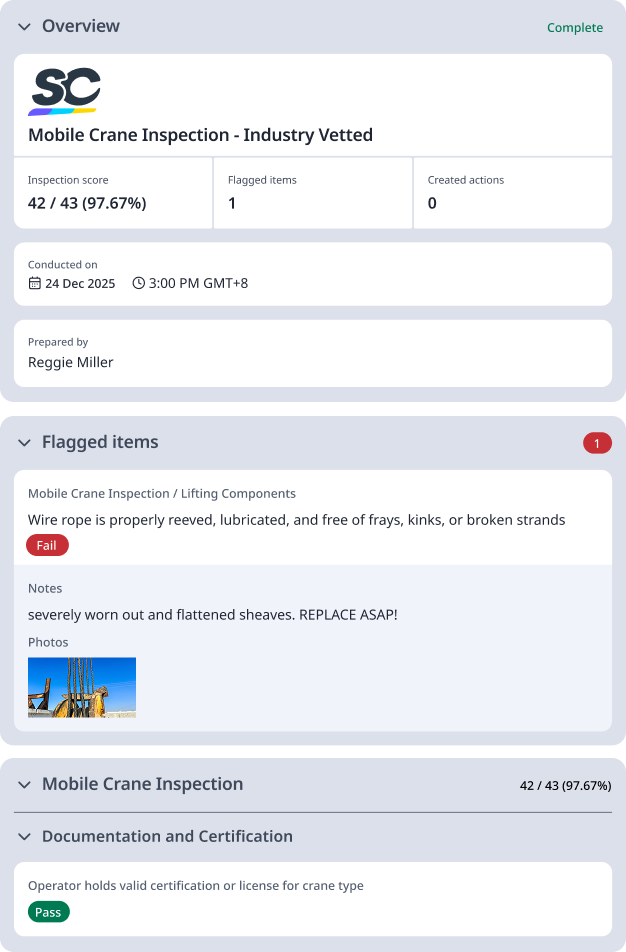
Sample Report
Here is an example of a mobile crane inspection checklist in use for reference:
Mobile Crane Inspection Checklist Sample PDF