Process Equipment in Modern Industrial Systems
Explore the role of process equipment in industrial processes, from core components to design, operation, and maintenance.
Explore the role of process equipment in industrial processes, from core components to design, operation, and maintenance.
Published 28 Apr 2026
Article by
7 min read
Process equipment refers to specialized machines and devices used to carry out chemical and materials processing. This kind of equipment includes mechanical and engineered systems that facilitate physical and chemical transformations, such as compressors, separation units, pressure vessels, heat exchangers, and reactors. These should meet operational, safety, and regulatory requirements to ensure efficiency across production environments.
As industries evolved from manual labor to mechanized production, processing equipment transformed the industry by automating tasks, which improved product consistency and manufacturing safety. From basic processing, such as food preservation, handstitching garments, or assembly by hand, advanced tools made operations faster and more reliable across industrial environments.
In the modern industrial landscape, process equipment is no longer just a functional requirement. It is a primary driver of competitive advantage. World-class facilities are defined by the precision of their equipment, ensuring chemical and mechanical compatibility, continuous uptime, and energy efficiency.
Manufacturing process equipment serves different purposes, from material transformation to heat, mass, and fluid transfer. Because each process has unique operational demands, equipment types vary widely. Selecting the right one is crucial to the long-term reliability of process manufacturing. Here are the different types of process equipment and specific examples:
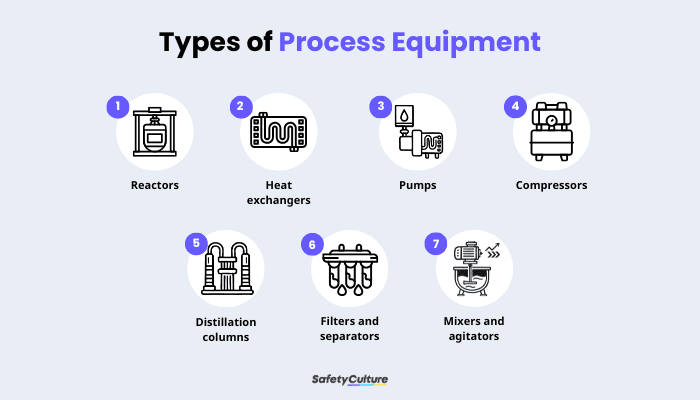
Widely used in chemical plants, pharmaceuticals, and petrochemicals, these vessels carry out chemical reactions under controlled conditions such as temperature and pressure.
Processes such as polymerization and vaccine bioreactors require extreme precision. The smallest temperature shift can ruin batches, costing millions. As such, utilizing the right equipment yields high results and avoids wasted runs.
Essential in power plants, HVAC systems, oil refineries, and food processing, this transfers her between two or more fluids without mixing them.
Shell and tube exchangers act like a radiator for refiners. They recycle heat. cutting fuel use. It is a must-have because it prevents equipment from overheating while saving millions in energy costs.
This moves liquids through pipelines by increasing fluid pressure or flow. It’s a necessary tool across industries, from manufacturing operations (e.g., chemical processing and food production) to utility services (e.g., water treatment, oil and gas).
Choosing the right pump for a particular process or material is vital in preventing clogs and cutting energy use. For instance, centrifugal pumps are for plain water while positive displacement pumps push thick syrups.
Commonly found in natural gas processing, refrigeration, and manufacturing plants, this increases the pressure of gases for storage or transport.
In automotive assembly plants, air compressors power the pneumatic robots and wrenches that build cars. Precise pressure prevents assembly errors and reduces energy waste, saving thousands in operational costs daily.
This separates liquid mixtures based on differences in boiling points. They are critical in oil refineries, chemical production facilities, and alcohol distilleries.
For example, giant fractionating columns in oil refineries sort crude oil into gasoline and diesel. Steady heat control boosts fuel yield, reducing waste and lowering production costs. Liquor producers can also increase alcohol purity and consistency with this equipment.
Used in wastewater treatment, pharmaceuticals, and food processing, these remove solid particles or separate liquids and gases from process streams.
In bottling plants, membrane filters remove microbes from juice and soda, ensuring a sterile product. Oil-water separators are must-haves in wastewater treatment, turning a potential environmental hazard into usable oil before discharge.
One of the most important process equipment components in the manufacturing system, these ensure liquids, solids, and slurries achieve uniform composition. They are widely used, from chemical manufacturing to food and cosmetics production.
High-shear agitators blend pigments and resins into uniform coatings. The perfect mix targets the right shade and prevents color separation. In commercial bakeries, mixers develop gluten for thousands of loaves. It prevents overmixing, saving facilities thousands of dollars in wasted ingredients.
To implement effective safety measures when handling process equipment, it’s important to understand the standards and regulations needed for compliance. For example, catastrophes like the Bhopal gas leak and the Texas City refinery explosion were partly due to failures in industrial equipment and systems. Both caused massive loss of life and environmental damage, and more importantly, exposed the need for strict standards. Here are the most relevant:
OSHA 1910.119 Process Safety Management (US) addresses hazardous chemical workflows. It requires hazard analysis, mechanical integrity programs, and employee training.
ASME Boiler and Pressure Vessel Code (US) is a widely adopted engineering code for pressure-containing equipment. Its focus is on safe design, fabrication, inspection, and testing.
Pressure Systems Safety Regulations (PSSR) (UK) govern pressure systems in operations. Regular inspections, safe operating limits, and maintenance prevent the release of highly hazardous chemicals.
Work Health and Safety Regulations (AU) focus on managing risks associated with high-risk facilities and industrial equipment. It necessitates safe design, operator training, and routine safety checks.
CSA B51 (Canada) requires registration of designs, certified fabrication, and periodic inspections to protect public and worker safety.
Pressure Equipment Directive (PED) 2014/68/EU (EU) regulates pressure equipment placed on the EU market. Manufacturers and users should follow essential safety requirements, from conformity assessments to technical documentation.
Operating complex process equipment is highly challenging, as manufacturers must balance safety, product quality, and regulatory compliance. Applying structured best practices prevents failures that may escalate quickly.
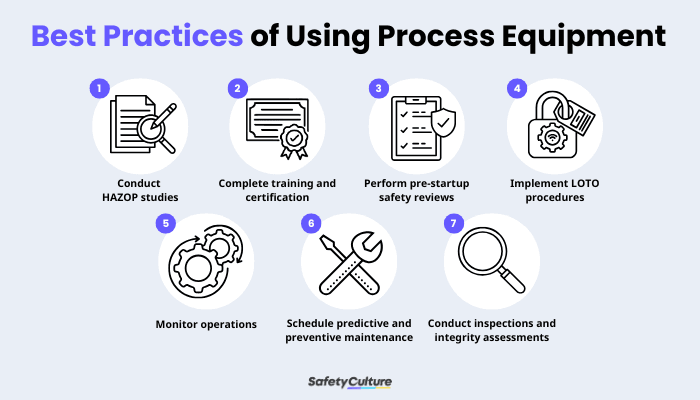
Systematically identify hazards and failure scenarios before operation. Risks should be addressed proactively, reducing the likelihood of unsafe designs or operating conditions reaching the production stage.
Train operators on equipment functions, limits, and emergency response. Knowledgeable personnel can detect abnormalities early, follow procedures correctly, and respond safely under abnormal conditions.
Verify equipment, controls, safeguards, and procedures prior to operation. Use digital tools like checklists to centralize inspections and maintain a comprehensive log. This confirms readiness, eliminating overlooked hazards, and ensuring all safety systems function as intended before exposure to live processes.
Energy sources must be isolated and secured before work begins. This prevents unexpected startup or energy release, protecting process equipment maintenance personnel from serious injury or fatal accidents.
Sensors continuously check for leaks, abnormal temperature and pressure, or hazardous atmospheres. They provide early warnings that help managers and frontline workers implement rapid corrective action before conditions escalate into fires, explosions, or toxic exposures.
Plan cleaning, calibrations, testing, and other servicing using performance data, vibration analysis, or wear indicators. Being proactive addresses degradation before failure, minimizing unplanned downtime and extending equipment life.
Inspect process equipment for corrosion, cracking, or deformation. This is a crucial component of manufacturing process management, ensuring vessels remain within safe operating limits, preventing catastrophic ruptures and regulatory non-compliance.
SafetyCulture is a mobile-first operations platform adopted across industries such as manufacturing, mining, construction, retail, and hospitality. It’s designed to equip leaders and working teams with the knowledge and tools to do their best work—to the safest and highest standard.
Digitize maintenance schedules, lockout/tagout procedures, and hazard assessments to ensure safety throughout the operations. Centralize training records and leverage analytics when reviewing relevant data for strategizing upgrades, minimizing breakdowns and ensuring regulatory compliance. Reduce unplanned downtime, enhance worker safety, and support continuous improvement across production lines through a unified platform.
✓ Save time and reduce costs
✓ Stay on top of risks and incidents
✓ Boost productivity and efficiency
✓ Enhance communication and collaboration
✓ Discover improvement opportunities
✓ Make data-driven business decisions
In this article