
Drought Management: Importance for Businesses and the Community
Learn what drought management is, why it’s important, and the key aspects in managing and planning for droughts.
Published 24 Oct 2025
Article by
SafetyCulture ContentTeam
8 min read
What is Drought Management?
Drought management is the process of preparing for, responding to, and mitigating the impacts of drought to reduce harm to people, agriculture, and the environment. It involves monitoring water resources, implementing conservation strategies, and developing plans to ensure sustainable water use. Effective drought management focuses on prevention and resilience rather than just reacting to water shortages.
Importance
Drought management is important because it helps communities build resilience and protect vital resources during prolonged dry periods. By integrating it into a disaster preparedness plan, governments and organizations can anticipate water shortages and minimize damage to agriculture, ecosystems, and livelihoods. This proactive approach ensures that measures such as water-rationing, crop diversification, and infrastructure upgrades are implemented in time rather than in crisis mode.
Droughts are becoming more common and more intense, which makes effective management even more critical. According to the Center for Climate and Energy Solutions ( C2ES ), climate change increases the odds of worsening drought in many parts of the world, as warming temperatures enhance evaporation, dry out soils and vegetation, and lengthen dry spells. As a result, communities face greater risk of water shortages, crop losses and ecosystem disruption if droughts are not managed properly.
Efficient drought management practices are also essential for business continuity and sustainability. When drought triggers restrictions or shortages in the market, continuity plans define how to maintain minimum viable operations, shifting processes and operations as needed. It also helps prepare businesses for changes in the supply chain, if any. An example of this is how the US and UK have been experiencing more droughts than usual,affecting many businesses worldwide.
Types of Droughts
One of the keys to preparing for and managing organizations during a drought is to understand the types of droughts specific areas can face. Here are some of the most common droughts experienced worldwide:
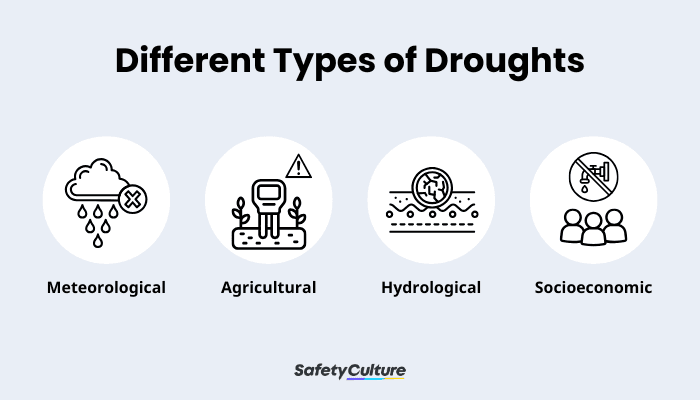
Different Types of Droughts
Meteorological
Meteorological drought occurs when an area receives significantly less rainfall than normal over a period of time. It is the earliest sign of drought, often triggered by changes in weather patterns or prolonged dry seasons. This type of drought can look different for different places, depending on regional climate norms.
Agricultural
Agricultural drought happens when soil moisture levels drop too low to support healthy crop growth and pasture productivity. It directly affects farmers and food supply chains, even if rainfall shortages are not extreme. This drought type highlights the close link between weather patterns and food security.
Hydrological
Hydrological drought develops when water levels in rivers, lakes, reservoirs, and groundwater sources fall below average. It often occurs after a long period of meteorological drought, as reduced rainfall limits water storage and flow. This type of drought affects drinking water supplies, energy production, and aquatic ecosystems.
Socioeconomic
Socioeconomic drought arises when water scarcity begins to impact people’s livelihoods, industries, and overall economy. It reflects the point at which demand for water exceeds the available supply for both social and economic activities. This type of drought often amplifies inequalities and highlights the need for coordinated management and policy responses.
Key Aspects of Drought Management
Drought management and preparedness doesn’t have to be a complex task. While teams are free to customize their preparedness plans to their needs, their plan will be enough if they make sure to cover the key aspects. Below are the key aspects of drought management that teams need to consider:
Risk Assessment and Monitoring
Risk assessment and monitoring involve identifying areas and sectors most vulnerable to drought and tracking environmental conditions like rainfall and soil moisture. By assessing these risks, governments and organizations can better understand potential impacts and prepare effective response strategies. Continuous monitoring, in particular, provides the data needed to detect early warning signs and guide decision-making before a crisis develops.
Early Warning Systems
Early warning systems play a crucial role in reducing drought impacts by alerting communities and authorities when conditions start to worsen. These systems, often in conjunction with risk monitoring systems, rely on meteorological data, satellite imagery, and climate models to predict drought onset and severity. When warnings are issued in time, farmers and local agencies can take preventive measures such as conserving water or adjusting planting schedules.
Water Resource Management
Organizations should focus on conserving and using water efficiently to ensure sustainable availability during dry periods. This includes promoting water-saving technologies, repairing leaks, recycling wastewater, and implementing fair distribution systems. By emphasizing conservation, communities can maintain essential water supplies for agriculture, industry, and households even during extended droughts.
Emergency Response
Emergency response involves implementing immediate actions to reduce harm once a drought has been declared. This can include creating and implementing business continuity plans and disaster preparedness plans; distributing water supplies; providing financial or technical assistance to affected teams, places, or individuals; and activating community relief programs. Quick and organized responses help minimize the human, economic, and environmental impacts of severe droughts.
Long-Term Planning
A long-term preparedness plan ensures that drought management is not just reactive, but part of a broader sustainability strategy. It includes developing policies for land use, water infrastructure, and climate adaptation to build long-lasting resilience. With forward-thinking plans, societies can better prepare for future droughts and lessen their long-term effects on people and ecosystems.
Integrate ESG principles into your operations
Drive sustainable growth and create long-term value with our ESG solutions.
Key Challenges
Drought management is essential for many governments and organizations. That said, the task comes with its fair share of challenges. Understanding these challenges is key to ensuring teams are prepared for whatever comes their way when planning and preparing for drought. Below are the key challenges teams are likely to face during this process:
Water Scarcity
Water scarcity is one of the biggest challenges in drought management, as it limits the availability of water for people, agriculture, and industries. When demand exceeds supply, it creates conflicts over water use and forces difficult decisions about allocation. Managing scarce water resources requires strong conservation policies, efficient infrastructure, and community cooperation.
Agricultural Impact
Droughts directly harm agriculture by reducing soil moisture, damaging crops, and decreasing yields. Farmers, water suppliers, and other types of producers during droughts face financial losses and may struggle to recover from repeated dry seasons, especially without access to irrigation. In turn, this can affect business processes as a whole. Effective drought management must include support systems, adaptive farming methods, and technologies to sustain agricultural productivity.
Food Security and Economic Loss
Prolonged droughts can disrupt food production and supply chains, leading to shortages and higher food prices. This affects both local economies and global markets, with vulnerable populations suffering the most. Addressing this challenge requires investment in resilient agriculture and policies that protect livelihoods during water crises.
Environmental Degradation
Lack of rainfall and overuse of water resources can degrade ecosystems, dry out wetlands, and reduce biodiversity. Droughts also increase the risk of wildfires and soil erosion, further harming the environment. Sustainable management practices are needed to balance human needs with the health of natural systems.
Data Gaps
Accurate data is essential for predicting, monitoring, and managing droughts, yet many regions lack reliable information. Incomplete data on rainfall, soil moisture, and water usage makes it difficult to assess risk and plan responses. Closing these data gaps through technology and collaboration can lead to more informed and timely decisions.
Coordination
Drought management often requires cooperation between multiple agencies, sectors, and levels of government. Without coordination, response efforts can become fragmented and inefficient, wasting resources and time. Building strong partnerships and communication channels ensures unified strategies and more effective drought resilience.
Best Practices for Drought Preparedness and Management
Here are some best practices to follow during the drought management process to enhance efficiency and effectiveness:
Promote Water Conservation
Encouraging efficient water use is one of the most effective ways to manage drought risk. This can include fixing leaks, using low-flow irrigation systems, and promoting awareness campaigns to reduce household and industrial water waste. When communities and businesses prioritize conservation, they help extend limited water supplies and build resilience during dry periods.
Develop Comprehensive Drought Plans
A well-structured drought management plan outlines actions to take before, during, and after drought events. It defines roles, responsibilities, and response strategies for organizations, government agencies, farmers, and communities. Having a clear plan in place allows for faster decision-making and minimizes confusion during emergencies.
Strengthen Early Warning Systems
Early warning systems allow communities to detect drought conditions before they worsen. By analyzing climate and soil data regularly, these systems provide timely alerts that guide water restrictions, agricultural planning, and relief efforts. Reliable early warning networks with timely analysis can significantly reduce the overall impact of droughts.
Encourage Sustainable Agriculture Practices
Promoting drought-tolerant crops,soil moisture monitoring and retention techniques, and smart irrigation helps reduce agriculture’s vulnerability to water shortages. These practices improve long-term productivity while preserving natural resources. Supporting farmers through training and incentives ensures that sustainability becomes a central part of drought management.
Integrate Modern Technology
Modern technology can enhance drought management through improved analytics, data storage, inspections, training, and communication. Digital dashboards can track water usage, while mobile tools with instant communication, digital forms, and alerts enable real-time reporting and collaboration among agencies. By using such tools, especially those with Internet of Things (IoT) sensors and asset management capabilities, organizations can make drought response faster, more coordinated, and data-driven.
Improve Drought Management Practices with SafetyCulture
Why Use SafetyCulture?
SafetyCulture is a mobile-first operations platform adopted across industries such as manufacturing, mining, construction, retail, and hospitality. It’s designed to equip leaders and working teams with the knowledge and tools to do their best work—to the safest and highest standard.
SafetyCulture complements your organization's efforts to implement and maintain ESG strategies. Through seamless data collection, real-time tracking, and reporting of your progress against sustainability goals, your organization can effectively drive sustainable growth and success.
Save time and reduce costs
Stay on top of risks and incidents
Boost productivity and efficiency
Enhance communication and collaboration
Discover improvement opportunities
Make data-driven business decisions
Related articles
Environmental Safety
Safety

Green Building for a Carbon-Neutral Future
Learn about green building, its components, and how it can help your business achieve its sustainability goals.
Safety
Risk Assessment

Machine Risk Assessment for Industrial Safety
Learn what machine risk assessment is, why it’s important, and the necessary steps to prevent workplace injuries and equipment failures.
Construction Safety
Safety

An Introduction to Core Drilling
Learn what core drilling is, why it’s used, and the best safety practices to during when core drilling.