
Celebrating Clean Air Day UK at Work
Learn more about Clean Air Day UK: what it is, why it is important, and how to participate in the event!

Published 5 Jun 2025
Article by
4 min read
What is Clean Air Day UK?
Clean Air Day is the UK’s largest nationwide air pollution campaign. Its held annually to raise awareness about the health and environmental impacts of air pollution and to inspire collective action for cleaner air. Organised by the environmental charity Global Action Plan since 2017, the event engages communities, schools, businesses, and healthcare professionals through educational resources and local initiatives. In 2025, Clean Air Day will take place on Thursday, June 19, focusing on empowering individuals to advocate for cleaner, greener transport options to protect public health and the environment.
History and Importance
Launched in 2017 by the environmental charity Global Action Plan in the UK, Clean Air Day aims to raise awareness about air pollution’s health and ecological impacts and inspire collective action for cleaner air. In the UK, air pollution is linked to approximately 40,000 early deaths annually, costing the economy up to £20 billion yearly due to healthcare expenses and lost productivity. This highlights the importance and urgency of taking action against pollution.
Businesses and organisations play a crucial role in the success of Clean Air Day. They can implement practises that reduce emissions such as promoting remote work, supporting active travel, and adopting cleaner technologies. Engagement from the business sector helps mitigate air pollution and demonstrates corporate responsibility and leadership in addressing environmental challenges.
How Organisations Can Participate
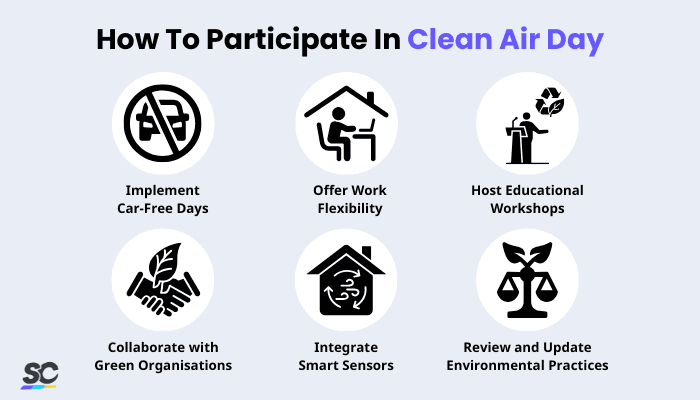
How To Participate in Clean Air Day
Participating in Clean Air Day in the UK can look different for each organisation. It’s important to think of initiatives that are feasible for the team while also helping to reduce pollution and improve the air in the area. Here are some ideas for businesses looking to observe this day:
Implement Car-Free Days
Companies can encourage employees to leave their cars at home by promoting walking, cycling, or taking public transport for the day. Organising a “bike to work” challenge or incentivising low-emission travel can help reduce traffic and air pollution. This initiative also raises awareness of sustainable commuting options.
Offer Work Flexibility
Allowing employees to work from home or adjust their hours can reduce peak-time congestion and emissions. Fewer commuters on the road leads to cleaner air and less stress for employees. This approach is an example of environmental analysis in action, identifying ways to cut emissions through operational shifts.
Host Educational Workshops
Workshops can inform staff about the health impacts of air pollution and how to reduce their environmental footprint. They also promote behavioural change by highlighting the importance of clean air at work and home. Interactive sessions can be led by experts or environmental organisations. These workshops can then be supplemented with mobile-ready training courses to ensure employees fully understand the importance of clean air and sustainable living.
Collaborate With Green Organisations
Collaborating with environmental charities or local groups can amplify impact and provide access to tools and expertise. These partnerships may include joint clean air pledges or community events. Such collaboration shows a strong corporate commitment to public health and sustainability.
Integrate Smart Sensors
Installing smart sensors helps track air quality in offices, warehouses, or other workspaces. Real-time environmental monitoring allows businesses to take immediate steps if pollution levels rise. These insights help guide long-term strategies for cleaner, healthier environments.
Review and Update Environmental Practices
Companies can conduct an internal review to identify sources of air pollution and inefficiencies. This might involve revising delivery schedules, replacing old equipment, or improving warehouse cleaning methods to reduce dust and emissions. Doing this regularly and not just during Clean Air Day ensures that air quality is a priority in everyday operations.
Explore SafetyCulture Monitoring Solution
Utilize advanced sensor technology to monitor assets, automate vital alerts, implement actions, and report urgent issues.
Addressing Air Quality Challenges with Modern Technology
Technological advancements have played a crucial role in tackling air quality challenges by providing practical, scalable solutions. Air purifiers equipped with HEPA and activated carbon filters help remove harmful particles and pollutants from indoor environments, creating safer spaces in homes and workplaces. Smart sensors offer real-time data on air quality, enabling businesses and governments to monitor pollution levels accurately and take timely action.
Additionally, the rise of remote work technologies has reduced commuting-related emissions, easing traffic congestion and lowering overall air pollution in urban areas. Together, these innovations support a cleaner, healthier atmosphere while promoting sustainable lifestyles.
An example of such a solution that can help streamline air quality monitoring and improvement is SafetyCulture. With its native integrations, sensor support, checklists, forms, and communication tools, workplaces can better create and implement strategies to ensure safer and cleaner air for all.
Observe Clean Air Day UK Effectively with SafetyCulture
Why Use SafetyCulture?
SafetyCulture is a mobile-first operations platform adopted across industries such as manufacturing, mining, construction, retail, and hospitality. It’s designed to equip leaders and working teams with the knowledge and tools to do their best work—to the safest and highest standard.
SafetyCulture complements your organisation’s efforts to implement and maintain ESG strategies. Through seamless data collection, real-time tracking, and reporting of your progress against sustainability goals, your organisation can effectively drive sustainable growth and success.
✓ Save time and reduce costs ✓ Stay on top of risks and incidents ✓ Boost productivity and efficiency ✓ Enhance communication and collaboration ✓ Discover improvement opportunities ✓ Make data-driven business decisions
FAQs about Clean Air Day UK
Related articles
Risk Assessment
Safety

A Comprehensive Guide to Risk-Benefit Analysis
Learn how risk-benefit analysis helps teams evaluate trade-offs, document residual risk, and support safer operational decisions.
Equipment Safety
Retail

Forklift Safety
Learn about the basics on forklift safety, forklift operator requirements, safety hazards and tips, and digital forklift tools.
Safety
Warehouse Safety
Key Strategies for Warehouse Emergency Preparedness and Response
Learn about warehouse emergency preparedness essentials, such as risk management, evacuation planning, and best practices to ensure safety.