Use this means of egress inspection checklist to keep exit paths compliant with fire and safety regulations. This checklist helps identify and address obstructed routes, broken emergency signals, and incomplete equipment.
A means of egress inspection checklist is a documented guide for inspecting all the parts of an emergency evacuation route. It lists the required checks to evaluate that exit paths, signage, and lighting can facilitate quick evacuation. This checklist ensures that each part will be visible, passable, and functional when guests and staff need to escape the premises.
Why is a Means of Egress Inspection Checklist Important?
A means of egress inspection checklist helps safety officers and facility managers keep exit routes accessible. It allows them to assess the path condition, ensuring it’s open and easy to find. This is essential to confirm so that evacuation takes as little time and distance as possible.
The checklist also ensures that evacuation routes consistently meet safety regulations while guiding staff on how to arrange, maintain, and mark exit paths.
Checklist Items to Include
A checklist should include all means of egress inspection requirements, taking into account each section along the route. It must also check off items to verify that there are no barriers along the way that could slow down or stop people from exiting. Make sure to inspect:
Walkways
Aisles, corridors, and floors should be marked free of objects such as:
Debris
Trash
Equipment
Lying materials
Emergency signs and lights
When inspecting whether exit signs and emergency lighting are working properly, look into the following:
In an earthquake and fire safety checklist, the stairways of an evacuation route should be evaluated based on:
Durability of handrails
Cleanliness of stair landings
Clearance from objects
Exit discharge
An earthquake and fire inspection checklist for means of egress shouldn’t overlook the exit discharge or the path that leads outside the premises. It should consider the following conditions:
Direct connection to a safe open space
Clearance from any obstructions
Separation from parked vehicles
Hazard controls
The exit path must maintain electrical, fall, and fire safety by:
Inspecting fire extinguishers
Cleaning out combustible materials
Clearing off low electrical panels and cables
Removing objects that can cause slips, trips, and falls
How to Use the Checklist
Here’s a brief guide for using a means of egress inspection checklist to ensure that the entire evacuation path is safe to pass through:
Provide the inspection’s basic information to make it easy to trace and reference. This includes the inspector’s name and the inspection time and date.
Go through all items and confirm that each section of the exit route is clean, open, and ready to use. Make sure to leave no item unchecked to prove that the exit path is accessible.
Record and report any identified issues along the route immediately. Assign the appropriate repair or clean-up right away, and document corrective actions in the checklist.
Attach images and documents to support each completion, issue, and correction throughout the inspection.
Evaluate the overall compliance of the evacuation path based on the checklist results.
Authorize and complete the checklist by signing off.
Sample Means of Egress Inspection Report
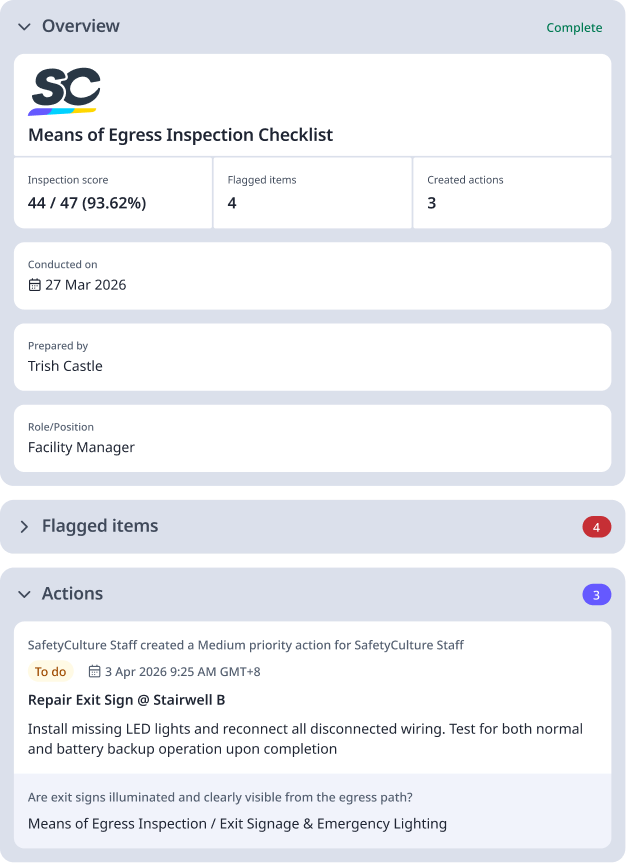
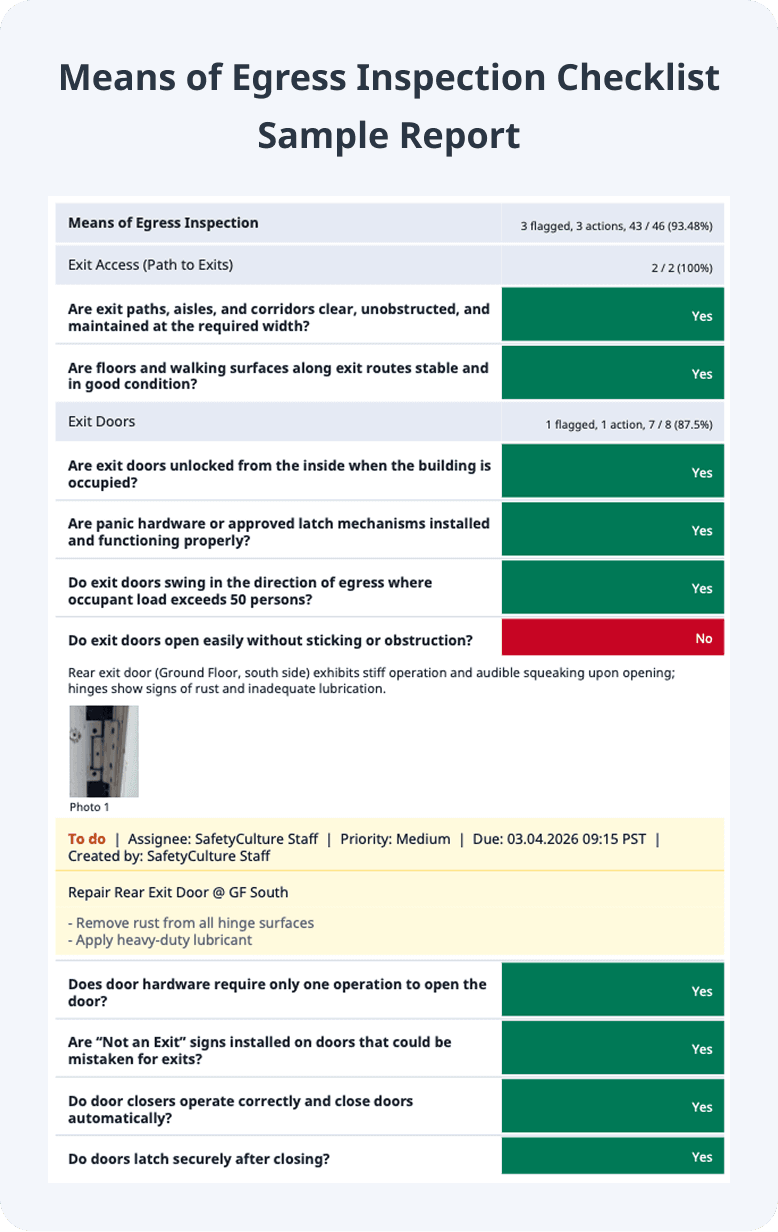
Below is an example of a completed means of egress inspection report. See how the checklist confirms compliance with evacuation standards:
See How Scotsman Hospitality Group Manages Venue Operations
SafetyCulture gives our staff a sense of responsibility and ownership for their venues. It’s completely transparent and improves staff awareness of what’s going on: which, in turn, drives up standards.