Importance
Using a waste storage and disposal area inspection checklist is essential for an effective waste management system. With this checklist, EHS managers will oversee the team to:
Ensure environmental regulatory compliance: A completed checklist provides documentation and records to validate the company's compliance with the Environmental Protection Agency (EPA) guidelines, such as the Resource Conservation and Recovery Act (RCRA).
Protect the environment: Proper waste segregation and treatment from various waste management types prevent contamination of soil, water, and air. It also encourages the reuse and recycling of materials, reducing pollution risks.
Support operational efficiency: Following structured and consistent waste storage and disposal guidelines ensures that waste containers and disposal areas remain adequately filled, preventing overflow and overstorage.
Reduce health and safety risks: This checklist helps identify hazards in waste storage and disposal areas, including potential pest infestations, blocked aisles, overflowing waste containers, and accidental leaks.
What to Include in a Waste Storage and Disposal Area Inspection Checklist
A waste storage and disposal area inspection checklist includes various components to help businesses manage waste storage and sorting. This can be customized for various formats, but common features of the checklist include:
Physical area and pest control:
This section examines the physical area of the storage area, including surrounding odors and bin covers, and monitors pest control measures. It has four sub-sections:
Structural integrity: Focuses on the physical conditions of the area, including floors, walls, ceilings, drains, lighting, and doors.
Odors: Recognize and investigate any strong or persistent smell in the area.
Bin Covers: Indicate checking whether the bins have intact covers.
Pest activity: Considered one of the waste storage area requirements, this sub-section monitors pest control measures, including pest control devices.
Hygiene and sanitation
This is also part of a waste storage area inspection checklist that tracks cleaning activities. It includes components such as:
Cleaning schedule: Discusses schedule and completion of cleaning activities, including deep cleaning and task assignments.
Chemical usage: Reviews the chemicals stored in the area and provides labels and safety data sheets for them.
Dilution and contact time: Validate chemical dilution and assess staff knowledge of the dilution process.
General housekeeping: Checks for potential hazards, including loose waste, overflowing bins, blocked pathways, and improper waste storage.
Waste segregation and labelling
This component validates segregation and labelling for waste materials in the storage area. It has three sub-components:
Signage: Checks the signage displayed for general waste, recycling, food waste, and hazardous waste in the area.
Correct sorting: Validates the separation of waste, such as food waste from general waste and hazardous waste from other waste.
Cross-contamination: Tracks the separation of waste materials and usage of appropriate waste bins to prevent cross-contamination and spills.
Collection and logistics
To avoid overfilling and contamination, this field records whether pickups were completed or missed. It includes parts like:
Scheduled pickups: Evaluate the frequency and documentation of waste collection in the disposal area and check for any contingency plans in case of overflow.
Documentation: Confirms the completion of waste transfer notes and hazardous waste, and their alignment with the local regulations.
Missed pickups: Verifies missed collections, notifications, temporary control measures, and escalation for recurring issues.
Corrective actions and escalations
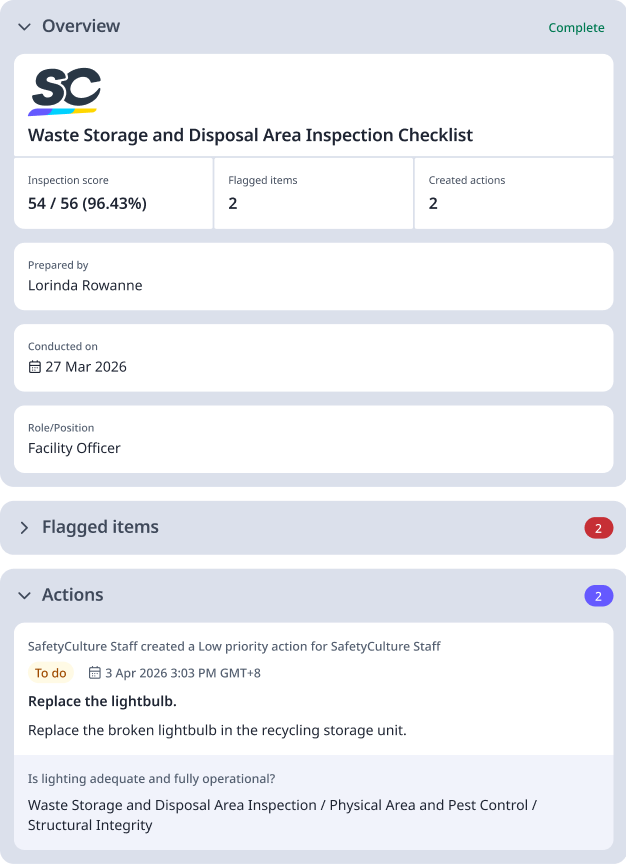
This section focuses on recording non-compliances and delegating corrective actions to staff members. It also includes reporting issues to management and scheduling follow-up inspections.
How to Use This Checklist
Follow these steps to create an effective waste storage and disposal area inspection report:
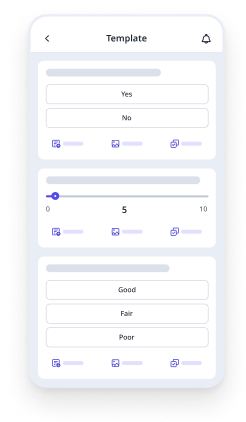
Provide the necessary details on the title page. This usually includes the inspector's or supervisor's name, the date and time, and the inspection location.
Assess and evaluate the physical area, pest control, hygiene, and sanitation of the waste storage and disposal area.
Review and track the waste segregation activities, including displaying the type of waste sorted.
Document the scheduled pickups and report any missed collections or issues. Assign corrective actions if needed.
Attach media, annotations, and notes as supporting evidence for the waste storage and disposal area conditions.
Complete the checklist with a sign-off.
Sample Waste Storage and Disposal Area Inspection Report
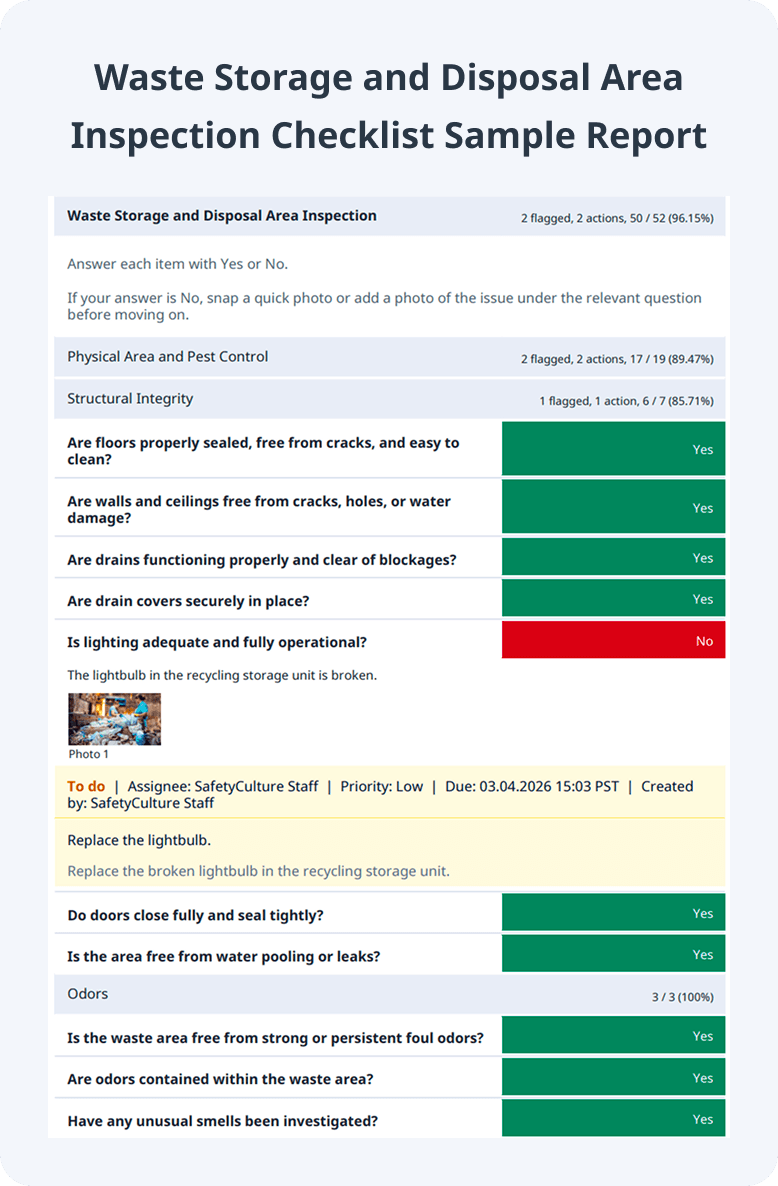
For reference, here is a completed waste storage and disposal area inspection report:
Preview Waste Storage and Disposal Area Inspection Sample PDF Report