
Understanding Atmospheric Testing for Confined Space Safety
Explore the importance of atmospheric testing in detecting hazardous gases and ensuring worker safety.
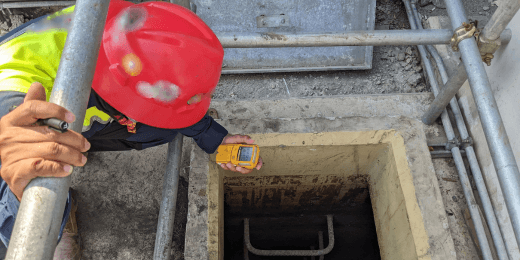
Published 5 Dec 2025
Article by
7 min read
What is Atmospheric Testing?
Atmospheric testing is the systematic process of evaluating the air quality within a confined space or work environment. It measures oxygen concentration, identifies and quantifies toxic or hazardous contaminants, and determines the presence of flammable or explosive atmospheres. This must be conducted as per occupational safety standards to mitigate known risks and protect workers from harm.
Importance
Air within confined or poorly ventilated spaces poses a significant, often invisible, hazard. Tragic industrial incidents, such as the 1990 ARCO explosion in Channelview, Texas, underscore the importance of rigorous atmospheric testing for confined spaces. The US Bureau of Labor Statistics (BLS) reports over 1,000 fatalities in cramped, oxygen-deficient atmospheres, emphasizing the need for increased diligence in confined spaces. Here are some specifics:
Protect workers from hidden hazards : Regular air monitoring uncovers invisible dangers (e.g., low oxygen, toxic gases, flammable vapors) that workers can’t sense in time. It allows them to do their job right and end their workday safely.
Reduce rescue and secondary casualty risk : A report states that over 60% of rescuers become victims while trying to save someone trapped in a hazardous confined space. The simplest air quality assessment can prevent this chain.
Ensure compliance with safety regulations : Many occupational health and safety standards require this assessment as part of entry protocols into confined spaces. Failing to conduct this can lead to regulatory fines and serious enforcement actions.
Support informed decision-making and control measures : When atmospheric conditions are known, safety teams can decide which control measures will work best. Leveraging actionable data is always better than guesswork.
Minimize financial, operational, and reputational costs : Accidents can halt operations, cause damage, draw regulatory scrutiny, and harm the company's reputation. Investing in atmospheric testing equipment is more cost-effective than the consequences of failure.
Improve your EHS Management
Cultivate a safe working environment and streamline compliance with our EHS solutions.
What are the Different Types of Atmospheric Testing?
Atmospheric testing for confined space isn’t a one-size-fits-all process. The behavior of hazards varies significantly across diverse workplaces. Furthermore, a single workplace may have simultaneous hazards, hence the need to use comprehensive methodologies:
Atmospheric Test | Purpose and Process | Ideal Application |
Oxygen Level Testing | Thismonitors air quality, determining if there is enough oxygen to breathe safely. A calibrated oxygen sensor measures the percentage of oxygen in the air, targeting the safe range of 19.5%–23.5%. | Use before ANY confined space entry, including the following: Tank cleaning Purging Inerting |
Combustible Gas Testing | This detects flammable gases or vapors that may ignite or explode. Combustible gas indicators measure gases as a percentage of the Lower Explosive Limit (LEL). Readings above 10% require ventilation or evacuation. | Refineries Fuel storage terminals Pipeline work Hot work operations Spaces with solvents or hydrocarbons |
Toxic Gas Testing | This is used to identify harmful gases that may cause poisoning or long-term health problems. A gas detector with electrochemical or photoionization sensors evaluates concentration in parts per million (ppm). | Wastewater treatment plants Chemical manufacturing Mining Spaces with biological decay |
Multi-Gas Testing | This simultaneously detects multiple hazards (e.g., oxygen levels and combustible gases). A multi-gas meter is used to read the full atmospheric profile before entry and periodically during work. | Use before ANY confined space entry. |
Continuous Atmospheric Monitoring | This ensures atmospheric conditions remain safe over time, especially during high-risk or long-duration work. A fixed or portable atmospheric testing device is placed inside the work area, providing real-time readings. Alarms are automatically triggered if readings go beyond safe limits. | Lengthy confined space entry Hot work Work with volatile chemicals |
Create your own Confined Space Safety checklist
Build from scratch or choose from our collection of free, ready-to-download, and customizable templates.
Which Standards and Regulations Govern Atmospheric Testing?
Confined space fatalities are almost always preventable. The test is relatively simple, so disregarding it is inexcusable. Because violations can result in loss of life, regulators enforce strict penalties, including hefty fines, criminal charges, and business shutdowns. Here are the specifics from various regulators across the globe:
US OSHA Confined Space Standards : Employers must test the internal atmosphere (including oxygen, flammable gases or vapors, toxic contaminants) using calibrated equipment. Continuous monitoring is also required.
UK Confined Spaces Regulations 1997 : Entry into confined spaces should be avoided. If this is impossible, risk assessments and extensive atmospheric testing should be conducted. Testing should be done by “competent persons” with complete respiratory apparatus .
Australia WHS Regulations and Codes of Practice : Confined spaces must be air-tested before entry . Ventilation or purging should be applied based on results. Continuous monitoring by Persons Conducting a Business or Undertaking (PCBUs) is also a must.
EU Directives and National Regulations : Conduct appropriate air monitoring before and during work, with special emphasis on Chemical Exposure Limits (CELs) and ventilation requirements . Note that local regulators in member states have stricter requirements.
Canada CSA Z1006 Standard : Initial and continuous atmospheric testing should be conducted when hazards are possible. Instruments should be calibrated and bump-tested, while workers should be trained to interpret readings.
How is Atmospheric Testing Conducted?
Atmospheres within enclosed spaces are inherently unpredictable. The presence of invisible hazards further complicates tasks. Following a clear, structured procedure to determine confined space atmospheric testing levels is vital to saving lives.
Step 1: Assess hazards before entry.
As the foundation for the entire process, this helps focus the test and plan controls. These are some must-haves under this phase:
Job scope
Potential sources of hazards
MSDS/SDS of chemicals present
Confined space drawings
Previous atmospheric logs
Ventilation, isolation, and rescue plans based on risks
Step 2: Select and calibrate equipment.
False negatives are deadly. Appropriate and properly calibrated equipment is essential to ensure accurate and reliable readings. Companies should always have these tools in hand:
Multi-gas meters that can measure Oxygen (O₂), Lower Explosive Limit (LEL), Carbon monoxide (CO), and Hydrogen sulfide (H₂S)
Specific sensors for Chlorine (Cl₂), Ammonia (NH₃), Sulfur dioxide (SO₂), Volatile Organic Compound/Photoionization Detector (VOC/PID)
Calibration gas kits and stations
Bump test kits
Safe Personal Protective Equipment (PPE) , including respirators
Step 3: Conduct initial testingoutsidethe space.
Never send a tester into a potentially lethal atmosphere. Because hazards can extend outside the access points, do a test in this “clean” area first. Here are some best practices:
Place the probe at the entry opening and sample the breathing zone.
Use an extension probe or aspirator pump to sample deeper into the space, where heavier gases settle.
Read and record in this order: O₂ → LEL → toxic gases.
Step 4: Test different atmospheric zones.
Atmospheric conditions vary within a space. Pockets of gas, stratification, or gradients near equipment or drains should be tested to prevent missing hazards. The following tips can help:
Map sampling points on the permit or diagram.
Use extended tools to reach confined depths.
Document and clearly label each zone’s readings.
Step 5: Monitor regularly.
Initial safe readings don’t guarantee conditions remain safe. This step detects changes from processes, equipment failures, or work activities. Consider the following best practices:
Install fixed monitors for area surveillance or have entrants wear portable meters.
Set alarms per regulated limits.
Keep a trained attendant outside the confined space for monitoring.
Step 6: Record and document results.
This step provides an auditable history. It shows due diligence and supports incident investigation, trends analysis, and regulatory compliance. These should be included in the logs:
Initial and subsequent readings
Instrument ID
Calibration status
Tester name
Date and time
Actions taken
Step 7: Implement corrective actions.
Testing shouldn’t stop at logging hazard details. Safety personnel should be ready with actions to eliminate, reduce, or control those hazards so frontline workers can proceed with their tasks.
Aside from implementing common controls (e.g., forced ventilation, purging or inerting, isolation of sources, etc.), organizations must also prepare and maintain evacuation and rescue procedures. The priority should always be the worker’s safety.
Efficiently Test Atmospheric Conditions with SafetyCulture
Why Use SafetyCulture?
SafetyCulture is a mobile-first operations platform adopted across industries such as manufacturing, mining, construction, retail, and hospitality. It’s designed to equip leaders and working teams with the knowledge and tools to do their best work—to the safest and highest standard. Efficiently manage and streamline health and safety processes across the organization, including incident management, safety audits and inspections, risk assessment, waste management, and more, using a comprehensive EHS software solution.
Capture real-time data and track atmospheric test results, and get alerts when limits are reached or exceeded using customizable checklists and sensor data. Schedule regular monitoring, manage compliance documentation, and coordinate corrective actions swiftly via a centralized dashboard. Enhance safety risk management and compliance adherence before and during work in confined spaces through extensive atmospheric testing with the help of a unified platform.
Save time and reduce costs
Stay on top of risks and incidents
Boost productivity and efficiency
Enhance communication and collaboration
Discover improvement opportunities
Make data-driven business decisions
FAQs About Atmospheric Testing
Related articles
Environmental Safety
Safety

Green Building for a Carbon-Neutral Future
Learn about green building, its components, and how it can help your business achieve its sustainability goals.
Safety
Risk Assessment
Machine Risk Assessment for Industrial Safety
Learn what machine risk assessment is, why it’s important, and the necessary steps to prevent workplace injuries and equipment failures.
Construction Safety
Safety
An Introduction to Core Drilling
Learn what core drilling is, why it’s used, and the best safety practices to during when core drilling.