A Comprehensive Guide to Warehouse Automation
Explore how warehouse automation reshapes daily operations, empowering teams to work faster, reduce errors, and scale with greater confidence.
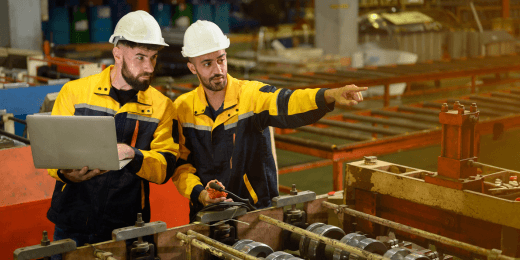
Explore how warehouse automation reshapes daily operations, empowering teams to work faster, reduce errors, and scale with greater confidence.
Published 5 May 2026
Article by
7 min read
Warehouse automation refers to the use of technology and automated systems to streamline day-to-day work and enhance the efficiency of warehouse operations. It reduces manual effort, improves accuracy, reduces errors, and speeds up operations.
Automation also helps make better use of space and supports safer operations by lowering the risk of handling mistakes. For many businesses, these tools are becoming essential as they keep up with growing demand and more complex supply chain.
The warehouse automation market may reach 41 billion dollars by 2027, growing by 75 percent in recent years. Various factors drive this rapid growth, such as labor shortages, supply chain issues, and the continued rise of e-commerce.
With these pressures increasing, more businesses are using automation to improve performance, build stability, and support long-term scalability.
Here are the reasons to automate your warehouse management:
Higher throughput and faster order processing: Today’s consumers expect fast delivery. Forty-five percent are willing to pay extra for next-day delivery, and 55% for same-day delivery. Automation speeds up picking, sorting, and shipping to help warehouses meet rising delivery expectations.
Improved accuracy and fewer errors: Automated systems minimize mispicks and packing mistakes. This is essential because 23% of online returns occur when customers receive the wrong item.
Better inventory control and real-time visibility: Integrations with warehouse management systems and Internet of Things (IoT) sensors provide up-to-date inventory data, reducing stockouts and excess stock.
Operational continuity during labor shortages: Robots and automated systems maintain productivity even when hiring challenges arise, allowing operations to run around the clock.
Optimized warehouse space: Smart solutions like vertical lift modules can free up as much as 90% of floor space, making it easier to scale without relocating or expanding.
Improved employee safety: Automation handles heavy lifting and repetitive or hazardous tasks, reducing injuries from overexertion, falls, and contact with objects.
Scalable operations for growth and peak seasons: Automated systems adjust quickly during demand spikes such as holidays or major sales events.
Support for sustainability goals: Modern systems run only when needed and switch to low-energy standby modes when idle, reducing energy use and operating costs.
Warehouses rely on many repetitive tasks that take time and are prone to human error. Automating these steps reduces costs while improving accuracy and productivity.
Below are some of the warehouse processes you can automate:
Receiving: Scanners and RFID technology speed up identification and sorting of incoming goods. Such systems minimize errors while increasing throughput.
Returns: Conveyor systems and automated sorters efficiently move returned products back into stock or storage. These solutions cut handling time and improve inventory accuracy.
Putaway: Automated systems analyze inventory data to choose efficient storage locations, reducing travel time and optimizing space utilization.
Picking: Robotics and pick-to-light tools make retrieving items faster and more accurate than manual picking.
Sorting: Conveyor belts, scanners, and other tools group items by size, weight, or destination for organization and handling.
Replenishment: Automated tracking monitors stock levels and triggers reorder requests when necessary. It prevents overstocking and reduces spoilage or theft losses.
Packaging: Automated packaging systems determine the best carton size and materials for each item, balancing cost, durability, and environmental factors. These systems improve efficiency while reducing material waste.
Shipping: Automated shipping systems select carriers, calculate rates, and accurately label packages, helping teams dispatch orders quickly.
Businesses can choose from several levels of warehouse automation depending on their needs. These range from simple tools that reduce manual work to advanced systems powered by AI. The following are the different categories of warehouse automation:
Basic warehouse automation: Includes tools like conveyors, forklifts, pallet jacks, Automated Storage and Retrieval Systems (ASRS), and barcode scanners that make manual tasks easier.
Warehouse system automation: Uses software, AI, ML, and data analytics to streamline processes. For example, a WMS groups similar items so workers can pick them together and spend less time walking.
Mechanized warehouse automation: Robotic equipment helps with picking, loading, and moving goods. Autonomous shelf loaders and robotic pickers reduce physical strain and boost efficiency.
Advanced warehouse automation: Combines robotics, AI navigation, and sensor networks for fully integrated operations that replace labor-heavy tasks.
A wide range of automation technologies can support warehouse operations. Some of the most commonly used technologies include:
AI and ML analyze real-time data to improve inventory accuracy and demand forecasting. These systems help identify workflow patterns and reduce bottlenecks. With AI-driven insights, warehouses can even optimize their layouts to improve efficiency.
AS/RS solutions use robotic cranes, shuttles, and vertical lift modules to store and retrieve items. They reduce manual labor, improve picking accuracy, and maximize available space. These systems connect directly with WMS platforms to streamline fulfillment.
AMRs independently navigate warehouse floors using sensors and AI to safely transport items. They adapt to dynamic environments and avoid obstacles without human control. This allows teams to focus on higher-value work instead of routine material movement.
AGVs follow fixed routes using magnetic strips, markers, or sensors to move goods between locations. They provide predictable, consistent transport and reduce manual handling.
G2P systems bring items directly to workers using conveyors, vertical lifts, or carousels. It reduces walking time, lowers congestion, and increases order-picking accuracy. As a result, fulfillment becomes faster and more efficient.
Sensors and IoT devices monitor equipment health in real-time and flag potential issues before they cause downtime. This predictive approach reduces repair costs and keeps operations running smoothly.
Fleet management systems track and coordinate warehouse vehicles, such as forklifts, pallet jacks, Automated Guided Vehicles (AGVs), and Autonomous Mobile Robots (AMRs). These systems offer real-time insights into vehicle usage, location, maintenance, and performance.
In fact, 75 percent of fleet managers rely on fleet management software and telematics for their daily operations.
Pick-to-light systems guide workers to the correct locations with illuminated indicators. They increase order picking speed and accuracy by 30-50 percent.
Voice-directed systems relay verbal instructions to help warehouse workers fulfill orders. These systems typically integrate with a Warehouse Management System (WMS) or Enterprise Resource Planning (ERP) software. It increases order accuracy and helps workers stay focused and efficient.
Cobots operate safely alongside people to assist with picking, packing, and palletizing. They reduce manual strain and help teams handle repetitive tasks more efficiently. According to a study, cobots can increase efficiency by 30 percent.
Implementing warehouse automation is most effective when supported by a clear strategy that boosts efficiency and increases Return on Investment (ROI). The practices below help companies deploy automation smoothly while reducing risks and maximizing long-term value.
Conduct a complete needs assessment: Start by identifying workflow gaps, recurring errors, and areas with high labor demand. Match these findings to your operational goals to determine where automation will have the greatest impact.
Select technology that fits your operations: Each warehouse has its own layout, product mix, and performance expectations. Look for tools that match your needs and can integrate with systems already in place. Scalable systems support long-term growth.
Build a structured implementation plan: A phased rollout helps teams adapt and reduces risk. Clear timelines and milestones make it easier to manage progress. Testing new tools in a smaller area first allows you to refine workflows.
Train employees and strengthen adoption: Training should cover how to use the system, how to troubleshoot common issues, and how workflow may change. Clear communication helps teams feel confident and reduces resistance.
Improve data collection and system integration: Accurate data supports better decisions. Automation works best when it’s connected to your WMS, so information stays consistent across inventory, labor, and order processes.
Plan for long-term scalability: Choose systems that can support sudden shifts in demand, layout changes, and future expansion. Scalable tools protect your investment and maintain ROI as your business grows.
SafetyCulture is a mobile-first operations platform adopted across industries such as manufacturing, mining, construction, retail, and hospitality. It’s designed to equip leaders and working teams with the knowledge and tools to do their best work—to the safest and highest standard.
Streamline processes, eliminate bottlenecks, enhance resource utilization, and build an agile and scalable infrastructure with SafetyCulture. Strive for operational excellence to boost competitive advantage, foster sustainable growth, and deliver long-term value.
✓ Save time and reduce costs
✓ Stay on top of risks and incidents
✓ Boost productivity and efficiency
✓ Enhance communication and collaboration
✓ Discover improvement opportunities
✓ Make data-driven business decisions
In this article