LOLER Explained: Ensuring Safe Lifting Operations in the Workplace
Learn the essentials of LOLER, from safe lifting practices to inspection duties, to reduce risks and stay compliant.
Learn the essentials of LOLER, from safe lifting practices to inspection duties, to reduce risks and stay compliant.
Published 28 Apr 2026
Article by
6 min read
LOLER is a set of workplace safety regulations in the UK designed to prevent injuries caused by lifting equipment. The acronym LOLER stands for Lifting Operations and Lifting Equipment Regulations under the Health and Safety at Work Act of 1974. The law ensures that all lifting equipment is strong, stable, and suitable for its intended use, and that all lifting operations are properly planned, supervised, and carried out by competent individuals.
The Health and Safety Executive (HSE) recognizes the significant risks associated with lifting operations. It became essential to develop a more robust and unified regulatory framework to improve occupational health and safety and protect workers from severe injuries and potential fatalities.
Before LOLER, lifting activities were governed by fragmented, industry-specific rules, such as the Construction Regulations of 1981. These left gaps in sectors like energy and utilities, logistics, and commercial cleaning. Aside from regulating all operations that require lifting equipment, LOLER strengthened protections and legal requirements. Its impact is clear: a 31% reduction in reported lifting incidents according to an HSE study.
Stay ahead of regulations and maintain a safe workplace with a digitized compliance tool.
Under LOLER, lifting equipment is defined as “work equipment used for lifting or lowering loads, including attachments used for anchoring, fixing, or supporting the load.” Here are some examples:
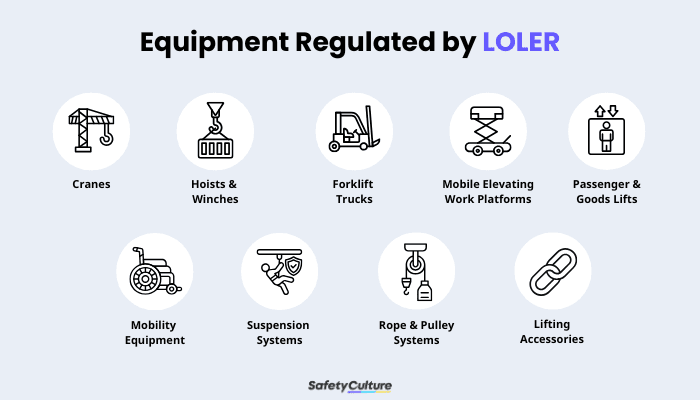
Cranes (overhead, tower, gantry)
Hoists and winches (electric and hydraulic)
Forklift trucks (including telehandlers, pallet tines, and loader buckets)
Mobile elevating work platforms (MEWPs)
Passenger and goods lifts
Care home and mobility equipment
Suspension systems (e.g., dumbwaiters, cleaning cradles)
Rope and pulley systems
Lifting accessories (e.g., slings, shackles, hoods, chains, eyebolts)
Escalators, roller shutter doors, and some pallet trucks are generally not covered by LOLER since they don’t principally lift or lower. However, these may fall under other regulations, like the Provision and Use of Work Equipment Regulations (PUWER) 1998.
HSE inspections are a core part of LOLER enforcement, ensuring workplace safety and legal compliance across industries that use lifting equipment. While there is no fixed public schedule, competent HSE personnel conduct spot checks or investigations triggered by risk assessments, complaints, or routine enforcement visits.
During an inspection HSE officers usually examine lifting equipment onsite, review maintenance and inspection records, and interview responsible personnel to verify compliance.
Build from scratch or choose from our collection of free, ready-to-download, and customizable templates.
Under the law, the operational responsibilities for ensuring the thorough LOLER assessments fall upon employers and designated dutyholders. These are their main obligations and how they can effectively fulfill them:
Unsuitable or faulty equipment increases the risk of failure, accidents, or serious injury to workers and bystanders. HSE requires lifting equipment to be:
Appropriate for intended use
Marked with safe working loads (SWL)
Regularly maintained and thoroughly examined
Inspections intervals include:
Lifting accessories and equipment that carry people - every 6 months
Other lifting equipment - annually
New equipment - before first use, especially without a valid certificate
After significant repairs or parts replacement
After involvement in an accident
Using LOLER checklists for pre-checks and combining inspections with routine maintenance helps identify defects early and remove or tag out unsafe equipment and accessories.
Poor planning can lead to unstable loads, collisions, dropped materials, and unsafe work zones. Whether simple or complex, all lifting operations must be systematically organized by competent personnel and completed under supervision. Here are some best practices:
Plan operations in advance and create standardized lifting plans and method statements.
Use a permit-to-work system for high-risk or complex lifts.
Involve the safety officer during the planning stage.
Competence minimizes human error, improves decision-making during lifts, and ensures proper use of equipment. It is up to the employers to hire, train, and authorize knowledgeable and skilled individuals to carry out lifting operations, including slinging, signaling, and operating the machinery.
Provide targeted LOLER and safety training, assessing capability before work starts.
Maintain up-to-date training records for lifting-related roles.
Assign supervisors to support less experienced workers.
On-site checks detect unsafe practices, changing conditions, or deteriorating equipment. Regularly conducting inspections of lifting activities, evaluating associated risks, and implementing controls prevents incidents and mitigates the consequences, in case an accident occurs.
Use LOLER-specific checklists for inspections and risk assessments.
Monitor weather and environmental conditions for outdoor lifts.
Immediately address any observed hazards or non-conformities.
HSE requires companies to keep thorough examination reports and related documents for at least two years. Documentation should include details like:
Inspection dates
Defects found
Corrective actions taken
Training activities
Certifications of competent personnel
Digital platforms can help centralize and automate recordkeeping, so documents remain accessible for internal audits and HSE spot checks.
Businesses in the UK understand that strictly following the regulations is vital to prevent costly accidents and downtimes. However, incomplete or rushed inspections still occur, implying compliance gaps remain. Here are the possible causes and how they can be overcome:
Complex and technical requirements - Finding a competent person with specialized LOLER knowledge can be difficult for companies without in-house expertise. The technical nature of inspections and equipment-specific risks add to this challenge. Engaging external inspectors and investing in training and competency can help overcome this issue.
Resource and cost constraints - Regular inspections, maintenance, and recordkeeping can introduce financial and operational strain. Downtime during inspections and repairs may also deter compliance. In addition to leveraging government support, including compliance budgeting during the planning stage of the lifting operation, can help minimize the burden.
Coordination across teams and sites - Managing lifting operations across multiple teams or locations can create communication gaps and inconsistent practices. Centralized management systems and robust communication channels help distribute strategic plans efficiently and resolve issues in real time.
SafetyCulture is a mobile-first operations platform adopted across industries, such as manufacturing, mining, construction, retail, and hospitality. It’s designed to equip leaders and working teams with the knowledge and tools to do their best work—to the safest and highest standard.
Simplify compliance and reduce the risk of human error by keeping all LOLER inspections, lifting equipment records, and certifications in one place. With targeted LOLER training built in, your team can report equipment issues in real time and address problems to keep everyone safe.
✓ Save time and reduce costs
✓ Stay on top of risks and incidents
✓ Boost productivity and efficiency
✓ Enhance communication and collaboration
✓ Discover improvement opportunities
✓ Make data-driven business decisions