Published 20 Feb 2026
Article by
3 min read
What is a Cold Food Holding Safety Checklist?
A cold food holding safety checklist outlines the steps necessary for proper cold food storage. From temperature checks to equipment maintenance, it ensures that all critical aspects are addressed to prevent bacterial growth and contamination in cold food.
Why It’s Important
Using a cold food holding safety checklist offers the following advantages for food establishments that refrigerate goods. It:
Prevents foodborne illnesses: A checklist verifies that cold food holding temperature logs should fall below 41°F to prevent the growth of bacteria, such as Salmonella and Listeria.
Maintains compliance: With a checklist, businesses can verify compliance with cold food storage regulations established under the Food and Drug Administration (FDA) Food Code .
Avoids food spoilage: Checklists effectively keep time and temperature control for safety (TCS) food at a specific temperature. It prevents food from going bad, reducing the number of spoiled stocks.
Cuts costs: By preventing food spoilage, checklists also eliminate the need to buy replacement stock, significantly minimizing waste.
Cold Food Holding Safety Checklist Items and Fields
A cold food holding safety checklist must cover key areas to ensure food remains safe from harmful bacteria. Specific items and fields in the checklist might vary based on what food you’re keeping, but general items and fields should include the following:
Temperature probe readings for each cold-holding unit or food batch (aim for 41°F/5°C or below)
Date and time of every check (logged at least every 2-4 hours)
Employee name or initials for signing off
Food item name or types and their locations
Cooler air temperature (should match food temperature)
Action notes (when issues arise)
How to Use a Cold Food Holding Safety Checklist
Record the date, shift period (e.g., "AM Shift 8:00-12:00"), and your initials at the form's header.
Specify the unit or area for clear identification (e.g., “Refrigeration Unit #1”).
Enter each food item or location per row (e.g., "TCS Salad - Unit 2").
Input recorded values like food and air temperature, and compliance status. Compare these to the optimal values listed in the cold food holding temperature chart.
Document issues and corrective actions in the designated column (e.g., "Temperature 43°F; ice replenished 10:15; recheck 12:00"). Use clear and straightforward language only.
Sign each entry, note shift completion time, and confirm resolution (e.g., "All Corrected: Yes"). Verify completeness and file for inspection readiness.
Sample Cold Food Holding Safety Checklist Report
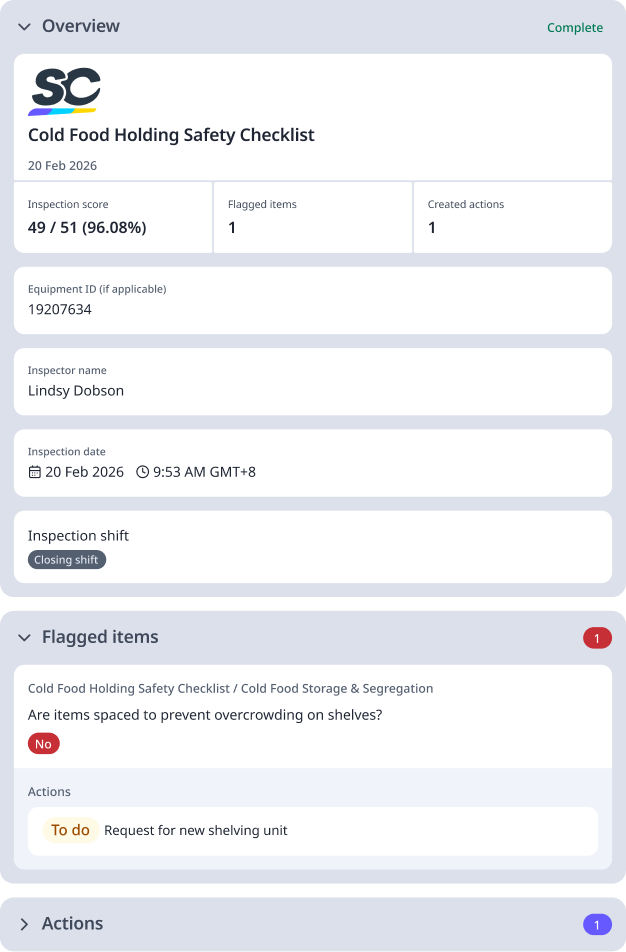
Below is how a cold food holding safety checklist would look like: