Published 13 Mar 2026
Article by
3 min read
What is a Food Traceability Template?
A food traceability template is a standardized document used in the food industry to record essential product details as they move through the supply chain. It is designed to enable seamless one-step-forward and one-step-back tracking for safety and recalls. It also helps ensure compliance with regulations, such as the Food Safety Modernization Act (FSMA) Food Traceability Rule, while minimizing contamination risks.
Why Use a Checklist Template?
Food traceability is crucial for maintaining public health by enabling rapid identification and containment of contaminated products, preventing widespread foodborne illnesses. By using a checklist, food businesses can better control and monitor where food goes throughout operations to comply with standards such as:
A checklist makes it easier to systematically document critical information such as ingredient sources, processing dates, product batch numbers, storage conditions, and distribution details. Having a structured and organized approach improves accountability and makes it easier to isolate affected products immediately and prevent issues from escalating.
What to Include in a Food Traceability Template
Food traceability is a structured process that incorporates different elements to enforce effective food safety and monitoring of food items. An ideal food traceability template should have fields such as:
Traceability plan and scope: This section ensures that food businesses using this checklist have a traceability system in place that defines which items need to be monitored and documented.
Supplier contact: One of the earliest steps in quality control is verifying that supplier standards are followed, especially when dealing with food and other perishable items. It is important to include contact details for quick communication.
Receiving traceability: This section is used to check whether products match their identifiers and expected quantity for accurate receiving documentation. Documenting these details is crucial for effective traceability and compliance.
Batch linking: Besides receiving, repacking and portioning also requires comprehensive documentation. This section ensures that food portions are properly labelled and include best-by dates to avoid contamination.
Internal movement: Logging the movement of food items is a crucial step in food traceability. Having this section makes it easier to verify transfer records and accountability once food is moved from the kitchen to other locations.
Recall workflow: It is important to have a dedicated section to confirm that a recall/hold trigger workflow is in place. One of the objectives of effective food traceability is being able to quickly identify and isolate noncompliant items for easy removal.
How to Use a Food Traceability Template
Here’s a quick guide to using a digital checklist template for food traceability in commercial food businesses:
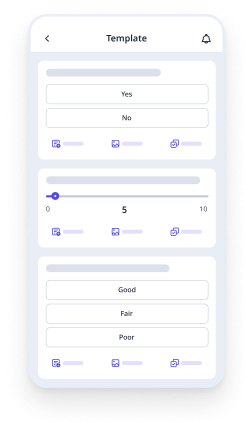
Fill out the basic information on the title page. This includes defining the type of audit being conducted, the site where the audit takes place, and which areas are being reviewed.
Go through the different template sections and provide detailed answers to each applicable question. A checklist like this covers areas such as labeling documentation, supplier communication, inventory checks, and recall procedures.
Attach photos and annotations to capture the full context of issues or observations.
Assign corrective actions as needed to address information gaps or noncompliance issues.
Provide an overall assessment of whether a food business is complying with food traceability requirements. Include additional comments or suggestions as necessary.
Finish the audit with a sign-off.
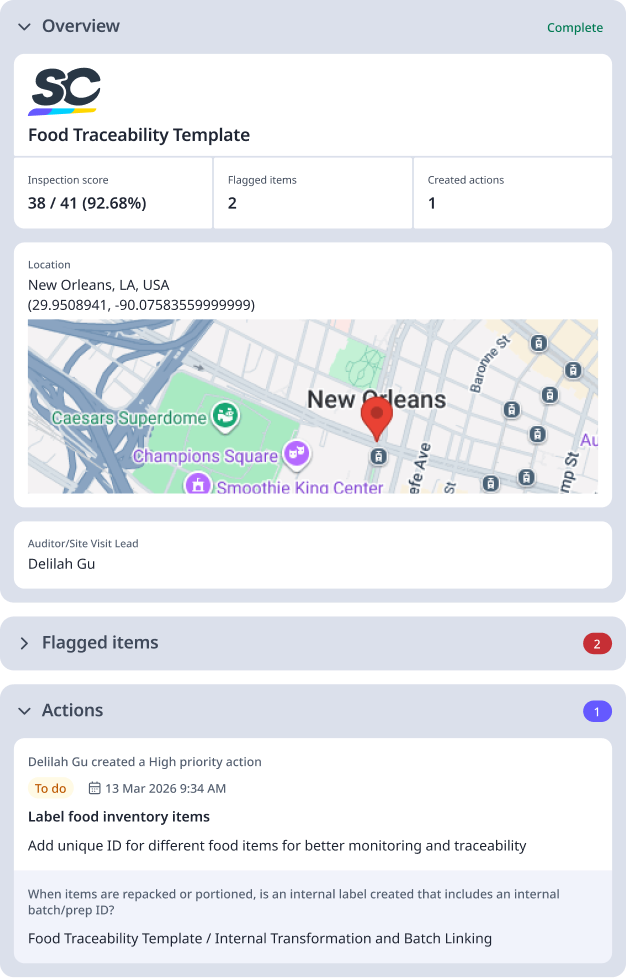
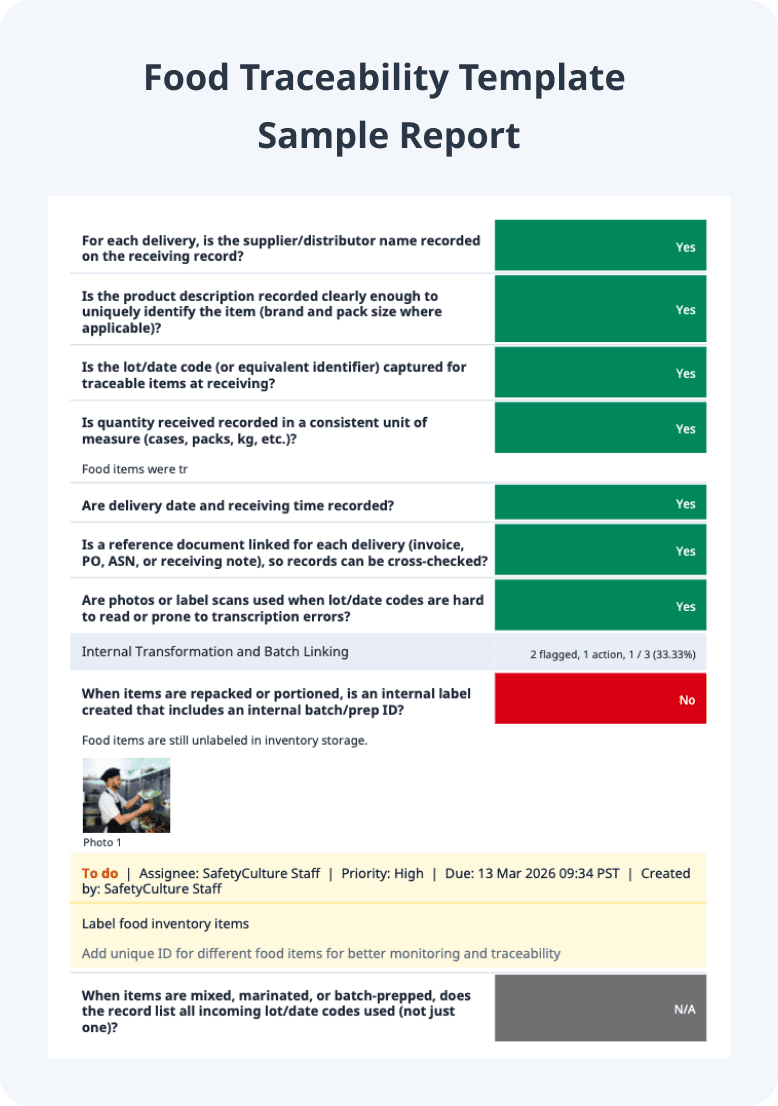
Sample Food Traceability Report
For reference, here is a sample food traceability template in use:

Food Traceability Sample PDF Report
How Infocus Efficiently Audits for Food Monitoring and Safety

“With SafetyCulture, we can go out, do the [food safety] audit in three hours maybe, then 10-15 minutes of reading through your notes to check for typos, then it can be published, producing a perfect report. We like how nice and neat the PDF report you can send the client is.”
Simon Berton
Infocus General Manager

Still looking for a checklist?
Search, filter, and customize 60,000+ templates across industries and use cases.