The Blueprint for Refrigeration Optimization
Discover best practices, technologies, and strategies for refrigeration optimization to enhance performance, sustainability, and operational reliability.
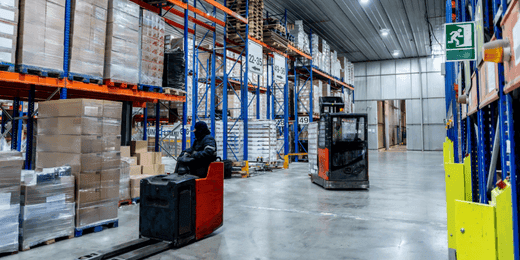
Discover best practices, technologies, and strategies for refrigeration optimization to enhance performance, sustainability, and operational reliability.
Published 5 Feb 2026
Article by
7 min read
Refrigeration optimization is the systematic process of enhancing cooling systems. This is achieved through careful energy management, load balancing, and fine tuning advanced controls. It combines proactive equipment care with smart technology, such as live performance monitoring, to lower long-term operating costs, uphold environmental standards, and support sustainability objectives.
Temperature control has been a part of daily life for a long time, from harvesting ice to using cooling systems in hospitals for malaria patients in the 1800s. Today, AI refrigeration optimization isn’t just a critical component of cooling systems in industrial operations. It has become a cornerstone in modern energy management and global decarbonization.
Energy consumption and cost reduction: Smart controls and better workload management allow systems to run more efficiently, often cutting power use by 15–45%. This translates into significant monthly savings on utilities.
Equipment longevity: Fine-tuned systems don’t have to work as hard to achieve the same results. Reducing the constant “stop-and-start” minimizes strain on compressors, extending the machine’s lifespan.
Product quality and safety: Consistent cooling is the best defense against spoilage. Optimized systems eliminate temperature swings, so that food, medicine, and other perishables stay fresh and safe.
Sustainability and compliance: On top of choosing low-charge refrigerants, improving efficiency helps lower the facility’s carbon footprint and upholds strict environmental laws regarding greenhouse gas emissions.
Operational resilience and reliability: Live tracking with IoT facilitates proactive care. Teams can catch minor issues before they turn into total system failures. This drives business resilience, or the ability to prevent disruptions before they happen or to recover immediately when they do.
Commercial refrigeration optimization builds on both mechanical components and intelligent controls. They influence system responsiveness, stability, and accuracy. Understanding how they work together shows where energy is used, helping companies focus efforts to get the highest return on investment.
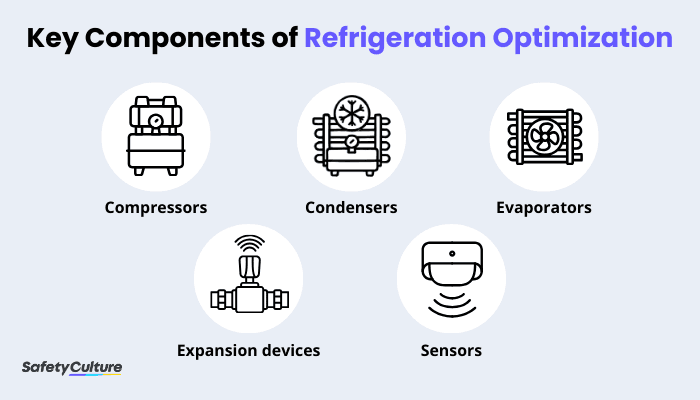
Considered the heart of the system, this circulates refrigerants by raising its pressure and temperature to move heat from one area to another. Because it’s the most critical driver of performance, it directly controls:
Cooling capacity: how much heat the system can remove
Energy demand: the amount of electricity required to keep the cycle moving
Pressure stability: how smoothly the system maintains the correct operation conditions
As the part that breathes out the heat collected, this cools down the high-pressure gas and turns it back into liquid. Releasing the heat keeps the system’s internal pressure steady so that the compressor won’t have to work hard.
There are three types of condensers. The choice depends on the environment and the practical needs of the business:
Air-cooled, simple and low-maintenance, requires plenty of airflow.
Water-cooled needs consistent water supply, but is great for tight spaces.
Evaporative provides maximum cooling in dry climates, but requires water and airflow.
As the actual cooler of the system, an evaporator soaks up the heat from the room or the product as liquid refrigerant turns into a gas inside the coils. It determines how well and evenly the space is cooled.
Evaporators are categorized into two main types:
Direct expansion is simpler and cheaper. It’s often used in commercial walk-ins and air conditioners.
Flooded, used for large industrial plants, have extremely high cooling efficiency.
As the system’s primary regulator, this device manages the amount of refrigerant entering the evaporator by dropping its pressure and fine-tuning the temperature of the gas as it exits. By precisely metering this flow, expansion devices ensure the entire system remains stable, efficient, and responsive to cooling demands.
Consider response speed and load tolerance when choosing this device. High-performance systems require electronic valves that react instantly to changing temperatures, ensuring the system stays balanced as cooling workload fluctuates.
Constant, accurate data is needed for a well-managed cold storage system. Sensors act as the eyes and ears, providing real-time feedback to maintain stability and save energy. The following are usually included:
Discharge temperature sensors
Suction and discharge pressure transducers
Ambient air temperature sensors
Air and product probes
Humidity sensors
Basic maintenance and daily checks are a start to optimize refrigeration, but manual tweaks can't keep up with rising costs and complicated standards. Digital solutions are now the best way to turn cooling systems into high-performance assets. Here’s how:
Digital audits and inspection checklists turn the physical health of the system into actionable data. Here are some examples that help assess energy performance and identify efficiencies across refrigeration systems:
5-minute preventive maintenance checklists support system stability.
Planned preventive maintenance ensures probes and alarms are calibrated.
Cold storage internal audit verifies temperature control and GMP compliance.
Transform manual systems into smart, responsive networks. Integrate IoT sensors with automated workflows to help teams remotely manage setpoints and trigger instant alerts. Here are some industry-specific solutions to consider:
Manufacturing: Refrigerant leak detectors monitor the air for specific chemical traces.
Transport and logistics: Shock and tilt sensors detect if a refrigerated container has been handled roughly.
Hospitality: Smart defrost sensors detect ice buildup on the coils, triggering a defrost cycle only when it is needed.
Refrigeration space optimization means treating the cold storage as a dynamic environment. Move away from the “set it and forget it” cooling system. Instead, link temperature setpoints with automated monitoring, allowing the system to adjust regardless of whether the room is empty or packed. This digital solution should serve as a safety net that turns a static setting into a responsive, secure operation.
Defrost cycles should be treated as a strategy to manage refrigerants rather than a fixed timer. Doing this too often for too long forces the compressor to work overtime, affecting the evaporators and causing significant leaks. Improve this by using modern software solutions with existing hardware to transform a potentially wasteful process into a fine-tuned task.
Keeping a space cold is a constant fight to stop energy from escaping. The most efficient system can’t compensate for a room with poor insulation or a door that stays ajar for too long. The following issues can be reported and resolved immediately with automation:
Forgotten door: Walk-in freezer door that has been opened for more than five minutes.
Gasket failure: Temperature could continue to rise even when the door is closed.
Strip curtain tangle or removal: Loss of thermal barrier may cause a temperature spike.
Reactive repairs are the enemy of system life and energy efficiency. Stay ahead of equipment failure by scheduling refrigeration preventive and predictive maintenance ahead of time and conducting them with standardized digital templates.
In highly-regulated industries, managing paperwork is just as critical as the task conducted. A unified digital hub serves two key functions. First, it acts as a digital vault that gives instant access to temperature logs, calibration certificates, and leak records. Second, it serves as a collaboration platform, so teams can resolve issues and document corrective actions directly within the record.
SafetyCulture is a mobile-first operations platform adopted across industries such as manufacturing, mining, construction, retail, and hospitality. It’s designed to equip leaders and working teams with the knowledge and tools to do their best work—to the safest and highest standard.
Streamline processes, eliminate bottlenecks, enhance resource utilization, and build an agile and scalable infrastructure with SafetyCulture. Strive for operational excellence to boost competitive advantage, foster sustainable growth, and deliver long-term value.
✓ Save time and reduce costs
✓ Stay on top of risks and incidents
✓ Boost productivity and efficiency
✓ Enhance communication and collaboration
✓ Discover improvement opportunities
✓ Make data-driven business decisions