Implementing Value Management for Better Business Outcomes
Learn how value management improves project outcomes by balancing cost, function, and performance while meeting stakeholder needs.

Learn how value management improves project outcomes by balancing cost, function, and performance while meeting stakeholder needs.
Published 28 Apr 2026
Article by
6 min read
Value management is a structured approach that helps organizations get the best results out of a project or business. It applies goal-focused reviews during organized meetings to get everyone on the same page, allowing the team to focus on what is necessary and cut wasteful spending while maintaining quality.
Value management was initially used in factories as a way to make the most of limited materials by cutting waste. By mapping workflows, teams can efficiently identify and fix bottlenecks. Today, every industry uses these same steps to work smarter and get better results, such as the following:
Cost optimization - Identifying unnecessary expenses and focusing on value-adding activities reduces overall costs. A good example of this is redesigning a product component to maintain performance but at a lower cost.
Improved project efficiency - Structured analysis clarifies functions and alternatives, aligning efforts to goals and improving delivery times. Value management in construction, for instance, eliminates redundant steps to complete a phase faster.
Enhanced stakeholder satisfaction - Involving everyone ensures needs are met. This builds stronger relationships and encourages better design because when people feel heard, they are more willing to collaborate on improvements
Risk reduction - Identifying potential issues early mitigates threats before they escalate. Foreseeing supply chain delays helps adjust plans to avoid cost overruns.
Encourages innovation - Focusing on value fosters creative problem-solving, generating solutions that deliver better outcomes. By highlighting cross-functional collaboration, teams find smarter ways to boost performance and reduce costs without losing quality.
Cultivate a culture of excellence with our digital solutions that enhance efficiency, agility, and continuous improvement across all operations.
Value management is often interchanged with value engineering and Cost Management because all use structured tools to improve the function-to-cost ratio. However, they differ in the following factors:
Point of Difference | Value Management | Value Engineering | Cost Management |
Focus | Maximizing overall project value aligned with stakeholder needs | Improving technical functions at a lower cost | Controlling and monitoring project expenditure |
Timing | Concept and feasibility stages | Design development stage | Entire project lifecycle |
Scope | Strategic and holistic | Technical and design-focused | Financial and administrative |
Key Question Asked | What solution delivers the best value over the project’s life? | How can this function be achieved at a lower cost? | How do we control costs to prevent overruns? |
Stakeholder Involvement | High and multidisciplinary | Moderate, involving mainly technical teams | Limited, mainly cost and project controls |
Tools & Techniques | Workshops Function analysis Value stream mapping | Function analysis Creative alternatives Technical evaluation | Budgeting Forecasting Earned value analysis |
Outcome | Better value-for-money and Stakeholder-aligned decisions | Optimized designs with maintained functionality | Cost certainty and Financial control |
Value management and value engineering are linked by value analysis (VA), providing the logic for more informed decision-making. Management sets the big-picture goals. Engineering fixes designs. Analysis investigates what every part actually does, so teams don't just cut costs.
Many projects become expensive failures because teams focus on cost control instead of value. Learning about these core principles and their objectives can be extremely helpful for companies in sectors where soaring material costs and high-quality standards are reaching a breaking point. This is a comprehensive guide with practical examples of construction value management.
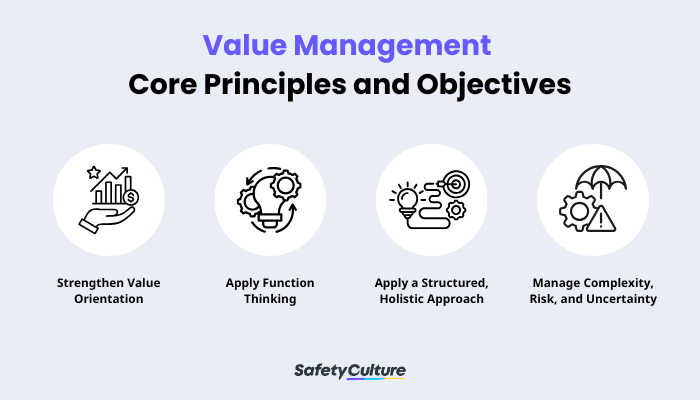
Everyone involved should understand the project’s main goals and what “value” truly means to the customer or end user. In a hospital build, value is defined as patient flow and safety, not just the number of rooms built. Adding luxury finishes should be out of the scope since affordability and durability are the focus.
Focus on what a product, system, or service must do, rather than what it is or how it has traditionally been delivered. Instead of specifying a costly facade material, architects and engineers should define function as “weather protection and thermal insulation”. Choosing a low-cost alternative is fine as long as it performs equally well.
Use a systematic, step-by-step process that considers technical, financial, operational, and user impacts together. The workshop should bring head engineers and architects, contractors, and facility managers to evaluate speed with safety, quality, and long-term operating costs.
Changes should be anticipated to reduce uncertainty and make informed decisions, especially in managing resources, to protect long-term project value. For instance, early analysis identifies supply chain risks. Managers can then use locally available materials to avoid delays. Planners can also build flexible layouts that do not require costly structural modifications to easily adopt potential changes in the future.
Build from scratch or choose from our collection of free, ready-to-download, and customizable templates.
Value isn't just a price tag; it is the perfect balance between cost, quality, and how well something works. Keep this balance in mind during every decision and avoid expensive mistakes using these value management strategies:
Conduct pre-workshop scoping - This preparatory step involves defining value-added and non-value-added activities. Clear scoping prevents unfocused discussions, reduces wasted time, and ensures participants evaluate options against agreed priorities rather than personal preferences or departmental agendas.
Facilitate function analysis workshops - Structured sessions enable teams to define what the project, product, or service must do. It separates essential functions from optional features so they can explore alternative solutions that deliver outcomes more efficiently and cost-effectively.
Integrate at design gateways - Formal value checks at major decision points (concept approval, design freeze, or investment sign-off) ensure early decisions remain aligned with value objectives. It prevents costly redesigns or commitments to solutions that do not meet stakeholder needs.
Apply whole-life costing models - This evaluation of total costs over the asset or solution’s full lifespan (e.g., operation, maintenance, energy use, and disposal) helps avoid choices that appear low-cost at first but are actually expensive to own and operate in the long-run.
Engage multidisciplinary teams - Expertise from different functions (e.g., technical, financial, operational, and end-user perspectives) uncovers risks and opportunities that a single department is sure to miss. This will also lead to more balanced, practical, and sustainable value decisions.
Implement post-occupancy evaluation - A structured review after the implementation assesses whether the solution meets expectations. It validates value assumptions, identifies gaps between initial intent and actual design or performance, and drives continuous performance for future projects.
Monitor with KPIs and dashboards - Measuring ongoing performance using clear indicators (e.g., cost, quality, time, user outcomes) allows teams to detect value erosion early, make timely adjustments, and ensure the project continues to deliver benefits.
Global streetwear retailer Snipes effectively manages value by streamlining its store operations. Replacing manual processes with automated audits cut waste and improve efficiency, ensuring high-quality brand standards and consistent performance across hundreds of its locations.

With SafetyCulture, we can reduce the workload for our teams in the field and in stores. This gives teams more space to focus on what really matters and adds value.
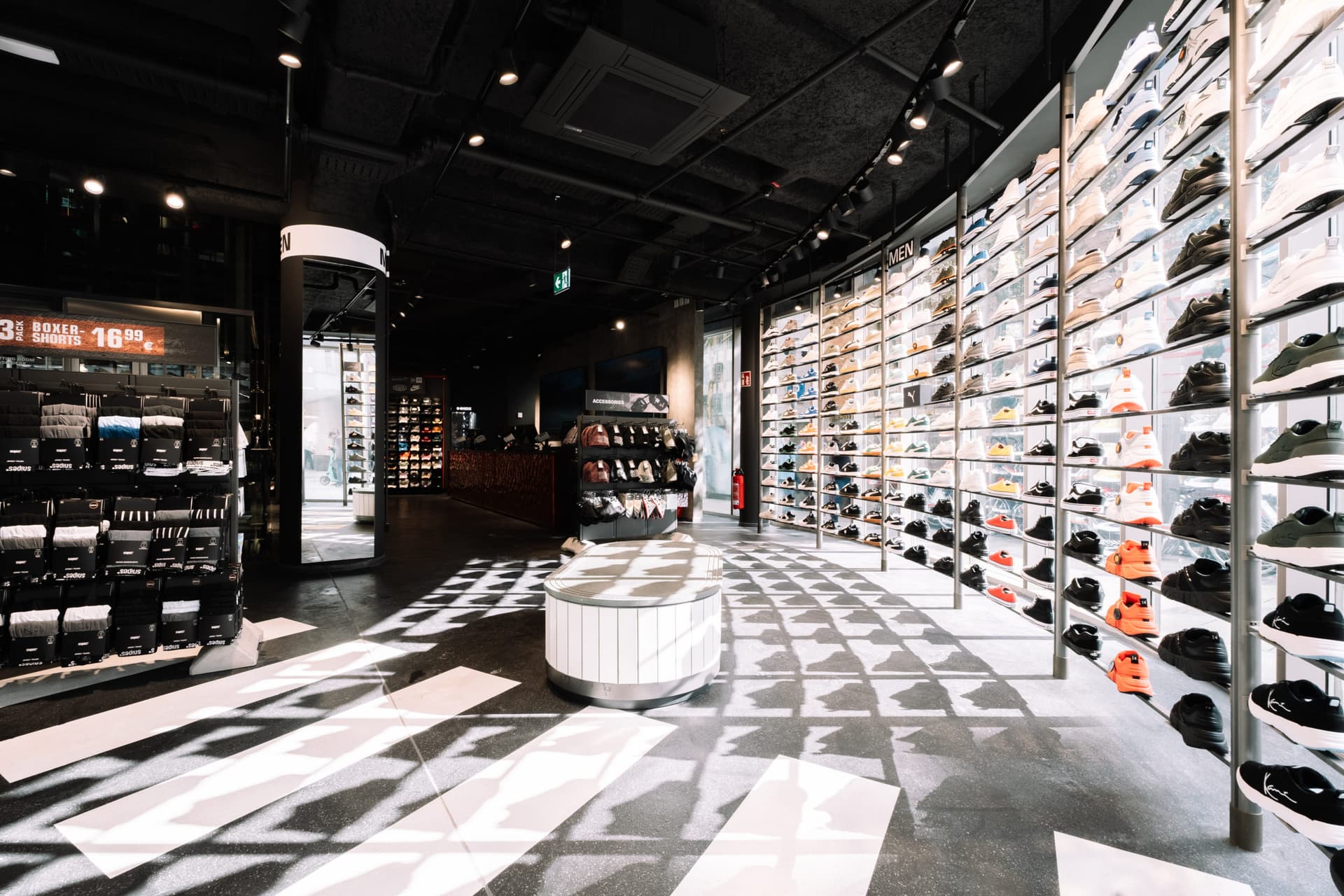
SafetyCulture is a mobile-first operations platform adopted across industries such as manufacturing, mining, construction, retail, and hospitality. It’s designed to equip leaders and working teams with the knowledge and tools to do their best work—to the safest and highest standard.
Enable teams to conduct digital audits and inspections to quantify operational efficiencies so leaders can prioritize high-impact actions. Provide collaborative platforms for value engineering workshops, real-time cost-benefit modeling, and KPI tracking across initiatives. Deliver executive dashboards. Enhance value management by strategizing resource allocation, driving higher ROI without compromising quality and upholding operational excellence through a unified platform.
✓ Save time and reduce costs
✓ Stay on top of risks and incidents
✓ Boost productivity and efficiency
✓ Enhance communication and collaboration
✓ Discover improvement opportunities
✓ Make data-driven business decisions
In this article