An Introduction to Clean Energy
A look into what clean energy is, how it works, its importance, and challenges faced in adopting it.
A look into what clean energy is, how it works, its importance, and challenges faced in adopting it.
Published 5 May 2026
Article by
7 min read
Clean energy refers to energy produced from sources that generate little to no pollution or greenhouse gas emissions during operation. It typically comes from renewable resources such as solar, wind, hydropower, geothermal, and biomass. Clean energy helps reduce climate change impacts while supporting long-term environmental and economic sustainability.
The terms "clean energy" and "renewable energy" are thrown around constantly in environmental talks. While they may sound similar, these two terms refer to specific types of energy, and it’s important to understand the differences. Here’s a quick look at the differences between clean and renewable energy and when to use each term:
Clean energy focuses on how energy is produced and whether it creates minimal pollution or greenhouse gas emissions. Renewable energy refers specifically to energy sources that are naturally replenished, such as solar, wind, and hydropower, regardless of their emission levels. This means some renewable sources may not always be fully clean, and some clean energy sources may not necessarily be renewable.
Use the term "clean energy" when emphasizing environmental impact, emissions reduction, and climate benefits. Use "renewable energy" when highlighting the sustainability and natural replenishment of the energy source. In policy, planning, and education, both terms are often used together to address both environmental performance and long-term resource availability clearly.
Clean energy is important because it reduces greenhouse gas emissions and helps slow the impacts of climate change. It improves air quality by lowering pollution, which protects public health and reduces healthcare costs. Clean energy also supports long-term energy security and economic growth by relying on sustainable, locally available resources.
As more and more governments and business grow more mindful of their emissions, it has become more important to learn more about how it works, and the considerations associated with it. New policies and standards are being developed regularly to promote it more, while also educating the public on it.
The exact way clean energy is harnessed can vary depending on the energy source, machinery used, and the scope of the project. That said, there are a few general steps in generating, harnessing, and implementing clean energy that apply to most sources, which we dive into below.
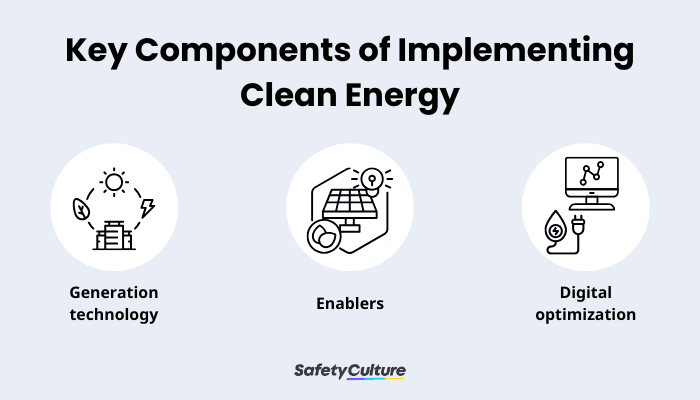
Key Components of Implementing Clean Energy
Clean energy works by converting natural resources such as sunlight, wind, water, and heat from the earth into usable electricity, fuel, or both. Technologies like solar panels, wind turbines, hydropower dams, and geothermal systems capture these resources with minimal emissions. The efficiency and scale of generation depend on the technology design, location, and available natural conditions.
Enablers are systems and infrastructure that support the reliable use of clean energy. These include energy storage, transmission networks, smart grids, and power electronics that balance supply and demand. Without these enablers, clean energy would be harder to integrate consistently into existing energy systems.
Digital tools improve clean energy performance through data collection, monitoring, and analysis. Technologies such as Internet of Things (IoT) sensors, AI, asset management platforms, and energy management software help predict output, detect faults, and optimize maintenance. Optimizing processes with digital solutions increases efficiency, reduces downtime, and lowers overall operating costs.
Each clean energy source comes with its own benefits and drawbacks, so it’s important to find the best fit for the community’s needs. That way, the energy is utilized to its full potential.
Solar energy involves converting sunlight into power using photovoltaic panels or concentrated solar systems. It produces no emissions during operation and can be deployed at small residential or large utility scales, hence why it’s a major clean energy source. Solar power is highly scalable but depends on sunlight availability and effective energy storage.
Wind energy uses specific turbines to convert the kinetic energy of moving air into electricity. It is one of the fastest-growing clean energy sources due to its low operating costs and high efficiency in suitable locations. Wind power output varies with weather conditions, making grid integration and storage important.
Hydropowergenerates electricity by using flowing or stored water to spin turbines, providing a reliable and flexible clean energy source. On the other hand, geothermal energy harnesses heat from beneath the earth’s surface to produce electricity or direct heating with very low emissions. Both sources offer consistent power and clean energy harnessing processes, but are limited by geographic and environmental conditions.
Similar to geothermal energy which comes from the earth, biomass is sourced similarly, but specifically from organic materials like plant residues, wood, and agricultural waste. Biomass relies on natural sources that must be grown, harvested, and processed, making it variable based on supply chains and land use. Some do not consider this as an ideal clean energy source as it can emit CO2 during burning if not done properly, which can lead to additional pollution and even health issues. However, it done correctly, it’s a viable source to be considered.
Nuclear energy is generated through controlled nuclear fission, where uranium atoms split in reactors, releasing heat to produce steam that drives turbines for electricity. As per the US Department of Energy, it qualifies as a clean energy source because it emits little to no greenhouse gases or air pollution during operation, unlike fossil fuels. However, it can generate large amounts of radioactive waste, which can be a great health risk in mishandled.
While clean energy offers various benefits, there are significant challenges that communities and organizations face when adopting it. Here are some of the main barriers to adopting clean energy faced today:
Many clean energy sources, such as solar and wind, generate power only when natural conditions are favorable. This variability can make it difficult to balance electricity supply and demand on the grid. Energy storage systems, flexible generation, and smart grid technologies are needed to manage intermittency effectively.
Clean energy projects often face lengthy and complex permitting and approval processes. These delays can increase project costs and slow down deployment, even when technologies are proven and available. Streamlining regulations while maintaining environmental and safety standards is critical for faster adoption.
The clean energy supply chain relies on specialized materials, components, and global manufacturing networks. Disruptions or shortages can delay projects and increase costs for developers and utilities. Building resilient, diversified, and local supply chains helps support steady clean energy growth.
Modern technology plays a critical role in supporting the clean energy transition by improving how renewable systems are planned, operated, and maintained. Advanced analytics, digital twins, and AI-driven forecasting help utilities balance supply and demand, reduce intermittency issues, and integrate renewables more reliably into existing grids. These tools also enable data-driven decision-making that lowers operational risks and improves long-term system resilience.
On top of that, IoT sensors, smart meters, and asset management platforms enhance visibility across clean energy infrastructure such as solar farms, wind turbines, and energy storage systems. Real-time monitoring supports predictive maintenance, reduces downtime, and extends equipment life, making clean energy projects more cost-effective. Together, these technologies accelerate adoption while ensuring clean energy systems remain safe, efficient, and scalable.
SafetyCulture is a mobile-first operations platform adopted across industries such as manufacturing, mining, construction, retail, and hospitality. It’s designed to equip leaders and working teams with the knowledge and tools to do their best work—to the safest and highest standard.
SafetyCulture complements your organization's efforts to implement and maintain ESG strategies. Through seamless data collection, real-time tracking, and reporting of your progress against sustainability goals, your organization can effectively drive sustainable growth and success.
✓ Save time and reduce costs
✓ Stay on top of risks and incidents
✓ Boost productivity and efficiency
✓ Enhance communication and collaboration
✓ Discover improvement opportunities
✓ Make data-driven business decisions