A Guide to the Complete Meat Processing Lifecycle
Master essential hygiene, technology, and regulatory compliance for the full meat processing chain.
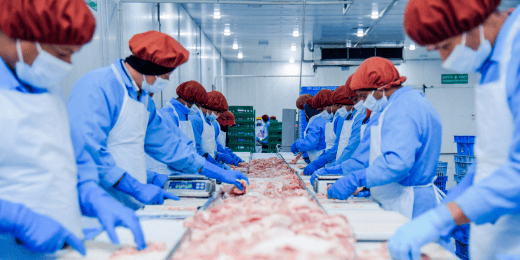
Master essential hygiene, technology, and regulatory compliance for the full meat processing chain.
Published 28 Apr 2026
Article by
7 min read
Meat processing is the sequence of operations that transforms raw animal products into safe, high-quality, and edible food. This includes everything from the humane slaughter of livestock to the final stages of curing, preparation, and packaging. The main objective is to maintain food safety, quality, and cleanliness through sanitation protocols, microbial management, and temperature control.
Efficiency plays a crucial role in the meat and poultry processing industry, which is currently valued at nearly $300 billion and is expected to double worldwide by 2033. Gaining a comprehensive understanding of the step-by-step meat handling process is essential for succeeding in this industry.
Animals must be humanely stunned, bled, and dressed to convert them into carcasses for processing. These are some best practices during the first stage of meatpacking and processing:
Ensure humane handling and stunning to minimize stress and promote proper bleeding.
Use sanitized cutting tools and protective equipment to avoid microbial contamination.
Implement efficient blood drainage and manage wastewater to keep the kill floor clean.
Livestock and game undergo different ways at this point. Cattle and sheep undergo hide removal. Wild game animals are almost always fully skinned because their hides are tougher. Take note of these safety and hygiene measures for effective skinning and dehairing:
Control scalding temperatures to inhibit bacterial growth.
Dedicate clean and dirty zones to avoid cross-contamination.
Regularly sanitize dehairing machines and hide pullers to remove residues and pathogens.
The skinned and dehaired carcass will be eviscerated, split lengthwise with mechanical or manual saws, and thoroughly washed. The first post-mortem inspection for quality is usually conducted at this point. For safety, make sure to observe the following:
Use sterile saws and knives and clean them between carcasses.
Remove and handle organs with the right equipment to prevent rupture or leakage.
Inspect work stations regularly for visible contamination.
The carcass is meticulously cut into primals, sub-primals, and retail cuts. Remove the skeletal structures (i.e., bones) and carefully trim to ensure proper yield and quality for fresh sale or further processing. Uphold raw food safety guidelines through the following:
Conduct this task in temperature-controlled (typically cold) rooms.
Sharpen and maintain knives to reduce bone splinters and contamination.
Color-code tools and workstations to avoid cross-contact.
Cut meat is ground, chopped, or emulsified. Sometimes, seasonings, extenders, and curing salts are mixed in for sausages, patties, or canned formulations. Strictly observe the following:
Meat should be chilled during grinding to prevent fat smearing and bacterial growth.
Frequently disassemble and sanitize meat processing machinery like grinders and mixers to remove trapped residues.
Weigh and dose curing agents accurately to prevent safety violations.
Primals, sub-primals, retail cuts, and processed mixtures should be rapidly cooled to inhibit bacterial activity and maintain product quality. The following safety and hygiene best practices are vital:
Target core temperatures of 32-39.2°F (0-4°C) through rapid chilling.
Avoid temperature fluctuations to prevent microbial growth with help from monitoring sensors.
Regularly clean and carefully control the humidity and ventilation in chillers.
Meat products can undergo further preservation techniques in the meat processing plant (e.g., curing, smoking, fermentation) to extend their shelf life. Here are some crucial reminders:
Use precise concentrations of curing agents to meet safety limits.
Validate heat-treatment schedules.
Clean smokehouses and fermentation rooms to prevent contamination and, most importantly, maintain flavor integrity.
Fill cans, pouches, or trays with the meat products. Canned goods undergo retort sterilization to ensure safety, while fresh meats are preserved through vacuum‑packing or Modified Atmosphere Packaging (MAP), extending shelf life and maintaining product quality through storage and food transport. However, it’s important to remember the following:
Uphold hygienic filling operations by sanitizing contact surfaces.
Check the retort process to ensure canned meats are properly sterilized.
Verify the integrity of the packaging to ensure they are leak-proof.
Foodborne illnesses remain a critical global issue, with 48 million cases occurring in the US alone. Because meat is highly perishable and prone to microbial contamination, strict adherence to these standards and regulatory systems is imperative for meat processing safety, to protect both abattoir workers and end consumers. Here are some of the most well-known safety and hygiene standards worldwide to ensure safe meat processing:
Hazard Analysis and Critical Control Points (HACCP) monitors critical stages like slaughtering, chilling, and packaging to detect and control pathogens like Salmonella and E.coli, bone fragments, or chemical residues.
Good Manufacturing Practices (GMP) sets foundational principles for hygienic equipment and facilities, proper sanitation schedules, employee training, and prevention of cross-contamination.
ISO 22000 establishes comprehensive food safety management systems, focusing on traceability, communication, and documentation.
The Food Safety System Certification (FSSC) expands upon ISO 22000 by integrating specific requirements for global retailer and exporter accreditation.
Codex Alimentarius under the World Health Organization and the Food and Agriculture Organization provides global benchmarks for meat hygiene, sets microbial criteria, and standardizes additives and contaminants limits.
In addition to these international standards, there are also region-specific food standards and regulations mandated by every country, with set rules for processing, packaging, and labeling. Here are some examples:
US -Department of Agriculture (USDA) and Food and Drug Administration (FDA)
Australia and New Zealand -FSANZ Food Standards Code
Digitizing manual processes is now essential for meeting regulatory requirements in high-risk sectors such as this. These food safety meat processing solutions help processors move from reactive to proactive safety management, providing the following advantages:
Digital checklists, audit reports, and forms - Replace manual checklists and run meat safety inspections on mobile devices for more accurate checks and documentation.
Integration with temperature and Internet of Things (IoT) sensors - Catch temperature, humidity, and other environmental excursions that could propagate pathogen growth or spoilage.
Real-time issue reporting and corrective actions - Immediately record and assign a corrective task when a safety hazard is spotted to lower the risk of contamination and safety lapses.
Mobile-friendly training courses on meat processing tasks - Reduce the risk of human error, enhance meat processing worker safety—especially for those working alone—and improve food quality outcomes through ongoing, accessible training.
Smart analytics - Build a proactive culture of quality, spotting recurring meat processing safety issues, tracking resolution rates, and measuring improvement over time.
Centralized documentation management tools - Keep all asset inspection records, sensor logs, and corrective actions in a cloud-based repository, making them searchable, shareable, and organized.
Integration with other meat processing workflow systems for end-to-end traceability - Eliminate silos, ensuring food safety data is easily shareable, by linking the solutions with Enterprise Resource Planning (ERP), Quality Management Systems (QMS), or Manufacturing Execution System (MES) platforms.
SafetyCulture has proven to be an invaluable asset for organizations looking to optimize their food operations. Marley Spoon leveraged sensors and digital checklists to prevent hundreds of thousands in stock loss during production and accelerate audits. Roma Food Products also improved their overall food quality, safety, and compliance by implementing a variety of digital tools from the platform.
SafetyCulture is a mobile-first operations platform adopted across industries such as manufacturing, mining, construction, retail, and hospitality. It’s designed to equip leaders and working teams with the knowledge and tools to do their best work—to the safest and highest standard.
Streamline processes, eliminate bottlenecks, enhance resource utilization, and build an agile and scalable infrastructure with SafetyCulture. Strive for operational excellence to boost competitive advantage, foster sustainable growth, and deliver long-term value.
Save time and reduce costs
Stay on top of risks and incidents
Boost productivity and efficiency
Enhance communication and collaboration
Discover improvement opportunities
Make data-driven business decisions