Keeping Industrial Operations Safe with Factory Maintenance
Discover how effective factory maintenance boosts productivity and safety in industrial operations.
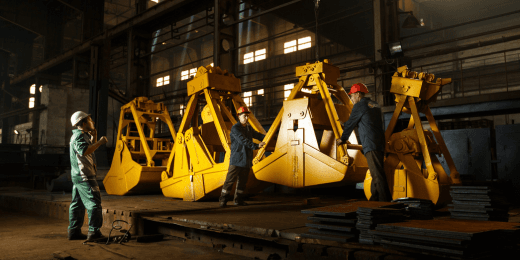
Discover how effective factory maintenance boosts productivity and safety in industrial operations.
Published 5 May 2026
Article by
7 min read
Factory maintenance is the systematic implementation of preventive, predictive, and corrective procedures designed to uphold asset reliability and operational uptime in factories. It involves activities like lubrication scheduling, routine calibration, vibration analysis, and equipment condition monitoring, optimized by Computerized Maintenance Management System (CMMS) or Enterprise Asset Management (EAM) systems to align with lean manufacturing and total productive maintenance goals.
Effective maintenance ensures that machinery operates reliably and safely across industries. Proactive strategies have resulted in a 30 to 50% reduction in downtimes, driving higher asset performance. This is especially crucial in manufacturing operations, where meeting quality standards is consequential to the public's health and safety. Here’s a breakdown of its efficacy:
Maximizes equipment uptime and productivity - Unplanned downtime is a plague in the manufacturing industry. Implementing preventive and predictive maintenance based on sensor data allows managers to get ahead of potential equipment damage.
Extends equipment life and lowers related costs - Replacing major parts and machinery is capital-intensive and disruptive. Carefully planning maintenance tasks counteracts those costs, extending the useful life of existing equipment.
Optimizes resource utilization and strategic planning - Reactive repairs actively drain resources, inflate emergency spending, and severely complicate spare parts planning. By transitioning to proactive strategies, organizations can support better decision-making and reverse these negative impacts.
Reduces defects and upholds product quality - Companies that have implemented condition-based and predictive maintenance have fewer equipment issues, resulting in more consistent outputs with fewer defects. This helps ensure standardized quality in both products and processes.
Improves safety and regulatory compliance - Equipment failure, such as poor Lockout/Tagout (LOTO) practices, can lead to serious injuries. All factory maintenance tasks ensure safe operations and, subsequently, adherence to labor protection standards.
Maintenance in assembly lines or similar production sites necessitates more than just visually checking machines and lubricating gears. This is a comprehensive, structured, and data-driven discipline that should encompass the following:
Understanding which assets require repairs or routine servicing helps prioritize preventive actions and resource allocation. Here are some helpful ways to comprehensively catalogue factory equipment:
Create an asset register that details equipment specifications, locations, and maintenance histories.
Conduct a criticality analysis to classify assets based on risk and production impact.
Adopt an ISO 55000 approach to managing assets, balancing performance, expense, and risk.
Well-planned maintenance activities, whether it's a long-term preventive plan or a short-term corrective work, ensure continued production to match customer demands. Here are some ways to define factory maintenance tasks:
Develop a preventive maintenance calendar based on manufacturer recommendations and asset performance data.
Report equipment condition (e.g., from outgoing to incoming operator) during shift changes.
Analyze changeover data to find opportunities for process improvement and faster transitions.
Tracking maintenance tasks from initiation to completion upholds accountability and improves team coordination, especially during high-impact factory maintenance periods like shutdowns. Manage work orders more efficiently with these helpful tips:
Standardize work order procedures (creation, approval, tracking, closure).
Utilize the three-bin Kanban (to do, in progress, for review) to keep better tabs on the activities.
Plan Shutdown, Turnaround, Outage (STO) activities months in advance to synchronize resources, materials, and the contractor's schedule.
Regularly evaluate factory equipment conditions and safety systems to detect early signs of wear, non-conformities, and failure before they escalate into costly breakdowns. Aside from preventing injuries, this ensures compliance with regulations. Here's how to do this:
Review asset files and logs before the inspections.
Conduct field spot checks to verify that maintenance personnel are actually following documented procedures.
Provide a clear, documented audit trail on forms to know who signed off on corrective actions, progress checks, and other related tasks.
Accurate documentation facilitates audits that prove factory maintenance tasks, safety checks, and regulatory inspections were conducted. It also creates a complete history that details asset repairs and replacements that aid in root cause analysis and cost computations. Effectively keep records through the following:
Standardize forms to capture all data points and ensure consistency.
Centralize records and use clear indexing systems for quick retrieval.
Focus on high-level metrics (e.g., breakdowns, labor hours spent, parts used) to optimize maintenance programs.
Build from scratch or choose from our collection of free, ready-to-download, and customizable templates.
Modern manufacturing is becoming increasingly complex, with intricate, interconnected systems that make even factory-required maintenance tasks more difficult. Overcoming these formidable challenges is critical to ensure operational resilience and efficiency:
Unexpected equipment failures - When machinery or systems fail without warning, productions halt, resulting in lost revenue, missed orders, and damaged customer trust. Implementing scheduling systems is a good solution.
Data gaps - Without reliable information, it’s impossible to identify recurring failures, their potential causes, and available resources. Enforcing consistent recordkeeping practices can help with this.
Skills gaps - Inadequately trained frontline technicians increase the risk of mishandled repairs, resulting in extended downtime and significant safety hazards. Investing in continuous learning with regular follow-ups and mobile-ready materials is the best approach.
Budget pressures - Maintenance work gets deferred when it is viewed as a cost center rather than a strategic investment. A cost-benefit analysis shows the link between maintenance spending and uptime performance.
Regulatory complexities - Strict laws and standards, while challenging, are non-negotiable requirements. Failure to comply inevitably results in severe penalties, including substantial fines, operational closures, and reputational damage.
Streamline your operations with usage-based maintenance using our intuitive management software.
Maintaining manufacturing facilities is complex and demanding, requiring a careful balance of uptime, compliance, and cost efficiency. Factory maintenance software solutions for manufacturing are essential tools that streamline tasks, centralize data, and connect teams in real-time, ultimately guaranteeing productivity, safety, and regulatory adherence. Look for these key capabilities:
Digital inspections and checklists - Digital systems replace paper forms with customizable templates on mobile devices. They ensure consistent routines, flag issues immediately, and facilitate prompt resolution.
Work order management - Managers create, assign, track, and close maintenance work orders across all teams with this tool. It integrates with predictive maintenance systems to automatically trigger work orders based on usage or sensor alerts.
Mobile-friendly asset management - This is a centralized digital record of all equipment, parts, and tools. It includes their location, condition, and full maintenance history, giving teams real-time visibility into asset status and life cycle performance from both computers and mobile devices.
Internet of Things (IoT) sensors and real-time monitoring - Industrial-grade sensors can continuously collect performance data (e.g., vibration, temperature) from factory machinery. The collected data is used to predict equipment failures before they happen, enabling truly proactive maintenance.
Automated scheduling - Automatically assign factory-scheduled maintenance tasks based on equipment priority, technician availability, and production schedules. It eliminates conflicts and improves workforce productivity by ensuring tasks are assigned efficiently.
Corrective actions and issue reporting - Digitization identifies, documents, and resolves maintenance issues, safety incidents, or equipment failures. Ensuring all actions are tracked and verified improves accountability across teams.
Digital training modules - Built-in learning tools provide on-demand maintenance and safety training for technicians. Knowledge bridges skill gaps and supports continuous improvement, helping workers stay competent, confident, and compliant.
Analytics and reporting - Data-driven modules consolidate maintenance metrics, such as Mean Time Between Failures (MTBF), Mean Time to Repair (MTR), and downtime trends. These help to provide transparent and real-time insights into maintenance effectiveness and regulatory adherence.
Integration - This capability seamlessly connects with other business systems such as ERP, MES, or inventory management platforms to reduce data silos and manual administrative work. Having a solution that easily integrates with other tools also helps improve workflows.
Thermosash Group, a New Zealand building envelope specialist, boosted operations by implementing advanced maintenance solutions. By deploying vibration sensors on critical assets, they shifted to predictive maintenance, preventing small faults from causing expensive breakdowns. This also minimized product defects, reinforcing their commitment to client quality.
SafetyCulture is a mobile-first operations platform adopted across industries such as manufacturing, mining, construction, retail, and hospitality. It’s designed to equip leaders and working teams with the knowledge and tools to do their best work—to the safest and highest standard.
Streamline processes, eliminate bottlenecks, enhance resource utilization, and build an agile and scalable infrastructure with SafetyCulture. Strive for operational excellence to boost competitive advantage, foster sustainable growth, and deliver long-term value.
Save time and reduce costs
Stay on top of risks and incidents
Boost productivity and efficiency
Enhance communication and collaboration
Discover improvement opportunities
Make data-driven business decisions