Essential Guide to Construction Waterproofing Systems
Explore common construction waterproofing methods, applications, and materials used to extend building life and prevent water-related failures.
Explore common construction waterproofing methods, applications, and materials used to extend building life and prevent water-related failures.
Published 5 May 2026
Article by
7 min read
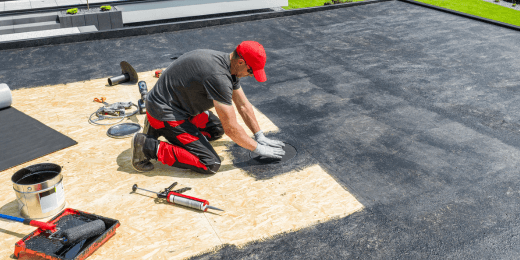
Waterproofing in construction is the process of protecting buildings from water damage. It involves applying specialized membranes, coatings, and sealants to create a water-resistant barrier within key structural elements. Effective waterproofing limits moisture penetration and helps maintain the structure’s strength and long-term durability.
Waterproofing work in construction has come a long way from traditional clay puddling. With the growing understanding of water’s destructive power on structures, waterproofing has shifted from an add-on service to a core element of construction safety. Here are some specifics as to why it matters:
Protect structural integrity - Moisture intrusion corrodes steel, cracks concrete, and weakens critical structural elements. Waterproofing shields foundations, walls, and roofs by stopping water at the source.
Extend building lifespan and value - Given the high cost of real estate, a strong waterproofing system prolongs the building’s functional life, increasing its appeal to prospective buyers or tenants.
Reduce long-term repair and maintenance costs - Preventing water damage drastically lowers the risk of costly issues like leaks, spalled concrete, and rusted reinforcements.
Enhance occupant health and safety - Mold and mildew from water intrusion and moisture create unhealthy indoor conditions. Keeping water out prevents allergy risks and more serious respiratory concerns.
Support regulatory compliance and performance standards - Many regulations and building guidelines emphasize the importance of waterproofing in construction. Aside from avoiding penalties and legal problems, this demonstrates a clear commitment to safety, performance, and structural integrity.
Structures endure different environmental pressures, levels of water exposure, and shifting substrates. Choosing the right barrier is vital to effectively address these diverse demands and minimize future water damage. Compare the leading waterproofing types in construction:
This cement-based system uses specialized additives to block water penetration in rigid structures. Its non-flexible nature makes it a perfect fit for static wet areas and sub-grade spaces (e.g., bathrooms, water tanks, and basements). While it’s relatively easy to apply, take note of the following requirements when doing this:
Substrates must be clean to allow proper adhesion.
Surfaces should be adequately saturated with water before application to support effective curing and bonding.
Multiple coats are required to achieve sufficient thickness and reliable waterproofing performance.
Ideal for roofs and balconies, this liquid polymer or resin-based coating dries into a stretchy, one-piece shield. Because it has no seams and fits easily around pipes or corners, it stops leaks better than other materials on surfaces that move or shift. Here are some specific considerations for this type:
Apply the membrane at a controlled and even thickness for consistent performance.
Allow sufficient curing time between coats for the right bonding.
Complete application in suitable weather conditions because moisture and extreme temperatures can affect curing and durability.
Considered one of the most reliable types of waterproofing in construction, these factory-made bitumen sheets are applied using either torch-on or self-adhesive methods. Perfect for flat roofs and foundations, they offer heavy-duty durability and stay waterproof even when constantly covered by water or tucked deep underground.
Apply compatible primers to improve adhesion between the membrane and substrate.
Add protective layers to reduce punctures and limit damage from ultraviolet (UV) exposure.
Skilled installers are needed to ensure correct placement and sealing.
This bitumen-based liquid dries into a thin, water-resistant layer perfect for damp-proofing foundations, retaining walls, and underground structures. Because of its limited elasticity, especially under UV exposure or structural movement, it requires several coats for protection.
Dry the surface before application for better adhesion.
Install protection boards during backfilling to prevent damage to the coating.
Use for areas with minor structural movement and minimal sun exposure.
Often used on roofs and balconies, this high-performance liquid polyurethane coating dries into a stretchy, durable shield. It is considered one of the best waterproofing materials in construction because it can withstand constant sun exposure, even for surfaces that move or expand.
Ensure accurate mixing ratios for multi-component systems to achieve the intended strength and elasticity.
Control moisture levels to prevent defects.
Work must be done by trained and experienced applicators.
Waterproofing in building construction may appear simple, but it’s a highly technical construction process that requires skill and precision. Aside from the fact that the worker needs to be trained and certified, each step must be performed correctly and in sequence. Following this step-by-step guide ensures proper adhesion, durability, and long-term protection.
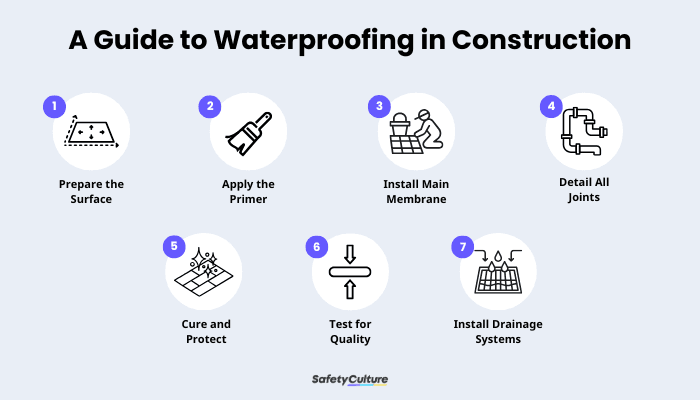
A Guide to Waterproofing in Construction
Surface preparation is the crucial first step in the entire waterproofing process in construction. All dust, oil, loose debris, and protruding concrete must be removed in the substrate. A clean surface allows materials to bond to the structure properly. Skipping this step will lead to “debonding”, where water crawls underneath the layers and causes hidden leaks.
Brush or spray a thin liquid layer onto the cleaned surface. This acts as a bonding agent that seals the pores of the substrate and creates a high-grip surface. Peeling off or blistering usually happens when this is not done.
Epoxy and polyurethane primers are the construction chemicals for waterproofing in concrete structures. Wash and zinc-rich primers are for metal surfaces. Oil-based ones are used for wood.
As the primary shield, the main membrane blocks water from entering the building’s interior or structural frame. Regardless of the type of waterproofing method in construction chosen, make sure that it’s applied to the required thickness and with complete coverage to perform effectively.
A waterproofing inspection checklist guides the assigned personnel in assessing installations and ensuring they comply with the standards for substrate preparation, materials application, testing, and more.
Corners, pipes, drains, and expansion joints are considered the weak points in this project. Reinforcing them with sealants or mesh is imperative to allow them to flex without tearing.
The coating should be allowed to “cure” or harden undisturbed. Installing protection boards over the newly waterproofed surface is an effective way to prevent physical damage. These steps ensure that the material reaches full strength and prevents accidental punctures, especially in an area with high foot traffic.
Perform thickness checks and 48-hour flood tests (i.e., submerging the area) to verify the system’s integrity. Using digital inspection checklists provides documented proof of a watertight seal, preventing costly repairs after the project is finished.
Installing pipes and gravel before filling in the dirt helps drain water away from the structure. This stops water from pressing hard against the walls, which is the main reason moisture gets pushed through small holes and causes underground leaks.
Byblos, a remote-scale infrastructure specialist, uses a digital platform to support daily operations, maintain real-time compliance, and enforce rigorous quality control across its complex waterproofing and construction projects.
Byblos Construction digitized safety checklists, compliance checks, and risk assessments with SafetyCulture, letting teams quickly notify leaders of risks for faster action and fewer blind spots. This improved risk management, communication, and visibility for safer job sites.

SafetyCulture is a mobile-first operations platform adopted across industries such as manufacturing, mining, construction, retail, and hospitality. It’s designed to equip leaders and working teams with the knowledge and tools to do their best work—to the safest and highest standard.
Utilize digital waterproofing templates for scheduling quality checks, logging weather risks, and tracking compliance with global standards and local regulations. Facilitate photo-documented audits to report defects and leverage analytics for material planning, crew training, and recurring inspections. Reduce water-related hazards to minimize project delays and prevent expensive reworks through a unified platform.
✓ Save time and reduce costs ✓ Stay on top of risks and incidents ✓ Boost productivity and efficiency ✓ Enhance communication and collaboration ✓ Discover improvement opportunities ✓ Make data-driven business decisions