Water Intrusion Risks and Response Strategies
Discover the impacts of water intrusion on buildings and how to detect and manage risks using proven standards and safety guidelines.
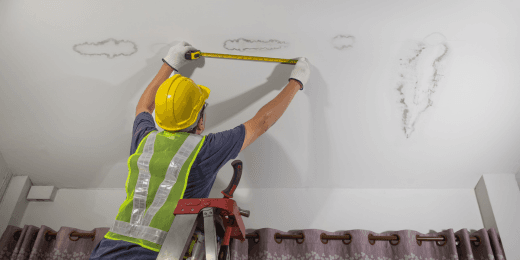
Discover the impacts of water intrusion on buildings and how to detect and manage risks using proven standards and safety guidelines.
Published 28 Apr 2026
Article by
7 min read
Water intrusion refers to the unintended penetration of water into a structure through leaks, cracks, or poor drainage systems. It’s often a result of structural flaws in the building, failed waterproofing barriers, or underground water seepage. The resulting decay, microbial contamination, and structural instability require comprehensive building exterior inspections and moisture control strategies.
A study by the Environmental Protection Agency’s (EPA) Building Assessment Survey and Evaluation (BASE) highlights the severity of water intrusion, revealing that nearly half of commercial structures surveyed experienced continuous leak problems. These reasons prove the need for prevention, early detection, and, if necessary, immediate water damage restoration:
Protects structural integrity - Seepage of water degrades concrete, wood, and steel, causing corrosion and warping that weakens the structure’s load-bearing capacity.
Prevents mold growth and preserves indoor air quality - Moisture causes mold and mildew, releasing spores into the air that trigger health issues such as allergies.
Saves on costly repairs - Ignoring seemingly minor leaks could escalate into major restorations, such as structural replacements and mold cleanup. Timely responses reduce repair costs.
Maintains energy efficiency - Moisture migration reduces Heating, Ventilation, and Air Conditioning (HVAC) efficiency, increasing energy use and utility costs. Early detection and control preserve system performance and support sustainability goals.
Ensures compliance and protects property value - Unsolved water intrusion violates building codes and creates liability risks. Aside from ensuring regulatory compliance, proactive maintenance sustains the property’s aesthetics and value.
The intrusion of water into structures often starts with subtle changes that many overlook. Recognizing the following early signs of water intrusion prevents hidden problems from escalating into significant, costly damage:
Discoloration - Yellow, brown, or dark patches, streaks, and rings appearing on ceilings, walls, or floors often point to a continuous leak hidden behind walls or above ceilings.
Mold and mildew growth - Fuzzy or slimy spots in black, green, or white, often found in corners, near baseboards, and under sinks, means mold spores are spreading quickly.
Warping or bubbling of materials - Buckled floorboards, peeling paint, or bubbling wallpaper are due to trapped moisture behind walls or under flooring that causes materials to expand, lose adhesion, or deform.
Musty odors - A persistent earthy or damp smell in enclosed spaces, like basements, attics, or rooms with poor ventilation, signals the growth of mold and mildew even if you can't see physical damage.
Wet surfaces - Surfaces that feel moist to the touch, condensation on windows and pipes, and water pooling near floors translate to high humidity levels, leaking plumbing, or poor sealing.
Increased utility bills or humidity - An increase in utility bills means HVAC systems are running longer. Leaking pipes and damaged insulation constrain heating and cooling systems, making them work harder to regulate temperature and air flow.
A thorough building water intrusion investigation is essential because identifying the root cause prevents recurring damage. Failure to address the true source means repairs on the building only mask symptoms, allowing the problem to persist and worsen.
Roof and chimney damage - Cracked shingles, broken flashing, or deteriorated chimney seals allow rainwater and moisture to seep through ceilings and attic spaces.
Faulty plumbing and appliance leaks - Malfunctioning appliances (e.g., dishwashers and water heaters) and leaking pipes release water that trickles into walls and floors.
Poorly sealed windows and doors - Gaps or worn-out caulking around openings allow rain to enter, especially during storms or high humidity.
Foundation and structural cracks - Fissures in basements or slab foundations allow groundwater to infiltrate, especially during heavy rains or high water tables.
Condensation and indoor humidity - Excess moisture from poor ventilation or temperature imbalances leads to condensation on cold surfaces. This feeds mold growth.
Malfunctioning gutters and drainage - Clogged or damaged gutters overflow, directing water towards walls and foundations instead of safely away from the structure.
External flooding and weather events - Heavy rainfall storms and rising groundwater can overwhelm drainage systems, forcing water into basements, crawl spaces, and low-lying areas.
Regulations that govern building exist to protect health, safety, and quality of life. Prevention, investigation, and remediation are crucial elements of that mission. These are some laws and standards that building owners and property managers should be well-versed in:
Country | Agency | Mandates |
US | Department of Housing and Urban Development (HUD) Occupational Safety and Health Administration (OSHA) Environmental Protection Agency (EPA) | Sets local building codes for waterproofing, foundation drainage, and safe plumbing Requires identification and mitigation of moisture, mold, and indoor air hazards in workplaces Sets moisture control and indoor air quality guidance for construction |
UK | Building Safety Regulator (BSR) Department for Levelling Up, Housing & Communities | Shared guidelines: Enforces the Building Safety Act Design and construction to resist moisture Remediation where defects threaten safety Local building inspections |
Australia | Australian Building Codes Board (ABCB) State enforcers | Shared guidelines: Enforces the National Construction Code Prescribes materials for waterproofing during construction Requires water-resistance and water intrusion testing Strict rectification orders with waterproofing failures |
EU | DG Energy and DG Environment Member states | Sets harmonized regulations and standards based on the Energy Performance of Buildings Directives (EPBD) Implements building codes, inspection regimes, and remediation orders |
Canada | Natural Resources Canada National Research Council Provincial and territorial enforcers | Sets technical requirements for moisture control based on the National Building Code of Canada Enforces the regulation through building permits, inspections, and water intrusion remediation orders |
Determining and verifying the presence of moisture, seepage, or leaks in the building is a vital first step in preventing more serious cases of water damage. Early identification enables property owners and managers to implement effective water intrusion solutions. Here’s a systematic guide:
1. Conduct a thorough visual inspection of the site -Visual checks locate obvious problem areas and guide the next diagnostic steps. Inspect walls, ceilings, floors, windows, and foundations for visible signs like stains, peeling paint, warped materials, or mold.
2. Measure moisture levels using special meters - These readings reveal hidden dampness that visual inspections might miss. This also helps confirm the extent of infiltration and prioritize areas for remediation. Pin-type and pinless moisture meters detect elevated moisture content in drywall, wood, or concrete.
3. Perform thermal imaging to identify hidden moisture - Thermal imaging is a non-invasive way to pinpoint concealed water paths behind surfaces. Simply scanning walls, ceilings, and floors with infrared cameras reduces guesswork and unnecessary demolition.
4. Monitor air quality for mold and humidity indicators - Poor indoor air quality and musty odors signal ongoing water intrusion and potential health risks. Air sampling and hygrometers measure relative humidity, indicating conditions favorable for active microbial activity and mold spores.
5. Utilize water leak detection systems - Leveraging technology helps identify live water sources, preventing further infiltration and supporting real-time monitoring of recurring issues. Sensors, flow monitors, or acoustic detectors can trace active leaks and plumbing lines or structural components.
6. Review maintenance and weather records - Historical records help trace the root cause of the issue, whether it's wear, a design flaw, or an environmental factor. Examine building maintenance logs, roof repair reports, and recent weather data to correlate leak occurrences with storms or lapses in upkeep.
7. Seek professional assessment for an accurate diagnosis - Engaging certified building inspectors is the best option for companies lacking the time or expertise to conduct these tests. Besides performing detailed tests and accurate evaluations, they recommend optimal corrective actions and prepare necessary documentation for insurance or compliance reporting.
SafetyCulture is a mobile-first operations platform adopted across industries such as manufacturing, mining, construction, retail, and hospitality. It’s designed to equip leaders and working teams with the knowledge and tools to do their best work—to the safest and highest standard.
Proactively manage water intrusion by utilizing sensors for environmental monitoring and automating inspection, maintenance, and compliance tasks. Empower staff by providing training that facilitates timely preventive and corrective actions and tracking remediation efforts. Mitigate costly damage by ensuring timely responses to early signs of seepage and leaks through a unified platform.
✓ Save time and reduce costs
✓ Stay on top of risks and incidents
✓ Boost productivity and efficiency
✓ Enhance communication and collaboration
✓ Discover improvement opportunities
✓ Make data-driven business decisions
In this article