Delivery Driver Safety: Tips for Facing Hazards on the Road
D iscover the common hazards faced by delivery drivers and learn the most effective tips to manage them.
D iscover the common hazards faced by delivery drivers and learn the most effective tips to manage them.
Published 5 May 2026
Article by
4 min read
Delivery driver safety refers to the measures and training designed to maintain and ensure the wellbeing of delivery workers as they perform their vital role in delivering goods and representing their companies. These safety measures focus on minimizing risks faced by drivers while they are on the road. Beyond safeguarding drivers’ health and wellbeing, deliver driver safety is a vital part of any business; it serves as the final link in the delivery chain, while also ensuring fast, secured, efficient deliveries.
Within the transport and Logistics industry, delivery drivers encounter a variety of hazards on the road due to the unpredictability of outside factors they may encounter. These challenges impact drivers across parcel, retail, and food delivery services alike. Some of the hazards they face are:
Traffic and road hazards: Delivery drivers face an increased collision risk as frequent stops, tight schedules, and unfamiliar routes intensify dangers on the road.
Deadlines and time pressure: Depending on the job, some delivery drivers may work long hours under strict deadlines and tight time pressure, leading to fatigue that slows reaction times, impairs judgment, and panicked movements.
Environmental and weather unpredictability: On the road, delivery drivers may face different hazardous weather that reduces visibility and road safety,heightening the risk of slips and falls when delivering packages.
Crimes, theft, and violence: Even if they are mostly in motion, delivery drivers face rising threats of theft, carjacking, and assault, especially in high-crime areas or late-night shifts.
Animal attacks and property hazards: Some delivery drivers are more likely to encounter unsafe properties than others, as well as aggressive or unrestrained pets during home deliveries, leading to bites or chases.
Customer-related conflicts: Delivery drivers may sometimes deal with uncommunicative and aggressive customers, leading to disputes that can quickly turn into conflicts, especially during high-stress or late-night shifts.
Delivery drivers can vary based on the type of service they perform, the vehicles they operate, or the industry in which they deliver. The US Texas Department of Insurance emphasizes that ensuring delivery driver safety starts with understanding their different roles, tasks, responsibilities, and the unique risks they encounter on the job. Some of the more common types are:
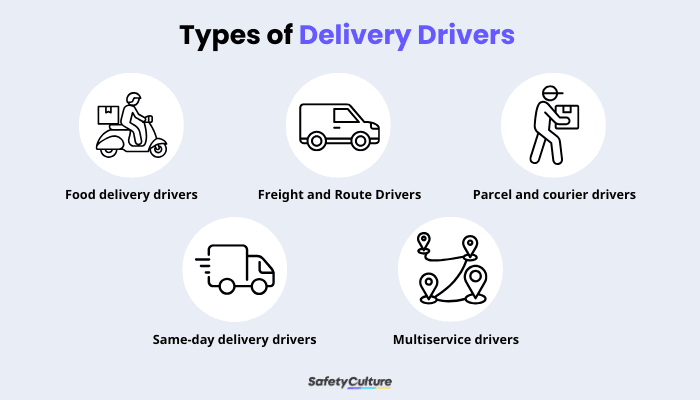
Food and grocery delivery drivers: Delivers meals, groceries, or other perishable goods directly to customers’ homes or businesses, managing tight deadlines and navigating diverse traffic and weather conditions.
Freight and Route Drivers: Operates larger vehicles like trucks to deliver bulk goods along fixed routes between warehouses, retailers, and distribution centers.
Parcel and courier drivers: Handles smaller packages for businesses and consumers as they focus on efficiency, accuracy, and time-sensitive deliveries.
Same-day or on-demand delivery drivers: Handles urgent deliveries that must reach customers within hours, focusing on speed, efficiency, and customer communication.
Ride-share and multiservice drivers: Offers both passenger and goods delivery services as they often switch between transporting people, parcels, and food, requiring adaptability and strong customer service skills.
Ensure visibility over lone workers and manage their quality and safety with our digital solutions, built for and trusted by lone workers and leaders globally.
Ensuring delivery driver safety is important because not only are they handling important cargos under time constraints, but they are also doing so often driving alone, working in diverse environments.
Here are five safety tips worth to remember and implement:
Work with drivers to conduct a pre-trip inspection before work to confirm the vehicle is safe to drive. Always remember to check the brakes, tires, lights, and mirrors to ensure everything is in proper working condition.
Use a journey management plan for longer routes and higher‑risk trips to confirm necessity, set routes and rest breaks, and document hazards and mitigations. Ensure this plan is easily accessible by both management and delivery drivers so all are aware of any possible risks, hazards, and changes.
Keep lone delivery drivers protected with digital delivery management solutions and lone working devices that are easily accessible, and can connect seamlessly with mobile devices. These should include features such as real‑time location visibility that are employee-activated, periodic check‑ins, and panic buttons.
Send critical announcements regarding bad weather, route changes, driveway hazards, dog warnings across an entire team or organization for visibility, even if only a select few are affected. This allows everyone to stay updated on any possible delays and concerns, and create ways to address or mitigate them.
Reminder drivers to stay alert on the road and at delivery sites with check-ins, reminders, and monitoring devices. Utilize telematics sensors to ensure they park properly, avoid unsafe areas while driving, and manage and drive vehicles safely.
SafetyCulture is a mobile-first operations platform adopted across the manufacturing, mining, construction, retail, and hospitality industries. It is designed to equip leaders and working teams with the knowledge and tools to do their best work—to the safest and highest standard.
Stay connected with your team and manage lone worker risks through location sharing and discreet panic alerts that can escalate to emergency services. Foster a culture of safety and transparency by enabling constant communication with lone workers, allowing them to perform tasks with configurable durations and check-ins.
Save time and reduce costs
Stay on top of risks and incidents
Manage compliance with safety standards
Enhance communication and collaboration
Monitor worker condition
Make data-driven business decisions