A Practical Guide to TPM Training: Implementation and Benefits
Explore how your organization can implement Total Productive Maintenance training to improve production reliability.
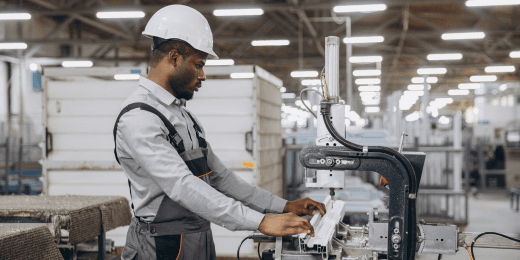
Explore how your organization can implement Total Productive Maintenance training to improve production reliability.
Published 5 May 2026
Article by
5 min read
TPM training enables manufacturing organizations to equip and encourage all their employees to apply the principles of Total Productive Maintenance in their daily work. It pushes every worker to take responsibility for production equipment and ensure its dependability. With this goal, the training covers strategies and tasks that prevent untimely breakdowns, issues, and accidents before they occur.
Implementing TPM training is necessary to achieve Total Productive Maintenance. It helps organizations improve equipment reliability and support smooth production. Below is a breakdown of how businesses can benefit from this training:
Training is one of the eight pillars of Total Productive Maintenance. By taking TPM courses, workers and managers can understand the purpose of TPM practices and their role within the framework. This drives them to fulfill their responsibilities, whether it’s conducting audits, promoting visual standards, or completing checklists.
TPM involves workers in routine checks and tasks that support maintenance management. For example, autonomous maintenance asks operators to monitor equipment temperatures and oil characteristics, and take action when they identify potential issues. Training ensures that teams are skilled and knowledgeable in performing tasks precisely, leading to safe and consistent work.
When everyone is trained to improve equipment effectiveness, manufacturing operations become less prone to delays and downtime. As a result, businesses can avoid the six major losses caused by faulty equipment, misuse, and insufficient maintenance, which the Environmental Protection Agency (EPA) lists as:
Unexpected breakdown losses
Set-up and adjustment losses
Stoppage losses
Speed losses
Quality defect losses
Equipment and capital investment losses
TPM training courses are relevant to anyone in manufacturing operations, as everyone has a role in supporting and enhancing equipment stability. However, certain positions need more focused training as they work closer with production equipment. These include:
Operators
Maintenance personnel
Line workers
Designers
Engineers
Process specialists
To prevent breakdowns and defects in production, training on Total Productive Maintenance must be role-based. Here are the TPM topics important for each key position:
Operator training must highlight simple checks, fixes, and reports that they should conduct daily on their own, such as:
Machine inspections, including vibration and temperature checks
Basic maintenance like cleaning and fluid top-ups
Quick equipment adjustments
Assembly and flow workers need to learn the best practices when working with conveyors and in facilities, including:
Completing post-work cleaning and tagging
Interpreting and following visual guidelines
Complying with safety standards, such as ergonomics and personal protective equipment
As maintenance specialists, it’s key that they’re skilled to lead on the following:
Predictive maintenance tools and data
Planned maintenance procedures based on manufacturer guidelines, time, and usage
Root cause analysis models
Quality Engineers need to understand the relationship between equipment performance and output quality by enhancing their skills in:
Statistical Process Control (SPC) charts, like the Process Capability Index (CpK) and the u-chart
Poka-Yoke design, which is the method of creating processes that prevent errors
Defect analysis and how it connects to equipment issues
Design teams are responsible for ensuring that the equipment is maintainable, accessible, and up-to-date, which means they should train on:
Early management of equipment
Identifying potential problems through Failure Mode Analysis (FMEA)
Designing equipment parts that fit together in different configurations
As leaders of improving production processes and performance, they need to be able to:
Find prevalent causes of loss and failure
Measure equipment effectiveness and return on investment
Conduct change management whenever new processes and equipment are introduced
To supervise and guide those on the floor effectively, team leaders must receive:
A TPM facilitator course that focuses on how they can conduct toolbox talks related to TPM practices
Training on enforcing compliance standards and completion of checklists
Lessons on writing and reviewing logs and audits
TPM training covers various complex ideas and skills, so combining different training formats is ideal. This blended approach allows each topic to be taught in the most suitable style, helping workers learn, retain, and apply knowledge effectively. Here are some examples for comprehensive training:
Formal lectures: Involves sit-down discussions, presentations, and question-and-answer sessions that teach the concepts related to TPM. For example, it can be used when training technicians on calculating an equipment’s average time in use between failures.
Hands-on exercises: Facilitate practice work that allows staff to perform tasks themselves. This is key in helping them follow specific steps, such as cleaning machines or installing parts.
Simulations: Get employees to conduct work and solve problems in a what-if scenario, building their confidence. You can simulate concerning machine temperature levels or product defects that need to be traced back to equipment.
E-learning courses: Use online training platforms to provide workers with self-paced lessons, video tutorials, and short quizzes to add to their on-site training. The approach helps refresh the team's knowledge, like their understanding of lean concepts or 5S maintenance.
Focused group activities: Gather a small team of employees and ask them to plan process improvements, using what they’ve learned from training. This technique is great for encouraging immediate application of the TPM pillar of focused improvement.
Certification assessments: Provide teams with opportunities to earn TPM certification, further developing their expertise in their roles. Certification assessments also strengthen trust in the organization and prove the skills of engineers, operators, auditors, and specialists.
SafetyCulture is a mobile-first operations platform adopted across industries such as manufacturing, mining, construction, retail, and hospitality. It’s designed to equip leaders and working teams with the knowledge and tools to do their best work—to the safest and highest standard.
Streamline processes, eliminate defects, enhance equipment utilization, and build a dependable infrastructure with SafetyCulture. Strive for overall equipment effectiveness to boost competitive advantage, foster sustainable growth, and deliver long-term value.
✓ Save time and reduce costs
✓ Stay on top of risks and incidents
✓ Boost productivity and efficiency
✓ Enhance communication and collaboration
✓ Discover improvement opportunities
✓ Make data-driven business decisions