
Published 8 Aug 2025
Article by
4 min read
What is an ISO 9001 Stakeholder Analysis Template?
A stakeholder analysis template helps you identify, assess, and manage the people, groups, or organizations who have a stake in your project. It gives you real insight into what your stakeholders want, expect, or worry about, helping you better understand who has the most influence or impact so you can take action and keep everyone aligned in the same direction.
Importance
A stakeholder analysis is a key step in any business, project management process, change management, or manufacturing operation. With a dedicated stakeholder analysis template, you can better understand who your stakeholders are, what roles they play, and how power dynamics affect collaboration.
Additionally, by identifying your most influential stakeholders, both internal and external, you can prioritize your focus and build stronger relationships. Using frameworks such as the 5W1H Method or a risk analysis alongside a stakeholder analysis template is a great way to do this. Knowing their goals, interests, and risks gives you a better chance of gaining their support. Plus, it helps you spot potential roadblocks early, so you can plan ahead and avoid costly surprises.
A stakeholder analysis template is especially important in large and complex operations like the manufacturing industry. Manufacturers deal with many groups (e.g., employees, suppliers, customers, local communities, and government bodies), and a template can help streamline how they meet the unique needs and expectations of each group.
A dedicated template also helps ensure compliance with ISO 9001 Clause 4.2 standards, which involves understanding and communicating the needs and expectations of different stakeholders. Without a thorough analysis template to standardize operations, a company might miss a stakeholder’s needs, which can lead to major problems such as supply chain disruptions or regulatory fines.
What to Include in an ISO 9001 Stakeholder Analysis Template
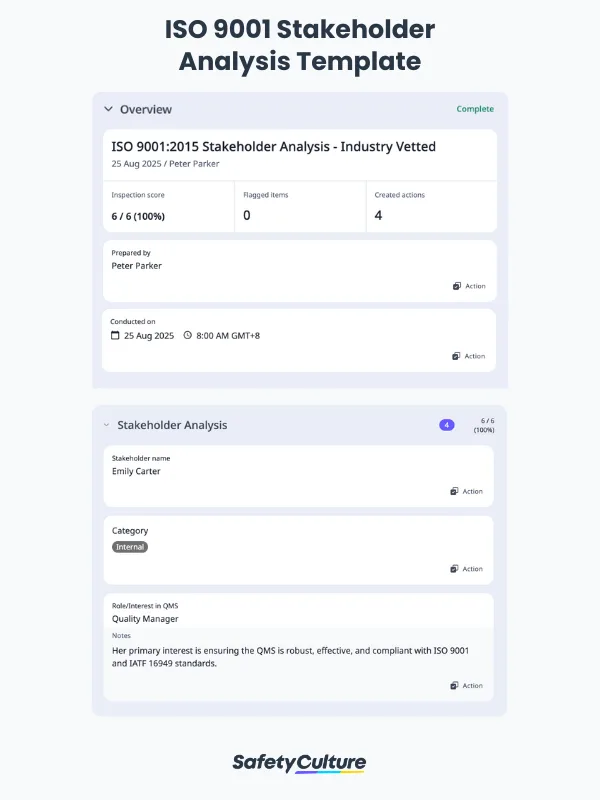
Similar to a governance framework, when working with internal or external stakeholders, it’s important to focus on three things when making an ISO 9001 stakeholder analysis template: their basic information, an engagement strategy, and an opportunity and risk analysis. This is often done visually, like through a stakeholder map or analysis matrix, but it can also be done digitally.
A stakeholder analysis report template, in compliance with ISO 9001 standards, should include the following:
Stakeholder Information
Stakeholder Name: Know the name of your stakeholder, whether they are an individual or a group/organization.
Internal or External: Identify if they are within your organization (internal) or outside your organization (external).
Role/Interest in Quality Management System (QMS): Describe what they contribute to or how they’re involved in the QMS.
Influence Level: Rate how much influence this stakeholder has: low, medium, or high.
Expectations and Requirements: Discuss what the stakeholder expects from your QMS, such as quality standards, timelines, communication, or compliance needs.
Stakeholder Engagement Strategy
Engagement Method: Outline how your team will engage with the stakeholder based on the information you’ve gathered.
Frequency: Decide how often engagement should happen (e.g., weekly, monthly, quarterly) based on the stakeholder’s influence and interest.
Responsible Party: Identify who in your team will lead the communication or engagement efforts with this stakeholder.
Risk and Opportunity Assessment
Potential Risks and Opportunities: List possible risks or opportunities related to each stakeholder.
Risk and Opportunity Strategies: Outline the action plans your team will take to address these risks or make the most of the opportunities if they arise.
How to Use
There are a lot of things to consider when creating an ISO 9001 stakeholder analysis template, which is why digital tools can be a big help. Making your template accessible online helps seamlessly integrate it into your day-to-day workflow.
Take a manufacturing process, for example. It may involve tracking input from internal teams, as well as external stakeholders like suppliers or regulatory bodies. Platforms like SafetyCulture allow you to create a digital stakeholder analysis template and map out roles, priorities, and influence levels in one place. This makes it easier for teams to make smarter decisions and keep things running smoothly.
Using a stakeholder analysis matrix template in a manufacturing context is as simple as:
Downloading the template
Listing key stakeholders, such as production teams, quality control, suppliers, and regulatory bodies
Filling in their roles, priorities, and influence over the process
Getting sign-off from operations, production managers, or plant managers
Exporting and sharing the report with cross-functional teams to stay aligned
Sample Stakeholder Analysis Report
Below is an example of an ISO 9001 stakeholder analysis template report for a Quality Management System (QMS) within a manufacturing company, completed through the SafetyCulture platform:
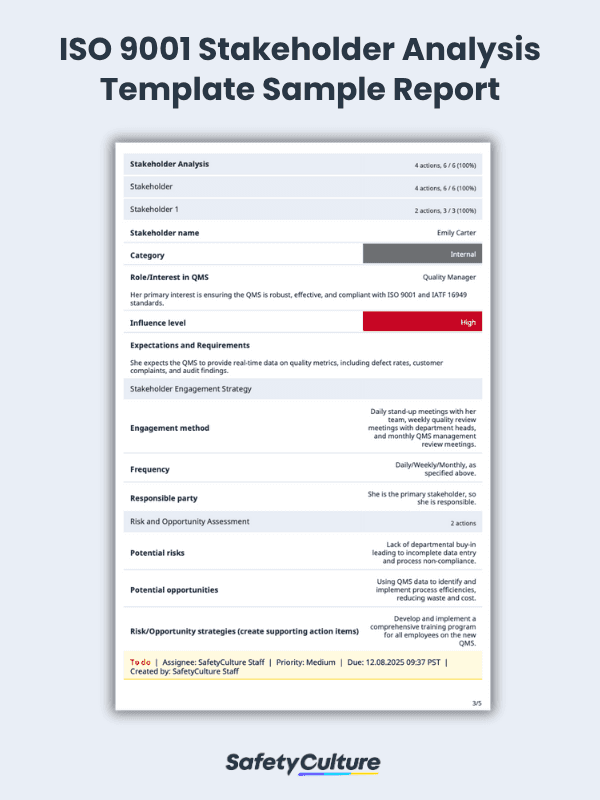
ISO 9001 Stakeholder Analysis Template | SafetyCulture
How Plastivaloire Maintained ISO 9001 Compliance

To meet customer requirements, they’re certified to multiple standards (ISO 9001, IATF 16949, ISO 14001, ISO 45001, ISO 50001) and use SafetyCulture to support quality audits at major production sites.

Still looking for a checklist?
Search, filter, and customize 60,000+ templates across industries and use cases.