A Guide to Choosing and Using Soil Amendments
Check out what soil amendments are, the different types available, and learn when to use specific soil amendments in your projects.

Check out what soil amendments are, the different types available, and learn when to use specific soil amendments in your projects.
Published 28 Apr 2026
Article by
6 min read
A soil amendment is any material added to soil to improve its physical properties, fertility, or overall health. Common amendments include compost, manure, lime, gypsum, and organic matter that enhance soil structure, nutrient availability, and water retention. Soil amendments help create better growing conditions for plants by correcting soil deficiencies or imbalances, making them essential for those in the agricultural industry.
As part of good agricultural practices, using soil amendments at the right time supports healthier root development, better water management, and more sustainable crop production. Ideally, soil amendments should be used when soil tests or visual indicators show poor structure, low organic matter, drainage problems, or pH imbalances that limit plant growth. They are especially helpful before planting, during soil preparation, or when rehabilitating degraded or compacted soils to improve long-term productivity.
Soil amendments differ from fertilizers in their primary purpose and how they affect the soil. Amendments are used to improve the soil’s physical, chemical, and biological properties over time, while fertilizers are designed to supply specific nutrients directly to plants for immediate growth. In many systems, amendments create the foundation for healthy soil, while fertilizers fine-tune nutrient levels based on crop needs.
Cultivate a culture of excellence with our digital solutions that enhance efficiency, agility, and continuous improvement across all operations.
There are many types of soil amendments, each with its own set of advantages and drawbacks. It’s critical for teams to select the right amendment for their needs, goals, crops, and projects, as they can greatly impact the quality of the soil. Below are some of the most common soil amendments and their properties:
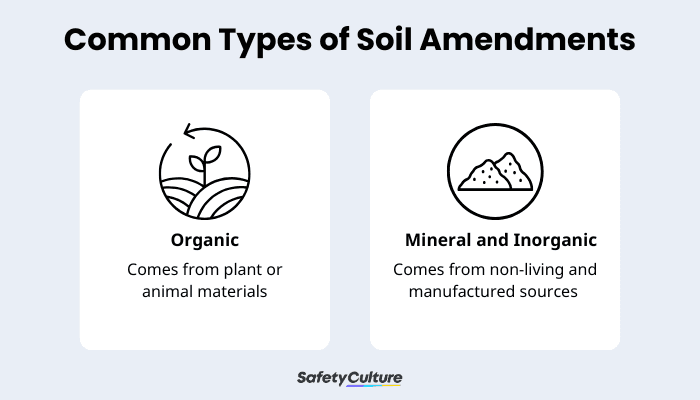
Common Types of Soil Amendments
Organic amendments come from plant or animal materials such as compost, manure, cover crop residues, and peat moss. They improve soil structure, increase organic matter, and enhance microbial activity over time. Organic amendments also help with moisture retention and gradual nutrient release, making soils more resilient and productive.
Mineral or inorganic amendments include materials like lime, gypsum, perlite, and vermiculite that are mined or manufactured rather than biologically derived. These amendments are mainly used to adjust soil pH, improve drainage or aeration, and correct specific soil chemistry issues. While not all of these amendments contain organic matter, they can provide long-lasting physical or chemical benefits to the soil.
The ideal soil composition for planting and harvesting crops are composed of about 50% solids, 25% air, and 25% water. Of the 50% solids, it can be made up of different soil types and amendments, all in varying ratios and qualities. The right soil amendment can have a massive impact on soil quality, especially when trying to grow specific plants and crops. This is why teams must pay close attention to what amendment they’re using or planning to use to ensure that they maximize their benefits. Here are some tips to remember when choosing the right soil amendment:
Clay soils are dense and tend to retain excess water, which can restrict root growth and oxygen availability. Adding organic amendments like compost helps break up compacted particles and creates pore space for better drainage and airflow. In some cases, mineral or inorganic amendments can also be added for additional support.
Compared to clay soils, sandy soils drain quickly and often struggle to retain moisture and nutrients. Organic amendments increase the soil’s ability to hold water and bind nutrients, reducing leaching. This results in more consistent moisture levels and improved nutrient availability for plants.
Loamy soils already have a balanced texture, so amendments are used mainly to sustain soil health rather than correct major problems. Adding organic matter supports beneficial microbes and preserves good structure. For compacted soils, amendments help restore porosity and biological activity, improving root penetration and soil function.
It’s important for teams to test their soil properly before adding any amendments. This is to ensure that they are adding the right amendments for their goals, and they don’t end up making the soil unsuitable for planting. Here are some of the key soil tests for teams looking to perform a soil amendment.
Soil pH testing measures the acidity or alkalinity of the soil, which affects nutrient availability and microbial activity. On the other hand, nutrient testing identifies levels of essential elements like nitrogen, phosphorus, and potassium, helping determine what amendments are needed. Conducting these tests ensures that any amendments applied will correct deficiencies and optimize soil fertility.
Monitoring soil moisture helps determine whether the soil is too dry, too wet, or well-balanced, which affects amendment effectiveness and plant growth. Simple soil feel tests, such as squeezing a handful of soil to check texture and cohesion, provide immediate insights into water retention and drainage. These assessments guide timing and type of amendments for the best impact.
Once tests are completed, results must be compared to recommended ranges for the crop or soil type to identify deficiencies or imbalances. Setting clear targets for pH, nutrient levels, and organic matter helps guide amendment choices and application rates. This ensures that soil improvements are precise, effective, and aligned with long-term soil health goals.
In recent years, technology has greatly improved soil amendment processes by making soil testing and monitoring more accurate and efficient. There are now digital soil sensors to monitor moisture, pH, and nutrient levels in real time, as well as portable testing devices to provide instant feedback on soil health. There are also advancements in agricultural machinery to support these new discoveries. Using these tools, farmers and gardeners can quickly identify deficiencies and determine the precise type and amount of amendment needed.
To get the most out of these technological advancements for soil amendment use, consider using a digital solution to gather all your data in one place. By doing so, you can easily make more informed decisions on what soil amendment to use, and create corrective actions as needed.
The ideal solution will also offer digital forms or checklists to streamline the amendment process by tracking applications, schedules, and results. Such a solution can also come in a mobile version with notifications to remind users when to retest or reapply amendments, ensuring consistent soil health over time. Together, these technologies reduce guesswork, save labor, and support data-driven decisions for healthier, more productive soils and crops.
SafetyCulture is a mobile-first operations platform adopted across industries such as manufacturing, mining, construction, retail, and hospitality. It’s designed to equip leaders and working teams with the knowledge and tools to do their best work—to the safest and highest standard.
Streamline processes, eliminate bottlenecks, enhance resource utilization, and build an agile and scalable infrastructure with SafetyCulture. Strive for operational excellence to boost competitive advantage, foster sustainable growth, and deliver long-term value.
✓ Save time and reduce costs
✓ Stay on top of risks and incidents
✓ Boost productivity and efficiency
✓ Enhance communication and collaboration
✓ Discover improvement opportunities
✓ Make data-driven business decisions