How to Perform Efficient Product Verification
A deep dive into what product verification is, why it’s important, and best practices for teams to follow to ensure streamlined operations and quality products.
A deep dive into what product verification is, why it’s important, and best practices for teams to follow to ensure streamlined operations and quality products.
Published 5 May 2026
Article by
7 min read
Product verification is the process of confirming that a product meets its specified design requirements and functions as intended before it is released or delivered. It involves tests, inspections, and reviews to ensure that the product was built correctly according to technical standards and specifications. This step in product manufacturing helps identify defects or deviations early, while ensuring quality, reliability, and compliance with regulations.
Product verification is important because it ensures that a product accurately meets its product specification and performs as designed. By verifying each component and function, manufacturers can detect flaws early, preventing costly rework or product recalls. This process also builds customer trust by guaranteeing consistency, safety, and adherence to industry standards.
While product verification checks whether a product was built correctly, validation ensures it is the right product that meets user needs and expectations. Verification answers the question, “Did we make the product right?” whereas validation asks, “Did we make the right product?” The product specification, on the other hand, defines the exact requirements and standards that guide both verification and validation processes.
Raise the bar for product quality and exceed customer expectations with standardized checks across all production sites.
Product verification can be a complex process that looks different for every business and team. Each process must be customized to the specific products and needs of the organization. That said, there are some processes that are staples in product verification, such as the following:
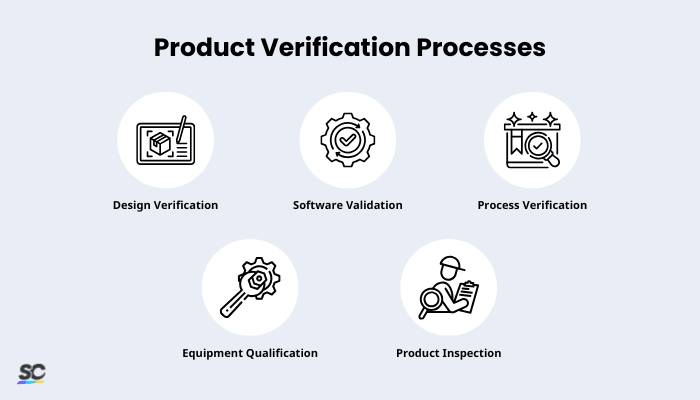
Product Verification Processes
This ensures that the product’s design meets all defined requirements and specifications before production begins. It involves reviewing drawings, models, and prototypes through tests, simulations, and peer reviews. This process helps confirm that the design will function as intended under expected operating conditions.
This process in product verification confirms that software used in or as part of a product operates correctly and meets its intended purpose. Verification checks that the software to be used or deployed was developed according to design requirements, while validation ensures it fulfills user needs in real-world conditions. This prevents functional errors and ensures system dependability.
Process verification focuses on confirming that manufacturing or production processes consistently produce outputs that meet quality standards. It involves monitoring parameters, conducting trial runs, and reviewing process documentation. This step ensures repeatability, reliability, and control across production operations.
Teams must verify that all machines, tools, and systems used in production are properly installed and function according to design and performance requirements. This includes performing installation checks, calibration, and operational testing. Proper equipment installation and management ensures that the manufacturing environment supports consistent, compliant production.
These steps involve evaluating products at different production stages to detect and correct defects early. In-process inspections maintain quality during manufacturing, while final inspections confirm that the completed product meets all specifications before release. Together, they help ensure product reliability, safety, and compliance.
Another key aspect of product verification is making sure that products and processes meet regulatory requirements. The exact regulations teams should follow vary depending on the product, industry, and other factors. Teams must pay attention to any industry or product-specific requirements they must follow to ensure compliance. Below are a few examples of regulatory requirements some organizations must comply with when verifying products:
US FDA CFR Part 820 - Establishes quality system regulations that medical device manufacturers must follow to ensure consistent product safety and performance. It requires documentation, process controls, and corrective actions to maintain compliance.
ISO 90001:2015 - Defines global standards for creating and maintaining an effective quality management system across various industries. It emphasizes continuous improvement, customer satisfaction, and risk-based thinking in all operations.
ISO 13485 - Specifies quality management requirements tailored to the design, production, and servicing of medical devices. It aligns with regulatory expectations to ensure product safety, traceability, and reliability.
Good Manufacturing Practice (GMP) - Provides guidelines to ensure that products are consistently produced and controlled to meet established quality standards. It covers manufacturing processes, personnel training, equipment maintenance, and documentation.
Consumer Product Safety Improvement Act (CPSIA) - Regulates the safety of consumer goods, especially those intended for children, to prevent hazardous exposure or injury. It mandates strict testing, labeling, and recordkeeping for manufacturers and importers.
While critical for product quality, verifying products can be a challenging task for most organizations. Here are some of the key challenges teams can expect during the process to keep them better prepared:
Product verification becomes difficult when dealing with multiple suppliers and manufacturing sites that follow different quality standards. Coordinating verification activities across global or multi-tiered supply chains requires strict oversight and communication. Any inconsistency in materials or processes can compromise accuracy and delay product approval.
Maintaining complete and accurate documentation is essential, but can be challenging when managing complex verification processes. Missing data, version errors, or incomplete records can make compliance verification difficult. Implementing digital tracking systems helps with ensuring efficient documentation practices, while also improving accuracy, transparency, and accountability.
Manual testing, inspections, and data entry can introduce mistakes that affect verification results. Even minor errors can lead to defective products, rework, or noncompliance issues. Standardized procedures, training, and automation, as well as the right tools, reduce human-related risks.
Ensuring audit readiness requires maintaining consistent records and documentation at all times. Unclear verification data or process gaps can result in failed audits or regulatory penalties. Regular internal reviews and digital quality systems help organizations stay compliant and audit-ready.
Each organization should tweak its product verification process to meet its unique needs. This ensures a smooth and effective verification that doesn’t hold up the production line. To help teams get off to the best start, here are a few best practices to remember when conducting product verifications:
Initiating verification activities early in the product lifecycle helps identify design flaws and compliance issues before production begins. This proactive approach reduces costly rework, delays, and safety risks. Early verification also ensures that all design and process requirements are aligned from the start.
Defining precise and measurable requirements ensures that verification teams can accurately test and confirm product performance. Ambiguous or vague criteria make it difficult to assess compliance. Clear specifications create a solid foundation for consistent and reliable verification results.
Applying multiple verification methods such as inspections, barcode scannings, simulations, and functional tests provides a more complete evaluation of product quality. Each technique reveals different types of issues, improving accuracy and reliability. Combining methods ensures that products meet both technical and safety standards.
Thorough documentation creates a verifiable record of each stage in the verification process. It helps demonstrate compliance during audits and supports root cause analysis if issues arise. Maintaining accurate records ensures transparency and accountability across teams.
Using digital tools like automated testing systems, electronic checklists and forms, and quality management and inspection software enhances efficiency and precision in verification. These tools help reduce human error, standardize data collection, and streamline reporting. Digitalization also improves traceability and simplifies audit preparation, ensuring efficient product verification before distribution or sale.
SafetyCulture is a mobile-first operations platform adopted across industries such as manufacturing, mining, construction, retail, and hospitality. It’s designed to equip leaders and working teams with the knowledge and tools to do their best work—to the safest and highest standard.
Streamline processes, eliminate bottlenecks, enhance resource utilization, and build an agile and scalable infrastructure with SafetyCulture. Strive for operational excellence to boost competitive advantage, foster sustainable growth, and deliver long-term value.
✓ Save time and reduce costs ✓ Stay on top of risks and incidents ✓ Boost productivity and efficiency ✓ Enhance communication and collaboration ✓ Discover improvement opportunities ✓ Make data-driven business decisions