A Comprehensive Guide to Material Handling Equipment (MHE) Training
Learn how MHE training can facilitate safe, compliant, and highly effective material handling across your warehouse.
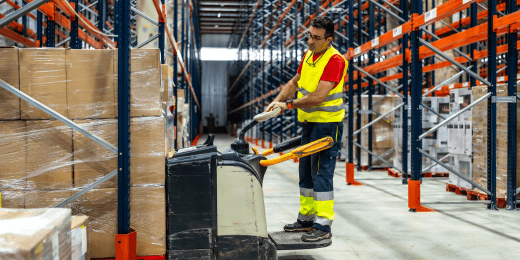
Learn how MHE training can facilitate safe, compliant, and highly effective material handling across your warehouse.
Published 5 May 2026
Article by
6 min read
Material handling equipment (MHE) training instructs workers on the trucks, systems, and fixtures meant for transferring, protecting, and storing loads. It covers discussions and practical exercises that focus on safe and effective use of these assets. Altogether, MHE training is a vital part of achieving productive material handling throughout the warehouse.
MHE training supports a smooth flow of goods and enables crew members to utilize material handling equipment to its fullest. Here’s why this training matters for your organization:
Worker safety: Some risks linked to MHEs appear among the Health and Safety Executive’s most common fatal accidents. MHE safety training stresses awareness to prevent accidents like collapses and strikes.
Regulatory compliance: MHE operator training helps crew members follow equipment use standards from various regulatory bodies. This ensures that workers are qualified and reduces the chance of legal issues.
Proper equipment use: Providing training helps staff choose the correct machine, hardware, or tool for each task. They also learn the steps to follow before, during, and after operating these assets.
Inventory control and organized facilities: Accurate use of handling equipment supports better routing, stacking, and storage of stock in the warehouse. As a result, teams misplace fewer items and find it easier to track materials.
Operational efficiency: Trained workers move loads quickly and with precision. This helps production lines, warehouses, and the wider supply chain remain on schedule.
Cost saving: Training encourages timely maintenance, standardized processes, and greater care with equipment. With this, your organization can reduce repair costs, insurance premiums, and violation fines.
Comprehensive training covers the necessary skills and knowledge for consistent and repeatable MHE operations. Below are the essential topics to expect:
Effective equipment usage starts from an understanding of its mechanics and processes. This topic builds this grasp by discussing how the equipment best moves or holds loads. Depending on the truck, system, or hardware, this topic discusses:
Operation sequences
Control systems
Loading and unloading practices
Secure maneuvers
Gears, fittings, and components
Maintenance processes and inspection checks training outlines the steps to sustain an equipment’s useful life for carrying or controlling items. This topic also includes techniques to spot existing and potential issues that can delay work. It explains:
Pre-shift check routines
Different types of inspections, including visual and operational checks
Defect logging
Lubrication schedules
Steady and secure load handling with equipment depends on properly following the principles of weight distribution and center of gravity. Understanding these concepts helps workers prevent damage to materials caused by drops and collapses. They can learn:
Load positioning
Assessing dynamic forces, like momentum and vibration
Stacking limits
Discussing workplace protocols provides you with an opportunity to highlight your organization’s warehouse safety rules. This enables you to enforce standards and cultivate compliance, further enhancing the quality of handling. It’s best to discuss points on:
Warehouse zoning
Storage limits
Aisle etiquette
Reporting procedures
Dedicating training sessions to operator safety builds the crew’s risk awareness, pushing them to take the necessary precautions while using material handling equipment. For this, training must explore:
Associated equipment risks, such as falls, overflows, and strikes
Appropriate personal protective equipment
Hardware securement
Safeguarding techniques
Emergency response
This training topic emphasizes the importance of responsible equipment control when on open or tight warehouse floors, surrounded by pedestrians, fixtures, and other objects. It aims to prevent collisions, strikes by equipment, and falling items. This should include:
Speed limits
Restricted vehicle and pedestrian lanes
Equipment lanes
Communication
Given the range of topics and skills that training must cover, as well as the number of workers to cater to, you’d need a tool that facilitates training without much friction. Tools like SafetyCulture’s Training allow you to deliver the knowledge and capabilities your teams need straight to their hands, at a fraction of the time. This way, operational improvements are made easily, without disrupting work.
MHE training applies to any equipment used to hold, control, move, or store loads around the warehouse. Given this broad description, it’s key to remember the different types of material handling equipment. It’s to ensure all relevant assets are covered in your organization’s training. Below are the classifications and examples:
Storage and handling: Shelves, racks, and drawers
Industrial trucks: Forklifts, hand trucks, and dollies
Bulk material handling: Conveyors, bucket elevators, and reclaimers
Engineered systems: Automated guided vehicles (AGVs), retrieval systems, and robotic delivery systems
Material handling equipment poses various safety risks, pushing occupational health and safety regulators to require MHE training. This can range from dedicated equipment training to general safety programs that address workplace risks.
Here’s a quick overview of those regulations for the United Kingdom, the United States, Australia, and Canada:
The Provision and Use of Work Equipment Regulations 1998 (PUWER) Regulation 9
According to this law, organizations must deliver relevant safety training to workers who use equipment, including material handling ones, in their tasks. This must cover proper operations, associated risks, and protective measures.
Lifting Operations and Lifting Equipment Regulations 1998 (LOLER)
This regulation applies to MHEs identified as lifting equipment, such as forklifts and lifters. It states that lifting operations must only be done by trained and competent workers.
OSHA 29 CFR 1910.178(l)
The Occupational Safety and Health Administration (OSHA) enforces that only operators who “successfully completed the training required” are allowed to drive forklifts. Additionally, their training must only be provided by someone who has the “knowledge, training, and experience.”
Work Health and Safety Regulation 2011 - Regulation 39
According to Safe Work Australia, organizations must give all necessary training to team members exposed to health and safety risks at work. This applies to operators of material handling equipment, given the inherent hazards of these tools.
High Risk Work Licenses under the Work Health and Safety Regulations
Employees performing high-risk work must complete training and obtain a High Risk Work License. Schedule 3 of the regulations includes forklifts, materials hoists, and reach stackers as equipment for high-risk work, reinforcing the need for training.
Canada Labour Code Part II Section 124.1
The Duties of the Employer include the provision of adequate training for workers handling “escalators, elevators and other devices for moving persons or freight.” This way, crew members receive the information and supervision they need to work safely.
CSA Standard B335-15 (R2024)
The CSA Group establishes safety standards for lift trucks. Their guidelines mandate vehicle operator training that reflects the type of truck used, as well as the relevant attachments, maintenance, and inspections.
It’s important to take note that these are national or federal regulations. Organizations must still check for additional state, regional, and local laws that may apply.
SafetyCulture is a mobile-first operations platform adopted across industries such as manufacturing, mining, construction, retail, and hospitality. It’s designed to equip leaders and working teams with the knowledge and tools to do their best work—to the safest and highest standard.
Standardize processes, improve safety, enhance resource utilization, and build an agile and efficient crew with SafetyCulture. Strive for operational excellence to boost competitive advantage, foster sustainable growth, and deliver long-term value.
✓ Save time and reduce costs
✓ Stay on top of risks and incidents
✓ Boost productivity and efficiency
✓ Enhance communication and collaboration
✓ Discover improvement opportunities
✓ Make data-driven business decisions