Electric Vehicle vs Hybrid: A Guide
Choose the right vehicle for your organization’s fleet after diving into the key differences and benefits of electric vs hybrid vehicles.

Choose the right vehicle for your organization’s fleet after diving into the key differences and benefits of electric vs hybrid vehicles.
Published 28 Apr 2026
Article by
7 min read
The electric vehicle vs hybrid comparison highlights the key differences between fully electric and partially electric cars. Electric Vehicles (EVs) run entirely on electricity stored in batteries and produce zero tailpipe emissions. Hybrid vehicles, on the other hand, combine a gasoline engine with an electric motor, using both power sources to improve fuel efficiency but still relying partly on fuel.
The comparison between EVsand hybrid vehicles is especially relevant for organizations today, as many are considering switching to EV fleet management. This switch can lead to significant long-term savings in fuel, maintenance, and harmful emissions, hence the great appeal surrounding this topic.
Managing an EV fleet or hybrid fleet, compared to traditional ones, allows for more predictable operating costs overall, as electricity is generally cheaper and more stable in price than petrol or diesel. , EVs, in particular, also have fewer moving parts to maintain, and potentially lower environmental compliance risks. Making the switch also enhances corporate reputation and helps organizations meet sustainability goals or regulatory requirements for reduced carbon footprints.
Another important reason for organizations to consider EV or hybrid fleets is that government policies are increasingly favoring EV and hybrid deployment. For example, the International Energy Agency (IEA) notes that, as of 2021, many countries have begun to purchase subsidies, implement tax rebates, and set regulatory standards (such as stricter CO₂ tailpipe emission rules or zero‐emission vehicle mandates) to make EVs and hybrid vehicles more economically attractive and accelerate adoption. Both commercial and personal vehicles are considered in these changes, as more government agencies try to implement more sustainable practices.
Companies have also started following these directives. Some have started to look into more sustainable and cost-efficient alternatives to regular vehicles, all while also working closely with their local government units to study the changes they can carry out. These benefits can trickle down to consumers as well, many of which have become more conscious of their environmental impact through the years—hence the increasing discussions surrounding the adoption of both types of vehicles.
Drive sustainable growth and create long-term value with our ESG solutions.
Choosing between fully electric or hybrid fleets begins with understanding the features, benefits, and drawbacks of each vehicle type. While both vehicles offer a huge upside, companies should always consider their unique needs to find the best fit.
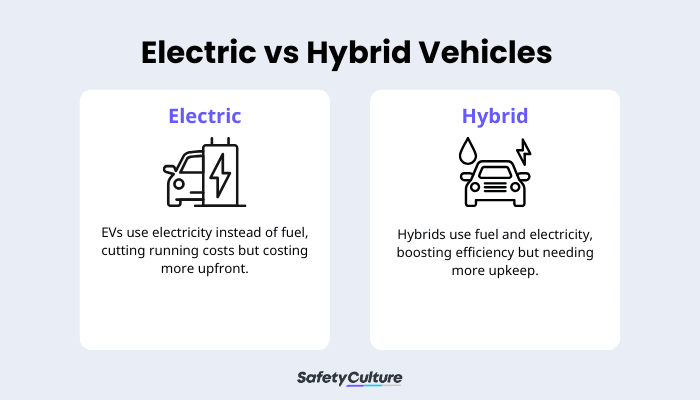
Electric vs Hybrid Vehicles
EVs run solely on electricity stored in high-capacity batteries, which power an electric motor instead of a gasoline engine. For fleets, this means zero tailpipe emissions, quieter operation, and eligibility for various government incentives aimed at reducing carbon footprints. EVs also help organizations lower long-term operating costs since electricity is generally cheaper than fuel and electric drivetrains have fewer moving parts.
However, EV fleets can face challenges such as high initial purchase prices and limited driving range compared to traditional vehicles. Organizations must also plan for adequate charging infrastructure and time to recharge, which can affect daily scheduling and route planning. Despite these limitations, ongoing improvements in battery technology continue to make EV fleets more practical and cost-effective over time.
Compared to fully electric vehicles, hybrid vehicles combine an internal combustion engine with an electric motor, letting them use both gasoline and electric power sources for propulsion. For fleets, this offers a balance between improved fuel efficiency and reduced emissions without relying solely on charging stations. Hybrids are also well-suited for mixed driving conditions, making them a flexible choice for organizations transitioning toward greener operations.
On the downside, hybrids still depend partly on fossil fuels, meaning they can’t achieve the same environmental benefits as fully electric vehicles. Their dual power systems can also make maintenance more complex and potentially more expensive over time. Nevertheless, hybrid fleets provide an excellent stepping stone for companies not yet ready to move entirely to EVs.
EVs and hybrid vehicles are both modern advancements from traditional engines. However, they are also very distinct from each other. Here’s a quick look at how the key differences between these vehicles can affect an organization’s choice for the ideal fleet:
EVs are powered entirely by electricity stored in rechargeable batteries, while hybrids use both an internal combustion engine and an electric motor. For fleets, EVs offer a fully electric solution that eliminates fuel costs, whereas hybrids provide flexibility by switching between fuel and electric power as needed. This makes EVs ideal for organizations prioritizing zero-emission goals, while hybrids would be better for longer travel distances without full reliance on charging infrastructure.
EVs produce zero tailpipe emissions, significantly reducing a fleet’s carbon footprint and improving compliance with environmental regulations. Hybrids, while cleaner than traditional vehicles, still emit some CO₂ when using their gasoline engines. For companies with sustainability targets, EV fleets deliver the best environmental performance. Utilizing hybrid vehicles can serve as a transitional step toward full electrification.
EVs are limited by their battery capacity and require access to charging stations, making them more suitable for short- to medium-range routes with predictable schedules. Hybrids, on the other hand, can refuel quickly with gasoline and switch to electric power in stop-and-go traffic, offering greater flexibility for long or unpredictable routes. Fleet managers often choose EVs for urban or local deliveries and hybrids for regional operations where charging access is limited.
EVs have fewer moving parts, eliminating oil changes and reducing brake wear, which leads to lower long-term maintenance costs for fleets. On the other hand, hybrids require maintenance for both the engine and electric system, making their upkeep more complex than EVs. While hybrids can save on fuel, EVs generally offer simpler servicing and fewer mechanical failures over time.
EV fleets provide the greatest environmental benefit by running solely on clean electricity, especially when powered by renewable energy sources. Hybrids contribute to emissions reduction, but still rely partly on fossil fuels, limiting their overall sustainability impact. For fleet operations aiming for corporate social responsibility goals or green certifications, EVs represent the most environmentally responsible choice.
Whether using an EV or hybrid fleet, modern technology plays a crucial role in improving efficiency, safety, and long-term performance of both types of vehicles. Digital platforms and connected systems can help organizations monitor vehicles, schedule maintenance, and train employees more effectively, especially when on the road. These tools also make it easier to analyze performance data, manage assets, and ensure smooth integration between electric and fuel-based systems, which are all essential for keeping mixed fleets running efficiently and sustainably.
Some benefits of using technology for choosing and utilizing EVs or hybrid vehicles are the following:
Improved Maintenance – Use digital maintenance systems to schedule inspections, track repairs, and ensure both electric and hybrid components receive timely servicing.
Streamlined Asset Management – Apply QR codes and other asset tracking and management tools to monitor vehicles, charging stations, and fuel assets, giving managers instant access to performance and maintenance data anytime as needed.
Enhanced Driver and Maintenance Training – Offer online and mobile training modules to teach staff proper handling of EVs and hybrids, including safety checks and energy-efficient driving techniques.
Better Analysis – Use smart data analytics to measure energy consumption, fuel efficiency, and driver performance, helping managers make informed decisions to optimize fleet operations.
More Seamless Workflows – Connect all tools and platforms —such as telematics, maintenance systems, and HR software—into one unified system for seamless communication and centralized management of fleet operations.
SafetyCulture is a mobile-first operations platform adopted across industries such as manufacturing, mining, construction, retail, and hospitality. It’s designed to equip leaders and working teams with the knowledge and tools to do their best work—to the safest and highest standard.
SafetyCulture complements your organization's efforts to implement and maintain ESG strategies. Through seamless data collection, real-time tracking, and reporting of your progress against sustainability goals, your organization can effectively drive sustainable growth and success.
Save time and reduce costs
Stay on top of risks and incidents
Boost productivity and efficiency
Enhance communication and collaboration
Discover improvement opportunities
Make data-driven business decisions