Driver Training: How to Improve Safety
Learn more about driver training programs, safety guidelines, and types of certifications needed for specific industrial roles.

Learn more about driver training programs, safety guidelines, and types of certifications needed for specific industrial roles.
Published 28 Apr 2026
Article by
5 min read
Driver training is a structured educational program that aims to prepare and teach individuals how to operate vehicles safely, responsibly, and in compliance with traffic laws and road regulations. These training programs also prepare incoming drivers for licensing tests or help experienced ones refine skills.
From mastering road rules and defensive driving to tackling distractions and complex roadways, it shapes skilled and responsible drivers across industries. All in all, driver training is an important practice that promotes safe and confident driving. This guide covers the importance, curriculum, and benefits of driver training.
According to the Occupational Safety and Health Administration (OSHA), driver training is an important protective measure against crashes, as motor vehicle accidents are the leading cause of worker injuries and death. These incidents also pose significant risks to other people on the road.
Knowing basic and, in some cases, advanced driver training courses ensures that drivers understand vehicle controls and systems, as well as the vehicle’s characteristics and limitations. Having this knowledge can help drivers better manage the vehicles they're operating and recognize risks and anomalies before they escalate.
Driver training imparts essential skills, knowledge, and confidence to navigate the roads safely. Through structured learning and professional guidance, individuals can not only master the rules of the road but also internalize the values of road safety and courtesy.
Certifications and licenses provide a standardized way to assess a driver’s knowledge, skills, and understanding of road rules. They help in regulating and maintaining road safety, preventing unqualified drivers from endangering themselves and others. Here are the most common driver certifications and licenses that are used in most countries around the world.
Standard or Non-Commercial Driver’s License: Allows individuals to operate private and non-commercial vehicles such as cars, light vans, etc. Typical requirements include passing a written test and a practical driving exam, though requirements may vary depending on the location and regulations.
Commercial Driver’s License (CDL) – Requires a CDL for operating commercial or heavy vehicles such as trucks and buses, involving specialized training in fatigue management, safety, and rigorous testing due to the significant responsibility of handling large vehicles.
Motorcycle Endorsement: Permits operation of motorcycles and motor scooters above specified engine sizes and often involves a written test and a motorcycle skills test.
Passenger Transport Endorsement: Required for driving vehicles designed to transport passengers, this endorsement involves additional testing to ensure passenger safety. In some regions, mandatory safeguarding and disability awareness training are required to acquire this license.
Driver training programs encompass a comprehensive range of courses designed to cater to individuals at various stages of their driving journey.
These programs are designed for individuals with little or no driving experience and focus on building essential driving skills. A basic course covers traffic rules and regulations like road signs and local laws. Other courses include practical driving lessons with an instructor to learn basic vehicle operation, parking, and maneuvering.
This type of training is designed for drivers with some experience, who want to further their skills and confidence in driving. These courses focus on advanced driving techniques, including parallel parking, highway merging, and three-point turns. They also improve navigational skills, like understanding road signs and using maps, while also being able to drive safely.
Advanced courses are designed for experienced drivers who want to refine their skills and handle complex driving situations with confidence. The course covers high-speed driving techniques, including safe overtaking, cornering, and lane changes. It also focuses on precision and performance driving skills, such as advanced braking and vehicle control.
These programs ensure that drivers of all levels are prepared, confident, and well-equipped to navigate the roads responsibly, contributing to safer and more skilled driving practices for everyone on the road.
Industry-specific driver training courses and programs are critical because they address unique hazards, regulations, and equipment in high-risk sectors. These tailored courses help keep various fields safety compliant and up to date with new regulations.
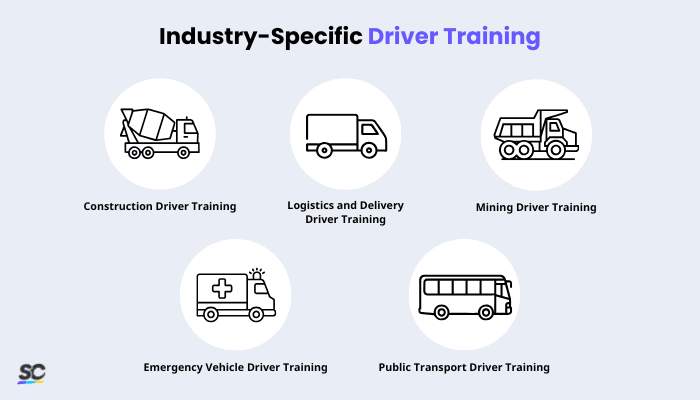
Construction Driver Training: Equips drivers to operate in active construction environments with high risk and constantly changing conditions that can quickly escalate minor accidents into fatalities.
Logistics and Delivery Driver Training: Targets delivery drivers responsible for transporting goods efficiently while maintaining safety and customer service standards.
Mining Driver Training: Provides specialized training for drivers operating in some of the most hazardous driving environments.
Emergency Vehicle Driver Training: Trains drivers of ambulances, fire trucks, police vehicles, and other emergency response units to operate safely under emergency conditions.
Public Transport Driver Training: Supports bus, tram, and other mass transit vehicle operators responsible for carrying passengers daily.
SafetyCulture is a mobile-first operations platform adopted across industries such as manufacturing, mining, construction, retail, and hospitality. It’s designed to equip leaders and working teams with the knowledge and tools to do their best work—to the safest and highest standard.
Streamline processes, eliminate bottlenecks, enhance resource utilization, and build an agile and scalable infrastructure with SafetyCulture. Strive for operational excellence to boost competitive advantage, foster sustainable growth, and deliver long-term value.
✓ Save time and reduce costs ✓ Stay on top of risks and incidents ✓ Boost productivity and efficiency ✓ Enhance communication and collaboration ✓ Discover improvement opportunities ✓ Make data-driven business decisions