A Comprehensive Guide to Delivery Driver Training
Explore how structured, people-focused training equips drivers to operate safely, handle daily risks, and deliver consistent service across complex logistics operations.

Explore how structured, people-focused training equips drivers to operate safely, handle daily risks, and deliver consistent service across complex logistics operations.
Published 28 Apr 2026
Article by
5 min read
Delivery driver training is a specialized program designed to equip individuals with the essential skills and knowledge needed to perform their responsibilities safely and efficiently. The training typically covers a wide range of topics, including defensive driving techniques, customer service etiquette, vehicle maintenance, and route navigation.
Participants can learn to handle various on-road situations, including adverse weather and heavy traffic, while prioritizing safety. Additionally, delivery driver training emphasizes the importance of time management and efficient delivery practices to ensure customer satisfaction.
Driver training is beneficial for businesses that rely on delivery services. Some of the key benefits include:
Improved driver safety and skills: Training enhances hazard awareness, defensive driving, and anticipation, helping drivers recognize risks early and avoid incidents.
Reduced accidents and downtime: Fewer road mishaps mean less vehicle damage, fewer injuries, and reduced time off the road. This keeps your fleet moving and prevents operational disruptions.
Lower operating costs: Investing in skill development protects your budget by minimizing the financial sting of insurance claims, unplanned maintenance, and costly repairs.
Better fuel efficiency: Through smoother driving habits, reduced idling, and smarter route planning, drivers can reduce fuel consumption and cut down on long-term fuel costs.
Extended vehicle lifespan: Proper vehicle handling and daily checks reduce wear and tear, keeping vehicles in service longer and minimizing breakdowns.
Stronger compliance and risk control: Organizations can mitigate fines and legal actions by ensuring drivers are aligned with the latest safety and regulatory standards through training.
Higher driver satisfaction and retention: Investing in driver development demonstrates a commitment to employee well-being, boosts morale, and helps retain experienced drivers.
Improved customer satisfaction: Well-trained drivers deliver on time, handle goods responsibly, and communicate professionally, leading to better service and fewer complaints.
Increased productivity: Efficient driving habits and better planning support faster deliveries, consistent performance, and higher overall productivity.
The sections below outline the core requirements to include in your driver training and operationalize across your delivery teams.
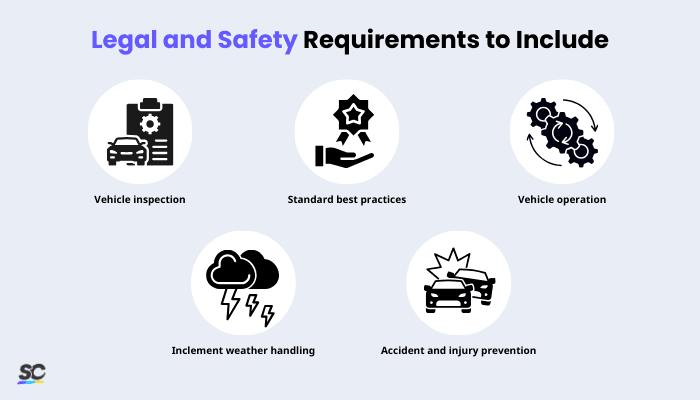
Training should begin with standardized pre-start vehicle inspection procedures, making sure the drivers are trained to:
Complete and document a vehicle pre-start check before the first delivery to confirm the vehicle is roadworthy and compliant.
Verify registration, insurance, and inspection status meet local and state requirements.
Inspect tires, brakes, lights, mirrors, seatbelts, and the horn to reduce preventable breakdowns and incidents.
Check windshield visibility, wiper condition, and fluid levels to support safe driving in variable conditions.
Confirm backup cameras and safety features are clean, operational, and properly adjusted.
Ensure company vehicle identification and signage are correctly displayed.
The program must clearly define safe operating standards and expectations for driver behavior, reinforcing:
Mandatory seatbelt use at all times.
Strict adherence to traffic laws, speed limits, and parking regulations.
Safe arrival and departure procedures, including minimizing reversing and completing vehicle walkarounds.
Assessing walking surfaces and delivery paths to reduce slips, trips, and falls at customer sites.
Zero tolerance for impaired driving, including the required disclosure of any medication that could affect driving safety.
Standardize customer interaction protocols to reduce escalation, disputes, and on-site risk.
Focused driving should be positioned as a core competency in delivery driver training, meaning drivers should be taught to:
Limit distractions by allowing mobile device use only when vehicles are safely parked.
Avoid eating while driving and set low audio levels to maintain situational awareness.
Restrict passengers unless formally approved, in line with insurance and safety policies.
Use GPS responsibly, prioritizing hands-free navigation and sustained road focus.
Weather-related risk management is also an important part of a good driver training program. Prioritize these key points and help drivers:
Adjust speed, spacing, and decision-making during adverse weather or high-traffic events.
Communicate delivery delays to customers during severe conditions.
Wear appropriate footwear and personal safety equipment to reduce fall risk in wet or low-visibility environments.
Equip themselves with basic tools, such as flashlights, to improve visibility during nighttime or stormy conditions.
Follow supervisor directions to pause or reroute deliveries when conditions exceed safe operating thresholds.
Delivery driving comes with its own set of risks. This is why your fleet should be taught personal security measures and incident prevention, more specifically:
Vehicle security protocols, including locking vehicles and removing keys during deliveries.
Parking in well-lit, visible areas.
Prohibiting deliveries to locations that present elevated personal risk.
Follow clear escalation paths for suspicious situations, including emergency response and internal reporting.
Adhere to cash-handling limits and dispute-resolution procedures to protect drivers during customer interactions.
Using vehicle safety features, such as alarms, to deter threats and attract attention when needed.
Most delivery roles do not require advanced certifications beyond a valid driver’s license, but additional credentials can strengthen a driver’s profile and reduce risk for employers. Below are some certifications that are either required or recommended for delivery drivers:
Commercial Driver’s License (CDL): Drivers must hold a CDL to operate vehicles that exceed standard passenger vehicle size or weight limits. This certification confirms advanced vehicle handling skills and regulatory knowledge.
Defensive driving certification: Courses focused on hazard recognition, collision avoidance, and risk-aware decision-making help drivers respond safely to real-world road conditions. Programs certified by the National Safety Council are widely recognized and valued by employers.
Online driving safety courses: State-approved online programs offer flexible training options that reinforce defensive driving fundamentals. These courses support onboarding, refresher training, and corrective actions following incidents.
Special endorsements (when applicable): Certain delivery roles require additional endorsements, such as HAZMAT certification for transporting hazardous materials. These endorsements ensure drivers meet strict safety and regulatory standards for higher-risk cargo.
SafetyCulture is a mobile-first operations platform adopted across industries such as manufacturing, mining, construction, retail, and hospitality. It’s designed to equip leaders and working teams with the knowledge and tools to do their best work—to the safest and highest standard.
Streamline processes, eliminate bottlenecks, enhance resource utilization, and build an agile and scalable infrastructure with SafetyCulture. Strive for operational excellence to boost competitive advantage, foster sustainable growth, and deliver long-term value.
Save time and reduce costs
Stay on top of risks and incidents
Boost productivity and efficiency
Enhance communication and collaboration
Discover improvement opportunities
Make data-driven business decisions