Workplace Management: The Ultimate Guide
Understand how aligning people, processes, and daily work enables organizations to manage their workplaces safely, consistently, and efficiently.

Understand how aligning people, processes, and daily work enables organizations to manage their workplaces safely, consistently, and efficiently.
Published 14 May 2026
Article by
6 min read
Workplace management involves organizing and coordinating workplace resources, including physical spaces, technology, and human capital, to optimize operations and enhance employee satisfaction. It encompasses a range of strategies and practices to ensure an efficient, productive, and harmonious work environment.
Effective workplace management requires a balance between maintaining the infrastructure and creating a supportive culture that motivates employees. This includes tasks such as space planning, resource allocation, and implementing policies that promote health, safety, and well-being.
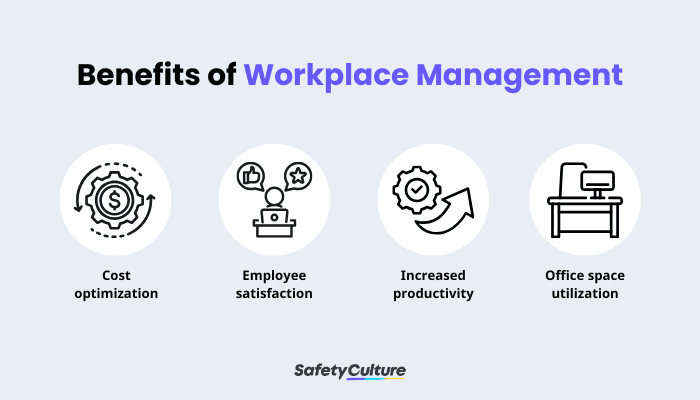
Large organizations often have workplace management systems already in place, but startups and small businesses can also benefit from implementing them. Some of the main benefits include:
Improved workplace experience: Workplace management ensures employees have the tools, layout, and support to perform at their best. A well-organized space boosts productivity, morale, and overall well-being.
Better use of space: Strategic workplace management helps organizations use space more efficiently. By aligning workspace layouts with how teams actually work, businesses can reduce wasted areas, support collaboration, and minimize daily disruptions.
Stronger communication and coordination: Clear workplace systems improve communication between employees, managers, and other stakeholders. It leads to faster decision-making, smoother conflict resolution, and a more positive workplace culture.
Greater support for automation: Workplace management often introduces tools that automate scheduling, tracking, and routine administrative tasks. Automation reduces manual effort and allows employees to focus on higher-value work.
Lower operational costs: Improved coordination, fewer disruptions, and better resource allocation help organizations reduce unnecessary expenses. Regular management reviews of workplace data ensure decisions remain aligned with business goals and that cost controls remain effective.
Workplace management, business management, and facilities management are often used interchangeably. However, there are distinct differences among these areas.
Workplace management centers on how employees interact with their work environment. Its goal is to create spaces, tools, and systems that support productivity, collaboration, and a positive employee experience. This includes space planning, hybrid work support, and technology that helps people work more effectively.
Facilities management focuses on the organization's physical infrastructure. It ensures buildings, equipment, and systems operate safely, efficiently, and in compliance with regulations, supporting critical areas such as maintenance, security, and workplace safety across the organization.
Business management takes a broader, strategic view of the organization. It oversees operations, financial performance, leadership, and long-term growth. Business management aligns people, processes, and resources to achieve organizational goals and maintain profitability.
Aspect | Workplace Management | Facilities Management | Business Management |
Primary focus | Employee experience and space utilization | Physical assets and building operations | Overall strategy and organizational performance |
Main responsibilities | Workspace design, desk booking, hybrid work support, productivity tools | Maintenance, repairs, safety compliance, security, vendor management | Strategy, budgeting, operations, leadership, growth planning |
Key outcomes | Improved productivity, collaboration, and employee satisfaction | Safe, functional, and compliant facilities | Sustainable growth, efficiency, and profitability |
Skill emphasis | User-focused design, data insights, workplace technology | Technical expertise, safety knowledge, and asset management | Financial planning, strategic thinking, decision-making |
Typical scope | How people use and experience workspaces | How buildings and systems are maintained | How the entire business operates and grows |
An effective workplace management strategy is crucial for organizational success. It requires focusing on several key elements that contribute to a productive and engaging work environment. These core components include:
Employee experience directly influences how employees engage with the office and their workday. When workplaces remove friction from everyday tasks, employees are more likely to stay productive, engaged, and connected, especially in hybrid environments. Some key features of a workplace that support employee experience are the following:
Mobile-friendly desk, room, and parking booking tools that simplify daily planning
Real-time visibility into where colleagues are working to support collaboration
Multiple workspace options designed for focus, teamwork, and informal interaction
Dedicated wellness spaces that support comfort, privacy, and mental well-being
Streamlined visitor management that balances security with a positive guest experience
Workplace operations are key to efficient management, ensuring spaces run smoothly and consistently while improving overall workplace efficiency. Strong oversight helps organizations move from reactive problem-solving to proactive decision-making through data and automation.
Some factors to consider when improving and maintaining workplace operations are:
Centralized dashboards that combine occupancy, booking, and policy data
Predictive insights that anticipate attendance patterns and peak usage
Automated actions such as releasing unused bookings or triggering alerts
Integrations with HR systems, access control, calendars, and analytics platforms
Sustainability tracking to monitor emissions, energy use, and resource efficiency
Smart energy controls that align lighting and HVAC usage with actual occupancy
Space planning is essential to workplace management because it ensures physical environments align with how people actually work. As workforce needs change, organizations must continuously adapt layouts and capacity to avoid wasted space while maintaining comfort and availability.
An efficient plan for managing and organizing workspaces includes considering the following:
Digital floor plans that update dynamically based on real-time occupancy
Scenario planning tools to model growth, policy changes, or office consolidation
Portfolio-wide oversight to manage multiple locations consistently
Utilization heatmaps that highlight underused or overcrowded areas
Predictive analytics that forecast future space requirements based on work patterns
Effective workplace management requires deliberate actions that improve how people work, collaborate, and stay engaged. The strategies below translate proven principles into practical steps organizations can apply to strengthen daily operations and employee experience:
Establish transparent communication practices: Create clear channels for sharing goals, expectations, and updates across teams. Regular communication reduces confusion, builds trust, and keeps everyone aligned as priorities change.
Implement flexible work structures: Offer remote work options, flexible schedules, or hybrid models that accommodate different needs. Flexibility supports performance while improving satisfaction and long-term retention.
Promote work–life balance support: Encourage regular breaks, time off, and participation in wellness programs as part of daily operations. Proactively supporting balance helps prevent burnout and sustains consistent productivity.
Increase employee involvement and engagement: Invite employees to participate in decisions that affect their work and environment. Employee involvement builds ownership, accountability, and stronger commitment to shared outcomes.
Invest in continuous learning and development: Provide training, upskilling, and growth opportunities aligned with evolving roles and tools. Continuous learning strengthens performance, morale, and internal career mobility.
Build a supportive workplace culture: Reinforce values of respect, inclusion, and fairness through leadership behavior and policies. A positive work culture creates psychological safety and encourages collaboration and innovation.
Apply structured time and task management: Introduce clear prioritization methods, workload planning, and task organization practices. Having structure helps employees stay focused, reduces stress, and limits inefficiencies.
Conduct regular workload assessments: Review workloads regularly to identify imbalances or overloads early. Timely adjustments keep work sustainable and protect both performance and well-being.
Formalize recognition and appreciation systems: Recognize achievements and effort through consistent, visible programs. Recognition reinforces positive behavior, boosts morale, and supports ongoing performance.
Launch health and wellness initiatives: Implement programs that address physical and mental health needs. Supporting well-being strengthens resilience, engagement, and long-term productivity.
SafetyCulture is a mobile-first operations platform adopted across industries such as manufacturing, mining, construction, retail, and hospitality. It’s designed to equip leaders and working teams with the knowledge and tools to do their best work—to the safest and highest standard.
Streamline processes, eliminate bottlenecks, enhance resource utilization, and build an agile and scalable infrastructure with SafetyCulture. Strive for operational excellence to boost competitive advantage, foster sustainable growth, and deliver long-term value.
✓ Save time and reduce costs
✓ Stay on top of risks and incidents
✓ Boost productivity and efficiency
✓ Enhance communication and collaboration
✓ Discover improvement opportunities
✓ Make data-driven business decisions