A Guide to Ensuring Cybersecurity for Retail
Learn what cybersecurity for retail means, why it’s important, and the best practices for teams to follow to ensure cybersecurity safety in retail establishments.
Learn what cybersecurity for retail means, why it’s important, and the best practices for teams to follow to ensure cybersecurity safety in retail establishments.
Published 28 Apr 2026
Article by
6 min read
Cybersecurity for retail refers to the protection of digital systems, customer data, and payment information from cyber threats like hacking and phishing. It involves implementing secure payment processing, protecting Point-of-Sale (POS) systems, and monitoring networks for suspicious activity. This helps build customer trust, prevent financial losses, and ensure compliance with data protection regulations.
Cybersecurity for retail is important because retailers handle large amounts of sensitive customer information, including payment data and personal details, making them prime targets for cyberattacks. The retail industry's rapid digital transformation, alongside the rise of e-commerce platforms, mobile apps, and interconnected systems, has significantly increased the potential attack surface for cyber threats such as data breaches, ransomware, and POS intrusions. These retail security incidents can lead to financial losses, legal liabilities, reputational damage, and loss of consumer trust, making cybersecurity a vital priority for maintaining business continuity and customer confidence
By prioritizing cybersecurity, retailers can safeguard their operations, maintain customer trust, and comply with legal and industry data protection requirements. This makes cybersecurity a crucial focus area for retailers to safeguard their business and their customers.
Both shoppers and retail establishments face a growing threat of cyberattacks, with some studies citing that 80% of non-cash purchases leave customers vulnerable. While shoppers have to remain vigilant against threats, it’s on retail establishments to improve security as well. This can start by understanding some of the key threats that shoppers and establishments face, which include the following:
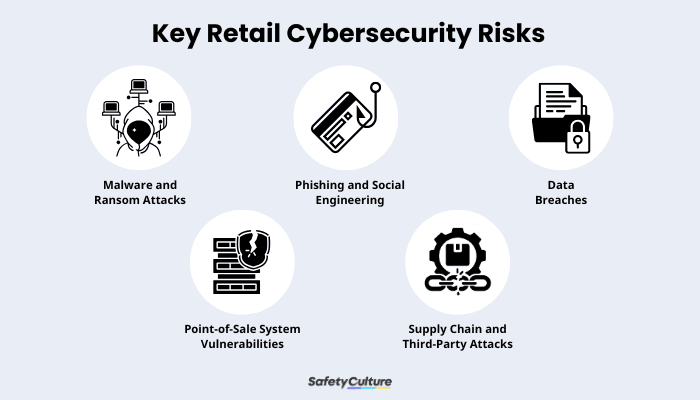
Key Retail Cybersecurity Risks
Malware and ransom attacks involve malicious software that infiltrates retail systems to steal data, disrupt operations, or lock files until a ransom is paid. Retailers are frequent targets of these due to the increasing reliance on interconnected digital systems and customer databases. These attacks can cause severe financial losses, downtime, and lasting reputational damage if not properly mitigated.
Phishing and social engineering target employees through deceptive emails, messages, or calls to trick them into revealing sensitive information or login credentials. In retail, attackers often impersonate trusted vendors, payment processors, or management. Training staff to recognize and report these attempts is crucial to prevent unauthorized access and data theft.
Data breaches occur when unauthorized individuals gain access to confidential customer or company data. Retailers are particularly vulnerable due to the high volume of payment and personal information they collect. These incidents can result in identity theft, regulatory penalties, and a significant loss of customer trust.
POS system vulnerabilities can allow cybercriminals to intercept credit card data during transactions. Outdated software, weak passwords, or insecure network connections make POS systems an easy target. Regular updates, encryption, and network segmentation help safeguard transactions and protect customer payment information.
Supply chain and third-party attacks exploit weak cybersecurity practices among vendors or partners connected to a retailer’s system. Hackers use these indirect entry points to access sensitive data or inject malicious code. Strengthening third-party risk management and requiring compliance with security standards can reduce this exposure.
While it’s important for retail stores to enhance cybersecurity, doing so can be a difficult task. Here are some of the major challenges teams can expect to face when improving their cybersecurity systems:
Many retail organizations struggle with having too few cybersecurity professionals or insufficiently trained staff to handle modern threats. This shortage limits their ability to monitor systems, respond to incidents, and enforce security policies effectively. Investing in workforce training and leveraging automation tools can help bridge the gap and strengthen overall cybersecurity resilience.
Human error remains one of the biggest vulnerabilities in retail cybersecurity, as employees may unintentionally click on malicious links, use weak passwords, or mishandle customer data. Even with strong security systems, a single careless action can expose the entire network to risk. Continuous education, clear policies, and simulated phishing tests can significantly reduce human-related security incidents.
Retailers often face tight budgets that make it challenging to invest in advanced cybersecurity tools, skilled personnel, or regular system upgrades. Limited funding can leave critical systems outdated and more vulnerable to attacks. Prioritizing essential protections, adopting scalable solutions, and seeking cost-effective security partnerships can help balance financial and cybersecurity needs.
Identify, evaluate, and mitigate risks to create a safe and secure environment for your employees and customers.
Building an effective and safe cybersecurity system takes significant time and effort. Teams can expect to readjust and restructure their system based on the store’s needs. That said, here are a few best practices to keep in mind that make building a cybersecurity system easier:
Retailers face constant threats from hackers targeting customer payment data, online shopping platforms, and POS systems, making advanced threat detection and monitoring technologies essential. These systems use artificial intelligence, behavioral analytics, and real-time monitoring to identify unusual activities such as unauthorized logins, data transfers, or malware infiltration. By analyzing large volumes of network traffic and endpoint data, they can detect patterns that traditional security tools might miss, enabling faster and more accurate threat identification.
In addition to using threat detection tools, implementing centralized monitoring dashboards and automated alerts allows security teams to respond to potential incidents immediately, reducing the window of exposure. Integrating these systems with existing IT infrastructure ensures continuous visibility across all retail channels, from in-store devices to e-commerce servers. This proactive approach not only minimizes financial and operational disruptions, but also builds long-term customer trust by keeping their data and transactions secure.
Strong password and authentication policies protect against unauthorized access to sensitive systems and data. Retailers should enforce complex passwords, regular updates, and multifactor authentication for employees and vendors. This approach strengthens login security and helps prevent breaches caused by stolen or weak credentials.
Regular security audits help identify vulnerabilities in retail systems and ensure compliance with cybersecurity standards. Ongoing employee training reinforces awareness of phishing scams, data handling procedures, and incident response. Together, audits and training build a proactive security culture that reduces the likelihood of successful attacks.
Keeping firewalls and antivirus software up to date is essential to blocking malware, ransomware, and unauthorized access attempts. Regular updates ensure that security tools can defend against the latest threats and vulnerabilities. A layered defense combining firewalls, antivirus, and intrusion prevention systems offers the best protection for retail networks.
Encryption ensures that sensitive customer and company data remains unreadable to unauthorized users, even if intercepted. Retailers should encrypt payment information, personal data, and internal communications both in transit and at rest. This practice protects customer privacy and helps maintain compliance with data protection regulations like PCI DSS and General Data Protection Regulation (GDPR).
SafetyCulture is a mobile-first operations platform adopted across industries such as manufacturing, mining, construction, retail, and hospitality. It’s designed to equip leaders and working teams with the knowledge and tools to do their best work—to the safest and highest standard.
Streamline processes, eliminate bottlenecks, enhance resource utilization, and build an agile and scalable infrastructure with SafetyCulture. Strive for operational excellence to boost competitive advantage, foster sustainable growth, and deliver long-term value.
Save time and reduce costs
Stay on top of risks and incidents
Boost productivity and efficiency
Enhance communication and collaboration
Discover improvement opportunities
Make data-driven business decisions