Clean Energy Technologies Powering a Sustainable Future
Learn how today’s clean energy technologies work, why they matter, and how they shape a resilient energy system.
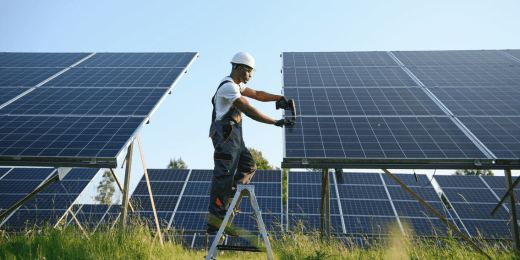
Learn how today’s clean energy technologies work, why they matter, and how they shape a resilient energy system.
Published 5 May 2026
Article by
7 min read
Clean energy technology refers to power systems that use natural resources like sunlight, wind, and water to produce electricity with little to no harmful pollution. These systems help companies move away from fossil fuels because they provide reliable energy for homes, businesses, and communities, while supporting a healthier planet.
Clean energy encompasses both renewable sources, such as solar and wind, and efficient non-renewables like advanced nuclear. Unlike pure regenerative power, green energy prioritizes low-impact production. Understanding the distinction is crucial for informed policy, innovation, and long-term sustainability. Here are the key types, along with some emerging clean energy technologies:
Sunlight is captured and converted into electricity or heat using photovoltaic (PV) cells. This source is renewable because the sun’s energy will continue for billions of years. It is also clean since generation produces virtually no greenhouse gas emissions.
Photovoltaic Systems are the most widely used, with some installations already powering tens of thousands of homes like the one in Trino, Italy.
Concentrating Solar Power (CSP) uses mirrors to focus sunlight and produce steam or turbine power. A facility in the Mojave Desert uses this technology.
Build from scratch or choose from our collection of free, ready-to-download, and customizable templates.
Turbines located on land or at sea harness continuously moving air to produce sustainable power. Like solar, this is both renewable and clean because little to no emissions are produced during generation.
Onshore turbines are built on land. Major installations, such as the one near the India-Pakistan border, combine wind and solar to power millions of households.
Offshore wind farms, located at sea, ensure strong and consistent wind speeds. The largest one with nearly 300 turbines is currently located in England.
Nuclear fission splits heavy atomic nuclei to release heat, which is then used to produce steam and generate electricity. While this process emits very low greenhouse gas during operations, it’s not renewable. Here are some common and emerging clean energy technologies that are nuclear-based:
Conventional Light Water Reactors (LWRs) are the most common type used for grid electricity.
Advanced Small Modular Reactors (SMRs) are gaining attention due to their compact and modular design that can be deployed faster.
Breeder reactors are proposed because they generate more fuel than they consume.
Heat is tapped from deep underground. The hot water or steam that rises turns turbines to generate electricity or provide direct heat for industrial use. This manner of generating electricity is both clean and renewable.
Flash steam plants, like the hybrid power plant in Nevada, pull hot water into low-pressure tanks to generate steam.
Binary cycle power plants take low-temp heat from geothermal fluids and transfer it to a secondary fluid to drive turbines.
Enhanced Geothermal Systems (EGS) is a developing technology that essentially creates artificial geothermal reservoirs underground, where natural ones don’t exist.
Energy from falling or flowing water is captured to spin turbines and generate electricity. This is renewable since water cycles don’t naturally run out. However, it isn’t always clean because large dams can disrupt local ecosystems.
Large dams, such as the Hoover Dam in Nevada, generate large electrical capacity.
Pumped-storage hydropower stores energy by moving water uphill and releasing it to generate electricity when demand is higher. The integrated renewable project in India makes use of this technology.
Run-of-river systems divert a part of the river through turbines with minimal reservoirs. They typically have less ecological impact because they preserve natural river flows.

Relying on coal, oil, and gas creates a cycle of rising pollution, unpredictable energy prices, and growing environmental threats. Turning to new clean energy technologies eliminates those issues and ensures energy security for communities across the globe.
Digitization of energy: Digital technologies, such as AI, cloud platforms, and data analytics, improve grid efficiency. These can predict demands, reduce outages, and integrate different renewable sources more reliably.
Smart sensors: Data collected on equipment health, weather conditions, energy flow, and emissions, supports crucial tasks, from real-time system performance monitoring to predictive maintenance, helping automate clean power systems.
Decentralized systems: Putting energy closer to where it’s used increases resilience. Rooftop solar, microgrids, and community energy systems empower companies and local regions to generate their own clean power.
Electrification of everything: Replacing fossil-fuel-powered systems, from vehicles to home heating, dramatically cuts emissions across transport, buildings, and industry while increasing overall energy efficiency.
Energy storage and grid flexibility: Technologies that store energy (batteries, pumped hydro, thermal storage) help manage variability in supply. Improvements in this space enable consistent, 24/7 clean power availability.
Circular energy economy: Minimizing waste and reusing materials reduce environmental impact, secures critical resources, and lowers lifecycle costs of clean energy technologies.
Cross-industry collaboration: Partnerships among energy providers, technology companies, manufacturers, governments, and research institutions accelerates innovation, lowers costs, and supports large-scale projects that no single group can achieve on its own.
Modern clean energy is complex, decentralized, and data-heavy. In this landscape, "smart" solutions are no longer optional. They are essential for scaling operations reliably while maximizing the positive environmental impact of these energy sources, financial returns, and grid performance.
Digital inspection templates and scheduling tools facilitate predictive maintenance to efficiently manage equipment health. These help prevent failures, extend asset life, and reduce downtime. They also solve the problem of costly breakdowns and reactive maintenance in solar, wind, and grid infrastructure.
Automating the “rules” improves quality, safety, and scalability. Creating consistent workflows, checklists, and procedures across sites solves inefficiencies caused by fluctuating practices as clean energy operations expand across regions and projects.
Sensors, IoT devices, and connected systems continuously track the condition and performance of energy assets. These tools look at parameters like temperature, vibration, pressure, electrical output, wear levels, and fault codes. This visibility helps prevent unexpected equipment failures, costly downtime, and inefficient maintenance.
Utilize advanced sensor technology to monitor assets, automate vital alerts, implement actions, and report urgent issues.
Environmental reporting tools track emissions, energy output, and sustainability metrics. It lessens the difficulty of accurately measuring and demonstrating clean energy performance, directly supporting transparency and regulatory reporting.
Workers can report issues instantly using mobile tools that can log issues and send details to the right teams for immediate response. These fixes delayed communication and unresolved on-site problems that can impact safety and performance.
Cloud-based platforms connect teams across locations, sharing visibility and improving coordination. This helps reduce operational silos and communication gaps across geographically distributed facilities and assets.
Learning management systems deliver consistent, on-demand training for different roles. Highlighting skill development and engagement in these programs drives workforce readiness for safety and quality.
Centralized dashboards make it easier to share sustainability progress with stakeholders, from regulators to affected communities. Clearly demonstrating the operation’s impact builds trust and brand value.
Having a single source of truth for permits, audit records, safety documents, and regulatory requirements helps teams stay compliant and audit-ready. It minimizes fragmented recordkeeping, missed deadlines, and compliance risks common in a highly-regulated space.
Analytics turn operational data (e.g., vibration levels of wind turbines, energy yield of solar inverters, state of charge of energy storage systems) into insights for decision-making. Getting rid of guesswork helps identify trends, cut waste, and improve overall performance.
SafetyCulture is a mobile-first operations platform adopted across industries such as manufacturing, mining, construction, retail, and hospitality. It’s designed to equip leaders and working teams with the knowledge and tools to do their best work—to the safest and highest standard.
SafetyCulture complements your organization's efforts to implement and maintain ESG strategies. Through seamless data collection, real-time tracking, and reporting of your progress against sustainability goals, your organization can effectively drive sustainable growth and success.
✓ Save time and reduce costs
✓ Stay on top of risks and incidents
✓ Boost productivity and efficiency
✓ Enhance communication and collaboration
✓ Discover improvement opportunities
✓ Make data-driven business decisions